
- Health Conditions A-Z
- Health & Wellness
- Nutrition
- Fitness
- Health News
- Ayurveda
- Videos
- Medicine A-Z
- Parenting
Flu Activity Has Not Peaked Yet, Says CDC Amid Record Breaking Season

Credits: Canva
While US has already reported record breaking flu cases, with hospitalizations and deaths continuing to rise, the Centers for Disease Control and Prevention (CDC) says that the flu activity may not have peaked yet. Around 40,000 people were admitted to the hospital with flu during the week ending with January 3. The CDC published the data that showed around 10% more than the 36,000 hospitalizations from the week before. There were 12 flu hospitalizations for every 100,000 people in the US last week.
CDC has also noted that vaccination "has been shown to reduce the risk of flu and its potentially serious complications". However, only 130 million doses of vaccine have been distributed, which covers less than 40% of the US population.
While the CDC data showed an increase in flu-like activity, and that the records have reached the highest since the initiation of the agency's tracking around 30 years ago, some indicators this week have fallen. CDC says that this does not mean the season has reached its peak, rather the downtick "could be due to changes in healthcare seeking or reporting during the holidays." CDC says more flu cases may come in the weeks ahead.
The Worst Flu Season Could Become Worse
This year's flu came after the flu vaccination was made, which means the current vaccination does not align with the mutation, however, experts have pointed out that it still continues to offer protection against the illness. This season's flu is a mutation of H3N2 or influenza A, called the subclade K, or what people are calling 'super flu'.
This is the culprit in rising flu cases, globally. The World Health Organization (WHO) on its website said that K variant marks "a notable evolution in influenza A (H3N2) viruses". Some are also questioning the effectiveness of this season's influenza vaccine against the strain.
The flu virus is highly contagious and spreads easily in crowded places, especially during the colder months.
In some cases, the infection can progress to the lungs, which could lead to complications like bronchitis or pneumonia. Yale Medicine too notes that this virus could attack the respiratory system, including throat, nose, and lungs.
What Are The Common Symptoms This Season For The Flu?
K variant causes more intense flu symptoms, they include:
- Fever
- Chills
- Headache
- Fatigue
- Cough
- Sore throat
- Runny nose
Are The Old Vaccines Effective Against This New Variant?
"The vaccine remains the most effective means to prevent disease. We still want to encourage people to get the vaccine," said Professor Antonia Ho, Professor and Honorary Consultant in Infectious Diseases at the University of Glasgow. Experts have stressed enough on the immunity that one can receive from the vaccine that that these flu jab remain the best defense against the flu, even though the current strain circulated may have drifted away from the strain included in this year's jab.
Data from the UK Health Security Agency (UKHSA) also show that vaccines is performing as expect, despite the emergence of subclade K.
Fish Oil Supplements Cut Heart Attacks And Strokes Risk In Dialysis Patients

Credit: Canva
Dialysis patients who took daily fish oil supplements had a 43 percent lower risk of major cardiovascular events, according to a large international clinical trial jointly led in Australia by Monash Health and the School of Clinical Sciences at Monash University.
Published in The New England Journal of Medicine, the study found that participants who took four grams of fish oil each day experienced significantly fewer major cardiovascular events, including heart attack, stroke, cardiac death and vascular-related amputations than those who received a placebo.
The supplement contained the omega-3 fatty acids EPA and DHA, which are naturally found in fish oil.
Adjunct Professor Kevan Polkinghorne, a nephrologist at Monash Health and adjunct in the School of Clinical Sciences, led the Australian portion of the trial said: "Patients on dialysis have extremely high cardiovascular risk, and very few therapies have been shown to reduce that risk," Professor Polkinghorne said. "In a field where many trials have been negative, this is a significant finding.
"Dialysis patients typically have much lower levels of EPA and DHA than the general population. This may help explain the magnitude of benefit observed in this group."
He also noted that results applied specifically to people undergoing haemodialysis for kidney failure and the findings should not be generalized to healthy individuals or to other groups of patients.
What Are Fish Oil Omega-3s?
Omega-3 fatty acids are polyunsaturated fats known for their crucial role in brain function and overall mental health. Fish oil is particularly rich in EPA and DHA, which are vital components of cell membranes and have strong anti-inflammatory effects in the body.
These omega-3s play a critical role in human development, and they are primarily found in fatty fish and fish oil. Since many people do not consume enough fish, supplementation is often recommended to ensure adequate intake of these essential fatty acids.
Although the body can convert another type of omega-3, alpha-linolenic acid (ALA), into EPA and DHA, this process is not highly efficient. As a result, fish oil supplements may provide a convenient way to ensure optimal levels of omega-3s.
Some popular sources of Omega-3 include:
- Salmon
- Cod Liver Oil
- Algae Oil
- Oysters
- Nuts and seeds, such as flaxseeds, chia seeds, and walnuts
- Plant oils, such as flaxseed oil, soybean oil, and canola oil
- Fortified foods, such as eggs, yogurt, juices, milk, etc.
Budget 2026: Cheaper Fish In India
Earlier this month, Finance Minister Nirmala Sitharaman announced a surprising tax reduction for India's fishers and marine industry, and experts say it is good news for you too.
Until now, fish caught by Indian vessels beyond territorial waters and brought back to the country for mass consumption has been treated as import, attracting customs duties and integrated goods and services tax (GST).
The combined tax burden raises costs and compliance issues, which discouraged people from deep-sea and exclusive economic zone (EEZ) fishing as well as
However, during her Union Budget 2026 presentation, Sitharaman proposed that fish caught in the EEZ and high seas by Indian fishing vessels are treated as duty-free when brought into Indian ports and treated as exports when landed at foreign ports.
This means that the market availability for Omega-3 packed fishes including salmon, mackerel, tuna, herring and sardines will significantly increase as their existing steep prices see a tremendous fall.
This Key Protein Could Revolutionize Malaria Vaccines, Scientists Say
Credit: Canva
Malaria infected an estimated 282 million people and caused about 6,10,000 deaths worldwide in 2024, according to the World Health Organization’s (WHO) latest World Malaria Report. The report placed strong emphasis on drug resistance, warning that it remains one of the biggest threats to global elimination goals.
WHO-recommended vaccines helped prevent roughly 170 million cases and one million deaths last year, which is about nine million more than the year before. Around 95 per cent of malaria deaths occurred in the African Region, with children under five forming the largest share.
Within the WHO South-East Asia Region, India represented 73.3 per cent of all malaria cases and 88.7 per cent of all malaria-related deaths. The report also underscored that the world is nowhere close to meeting the targets set under the Global Technical Strategy for malaria 2016–2030.
However, a group of University of Nottingham researchers have now found a key protein that is an enticing target for new antimalarial interventions. The study looked at a protein called Aurora-related kinase 1 (ARK1), which plays an important role in the parasite’s unusual cell division.
ARK1 helps control the parasite’s mitosis (cell division) and organizes a structure called the spindle, which separates genetic material so new parasites can form.
Scientists turned off the ARK1 gene using genetic engineering techniques to see what would happen. Without ARK1, the parasites could not form proper spindles and failed to reproduce, suggesting the protein could be a weak spot that future malaria treatment.
"What makes this discovery so exciting is that the malaria parasite's 'Aurora' complex is very different from the version found in human cells," senior author Rita Tewari said.
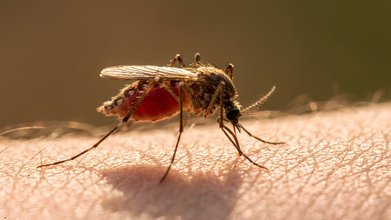
What Are Anopheles Stephensi Mosquitoes?
Anopheles stephensi is a malaria-transmitting mosquito originally found in South Asia. Unlike many other malaria vectors, it thrives in cities and breeds in man-made water sources such as storage tanks, containers, and discarded tyres. It can carry both Plasmodium falciparum and P. vivax parasites.
In recent years, this mosquito has spread into several African countries, where it adapts easily and shows resistance to multiple insecticides. This expansion has increased the threat of urban malaria outbreaks, as highlighted by the World Health Organization.
At present, Anopheles stephensi has been detected in nine African countries and is proving difficult to control due to widespread insecticide resistance.
Malaria Vaccines
The report noted that WHO approved the world’s first malaria vaccines in 2021, and 24 countries have now added them to their regular immunisation schedules. Dr Tedros Adhanom Ghebreyesus, WHO Director-General, said that new preventive tools provide reason for optimism, but many obstacles remain.
He pointed out the rise in cases and deaths, the pressure from drug resistance, and the impact of reduced funding. These factors could undermine the progress achieved over the last twenty years.
This Common Supplement Linked to Birth Defects In Babies, Study Shows
Credit: Canva
Men planning to conceive should practise caution while consuming antioxidant supplements, as excessive intake may affect sperm and early craniofacial development in babies, a Frontiers in Cell and Developmental Biology study shows.
Antioxidants are often promoted as powerful supplements that can help protect the body from chronic conditions, including cancer, chronic obstructive pulmonary disease and dementia.
However, researchers at the Texas A&M College of Veterinary Medicine and Biomedical Sciences (VMBS) found that consuming high levels of the antioxidant compounds N-acetyl-L-cysteine (NAC) and selenium (Se) can alter skull and facial shape in female children, even though the treated fathers did not exhibit obvious health problems.
Dr Michael Golding, a professor in the VMBS’ Department of Veterinary Physiology and Pharmacology, whose research team made the discovery said: "We know alcohol causes oxidative stress and we were looking to push back on it by adding a supplement known to lower oxidative stress.
"When we realized that offspring born to males that had only been given NAC were displaying skull and facial differences, it was a surprise because this molecule is universally thought to be good.
“When we sat down to think it through, we realized that it makes sense — you take a multivitamin to ensure that you’re in balance, but if the thing that you’re taking to ensure you’re in balance is unbalanced (the dose of antioxidants is too high), then you’re not doing a good thing.
“Sperm health is another performance metric; it’s just not one that we think about in everyday life. If you’re taking a high-dose antioxidant, you could be diminishing your reproductive fitness, and part of the journey toward the bad outcome is going to be the effects on the offspring.”
What Are Antioxidants?
Antioxidants are important because they protect the fundamental structure of the human body, cells. They safeguard an individual's DNA and proteins from the damage caused by free radicals.
Research has shown that a diet high in antioxidants may help individuals prevent chronic diseases and mental health issues. But on the contrary, having too many antioxidants in your body could confuse your cells' responses, leading to more damage than intented.
How Do Antioxidants Protect Your Body?
Antioxidants basically neutralize free radicals in the body. These free radicals are extra atoms that are produced during the body's internal processes and also by some external factors.
Overproduction of these free radicals, during the process of oxidation in the human body, damages cell membranes and other structures, including cellular proteins, lipids and DNA. Oxidation can be exacerbated by stress, smoking, alcohol, sunlight and pollution.
In the long run, they can lead to diseases such as cancer and heart diseases. It is pertinent to note that the brain is prone to oxidative stress due to its high metabolic activity. Here, the role of antioxidants becomes particularly important as they fight oxidative stress which could otherwise lead to stroke, traumatic brain injury or neurodegenerative diseases like Alzheimer's.
If you take large amounts of antioxidants, then it could hamper the cell's defence mechanisms and normal signalling. Different types of antioxidants also have different properties, so they may not be interchangeable. Therefore, health experts advise people to be mindful of the amount of antioxidant-rich food they are including in your diet. Notably, studies have found that antioxidant supplements have a lower impact such as natural food items.
Here Are Top 10 Antioxidant Rich Food:
- Blueberries: Packed with anthocyanins, which help fight oxidative stress and inflammation.
- Dark Chocolate (70 percent cacao or higher): Rich in flavonoids, known for their heart health and antioxidant properties.
- Spinach: Contains vitamins C and E, flavonoids, and carotenoids, all potent antioxidants.
- Nuts (especially almonds and walnuts): High in vitamin E and other antioxidant compounds that protect cells from damage.
- Green Tea: Loaded with polyphenols, particularly catechins, which are powerful antioxidants.
- Kale: Full of vitamins A, C, and K, along with flavonoids, which support immune function.
- Tomatoes: Rich in lycopene, a carotenoid antioxidant that supports skin health and may reduce the risk of certain cancers.
- Carrots: High in beta-carotene, which is converted to vitamin A and offers strong antioxidant benefits.
- Avocados: Packed with healthy fats, vitamin E, and carotenoids, helping to reduce oxidative stress.
- Pomegranates: Contain punicalagins and anthocyanins, powerful antioxidants that may help lower inflammation and improve heart health.
- Follow Us :


© 2024 Bennett, Coleman & Company Limited