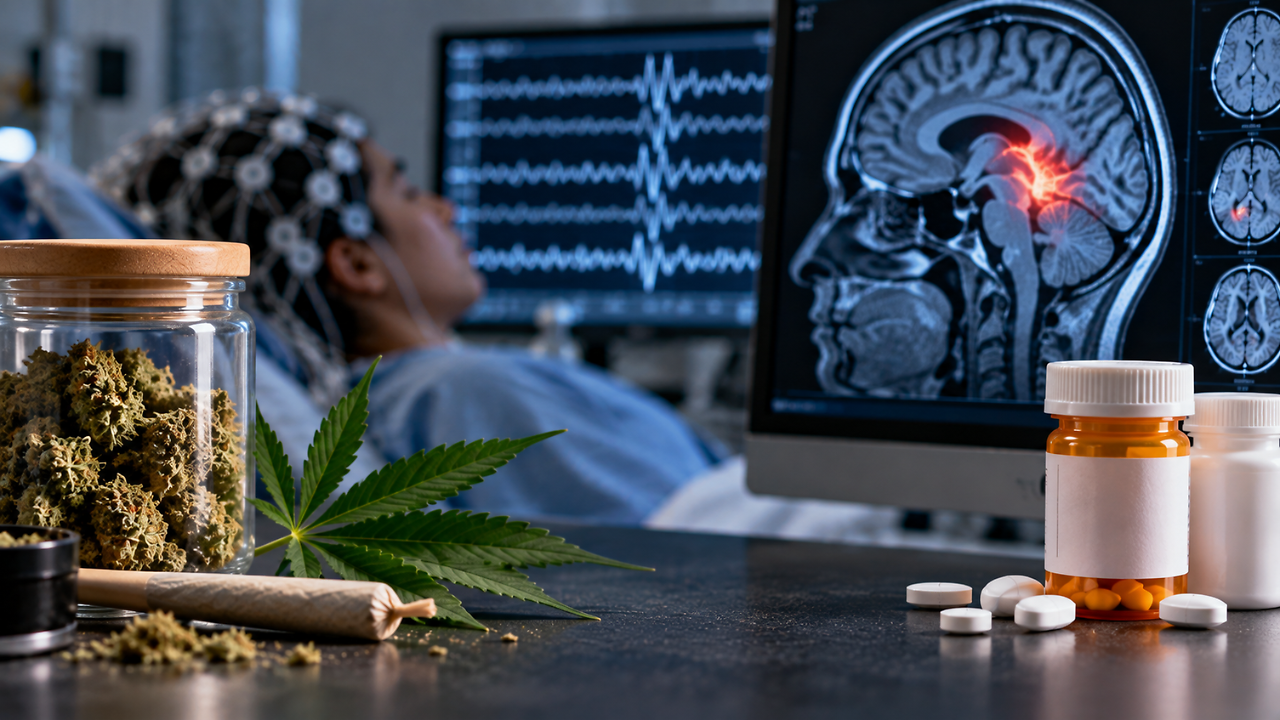
Frequent cannabis use may worsen epilepsy-related symptoms, new research. It discovered that raised that people with drug-resistant epilepsy who used cannabis often had more frequent convulsive seizures and sought advanced epilepsy care much sooner than non-users. Published in Epilepsia, the study analysed health records of 64 adults with drug-resistant epilepsy. It found that frequent cannabis users reached an intensive epilepsy monitoring stage an average of five years after their first seizure, compared to 18 years reported among non-users. The difference of 13 years is attention-worthy but it must be noted that the study shows an association, not proof that cannabis worsens epilepsy. Seizures Doubled In Cannabis Users With Epilepsy Researchers compared 22 people who used cannabis at least 20 days a month to 42 people who did not. The frequent users reported to have a heavier burden of seizure, one of the symptoms of epilepsy. They had more than twice as many convulsive seizures per year than non-users. About 91% of frequent cannabis users experienced convulsive seizures, compared to roughly half of the non-users. Seizures involve stiffening and jerking of the body and loss of consciousness. They constitute medical emergency as they are associated with sudden death in epilepsy.Also read: Does Cannabis Really Help You Sleep? Experts Say It Is Complicated What Does Drug-Resistant Epilepsy Mean? Epilepsy is considered drug-resistant when seizures continue despite appropriate treatment with two antiseizure medications. People with drug-resistant epilepsy may need to visit specialised epilepsy centres, where doctors can monitor them and recommend changes in medication, surgery, or other treatment options. In this study, frequent cannabis users reached this stage much earlier. They were also discharged from hospital after taking an average of 3.05 antiseizure medications, compared with 2.21 among non-users.Also read: Why Can’t Millennials Sleep? The Crisis Keeping An Entire Generation Up At Night Cannabis & Epilepsy This was a retrospective study based on health records of a small sample size. There may be other differences between people who used cannabis often and those who did not that could affect the severity of the seizures. However, researchers were able to establish the timing of cannabis use for 15 of the 22 users. All 15 had started using cannabis before their first seizure, making it less likely that they had simply begun using cannabis to cope with an already existing seizure disorder. The researchers say larger studies can determine whether cannabis contributes to worsening seizures. The association between cannabis and seizures is complicated as CBD (cannabidiol) is reported to have beneficial effect on severe epilepsy. To understand the seeming contradiction, we must understand the distinction between cannabis and purified cannabidiol (CBD). A purified form of CBD is an approved treatment for certain severe forms of epilepsy. CBD is different from THC, the psychoactive element responsible for the “high” associated with cannabis. Recreational cannabis products may contain high concentrations of THC. According to the researchers, animal studies suggest CBD can suppress seizures, while THC may have the opposite effect. Hence, evidence that a specific CBD-based medicine can help certain epilepsy syndromes cannot be used to conclude that recreational cannabis is an epilepsy treatment. Researchers suggest that THC acts on receptors concentrated in brain regions involved in seizures, raising the possibility that cannabis could influence how brain circuits fire. But this is a hypothesis that needs further investigation.