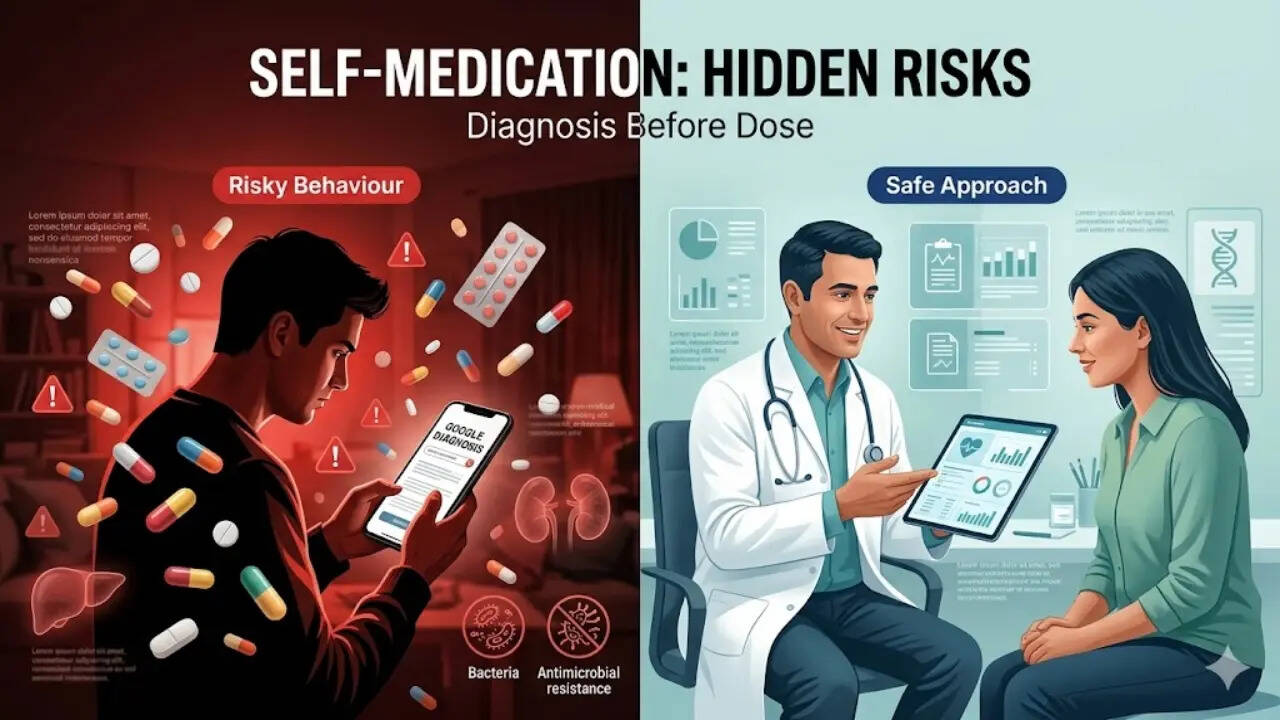
The concept of self-medication in the case of a trivial ailment such as a headache or a small cut is generally considered responsible self-care. Nevertheless, it becomes a matter of public health concern when the process goes through two particular stages. The first of these stages is the “masking of chronic disease." When one uses over-the-counter (OTC) drugs to cover up symptoms of fatigue, acidity, or thirst, he or she ends up masking the symptoms of underlying chronic diseases, which could be type 2 diabetes or high blood pressure, for instance. By the time these symptoms are diagnosed, the condition may have caused irreparable damage to organs. Another health problem created due to self-medication is antimicrobial resistance, which poses a danger not only to the individual but also to society as a whole.What are the risks of making a self-diagnosis?Dr Vimal Pahuja, MD, Associate Director, Internal Medicine & Metabolic Physician, Diabetes & Weight Management Clinic, Dr LH Hiranandani Hospital, Powai, Mumbai, said, “The most serious complications include those that have no immediate effects and do not trigger pain signals. DILI is a growing concern in India and is a consequence of the persistent abuse of painkillers (NSAIDs) or even some of the herbal supplements available in the market. In the same way, ‘kidney compromise’ results from prolonged consumption of analgesics. Looking at things from the viewpoint of the endocrine system, the frequent consumption of over-the-counter steroids, which are also included in some ‘miracle’ skin creams and supplements, can affect hormones and lead to the development of secondary diabetes.”Does it help to ‘Google’ symptoms?Internet searches usually generate confirmation bias, where patients only seek answers that align with what they want to hear. Health-related social media sites and influencers tend to oversimplify medical issues by encouraging bio-hacking. This results in unsafe practices, such as people prescribing themselves advanced metabolic and hormonal treatments without being aware of the contraindications or the need for clinical testing.Dr Kirti Sabnis, Infectious Diseases Specialist, Fortis Hospital, Mulund & Kalyan, Mumbai, said, “With the growing emphasis on early and accessible diagnosis, more individuals are becoming proactive about understanding their symptoms and lab reports. This has led to a noticeable rise in what clinicians often refer to as ‘Google diagnosis,' where patients arrive with self-researched conclusions based on online information or AI-enabled report analyses.”Why is accurate diagnosis important?The expert went on to say that interpreting symptoms and investigations is rarely straightforward. Fever, for instance, is merely a symptom and can stem from a wide range of causes, from infections to non-infectious conditions such as thyroid disorders. While digital tools and AI platforms can analyse reports and suggest possible conditions, they typically rely on common algorithm-based differentials. In some cases, this may lead to alarming or misleading possibilities such as tuberculosis or even cancer, when the underlying issue could be far less serious.Accurate diagnosis requires more than data interpretation; it demands clinical expertise, physical examination, and years of medical experience to connect symptoms, history, and test results. Over-reliance on online searches can sometimes lead to unnecessary anxiety, delayed diagnosis, or even self-medication, which may complicate the condition further.The importance of taking time to explain the reasoning behind prescribed medication is essential, especially when informing a patient that an antibiotic cannot cure their flu.