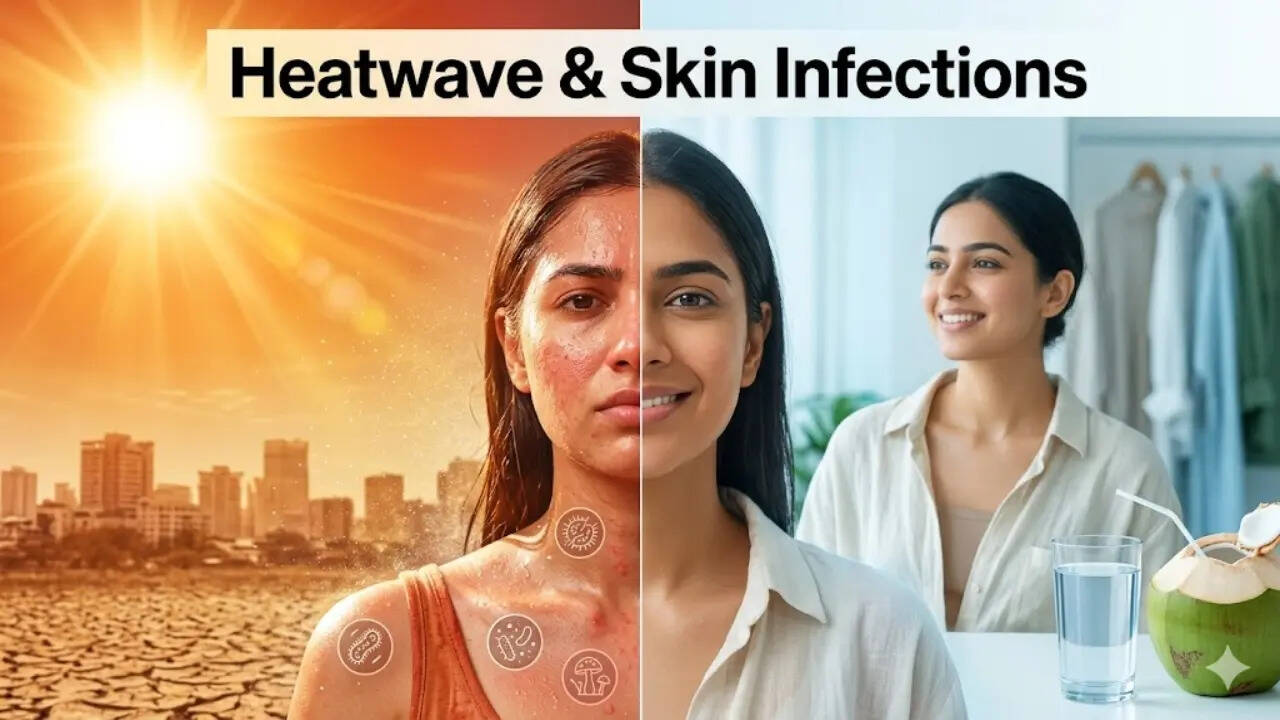
When it comes to heatwave-like conditions, most people worry about the risk of dehydration and sunburn. But it turns out that the scorching heat could also take a toll on your skin—according to experts, extreme summer heat can increase the risk of skin infections. Heatwave-related skin infections can be triggered by high humidity, sweat, and bacteria trapped on the skin. Some of the other issues associated with heatwaves are folliculitis, heat rash, impetigo, and yeast infections.What makes heatwaves conducive to increased skin infections?Talking about it, Dr. Gitika Sanodia, Consultant Dermatologist at Dr. L H Hiranandani Hospital, Powai, answered some FAQs associated with heatwaves and consequent skin infections.The expert said that when there is an increase in temperature, there is an increase in sweating, dehydration, and breakdown of the skin barrier, which creates an environment suitable for infection development, mainly in children, the elderly, diabetics, and obese individuals. Heatwaves also cause friction, which leads to skin infections. As a result, rashes can develop and cause a great deal of discomfort.Can sweating too much increase the risk of infection?During summer, because of the heat, one ends up sweating far more than normal, and if you are someone who often wears tight clothes, it can be even worse. Overproduction of sweat keeps the skin constantly wet. Such an environment provides perfect conditions for bacteria and fungi to multiply. Being trapped under breast tissue, between the thighs, and in folds around the neck and armpits causes conditions such as yeast infections or folliculitis.What are the infections associated with heat?During a heatwave, some skin infections are likely to develop silently. These include:Fungal infections such as tinea and candidiasisBacterial infections such as folliculitis and boilsHeat rash resulting in miliariaWho is at risk of skin infections during a heatwave?At a time when temperatures are rising constantly, heatwave-related infections are likely to affect certain groups more than others. These high-risk groups are:ChildrenThe elderlyOverweight peoplePeople with diabetesPeople who wear tight or non-porous clothes during summerHow to prevent heatwave-related skin infections?In order to prevent heatwave-related skin infections, you need not make major changes to your lifestyle or wardrobe. Rather, some simple, cost-free methods can also do the trick. Here are some expert-recommended tips to beat the heat:Keep your skin dry, especially skin foldsWear loose-fitting cotton clothesBathe after sweatingDo not share towels or undergarments with anyoneUse an antifungal dusting powder on susceptible areasKeep yourself hydratedWith the increasing number of heatwaves, these problems have become more than just seasonal. However, with the right choices in terms of diet, lifestyle, and clothing, you may be able to avoid skin infections during a heatwave.