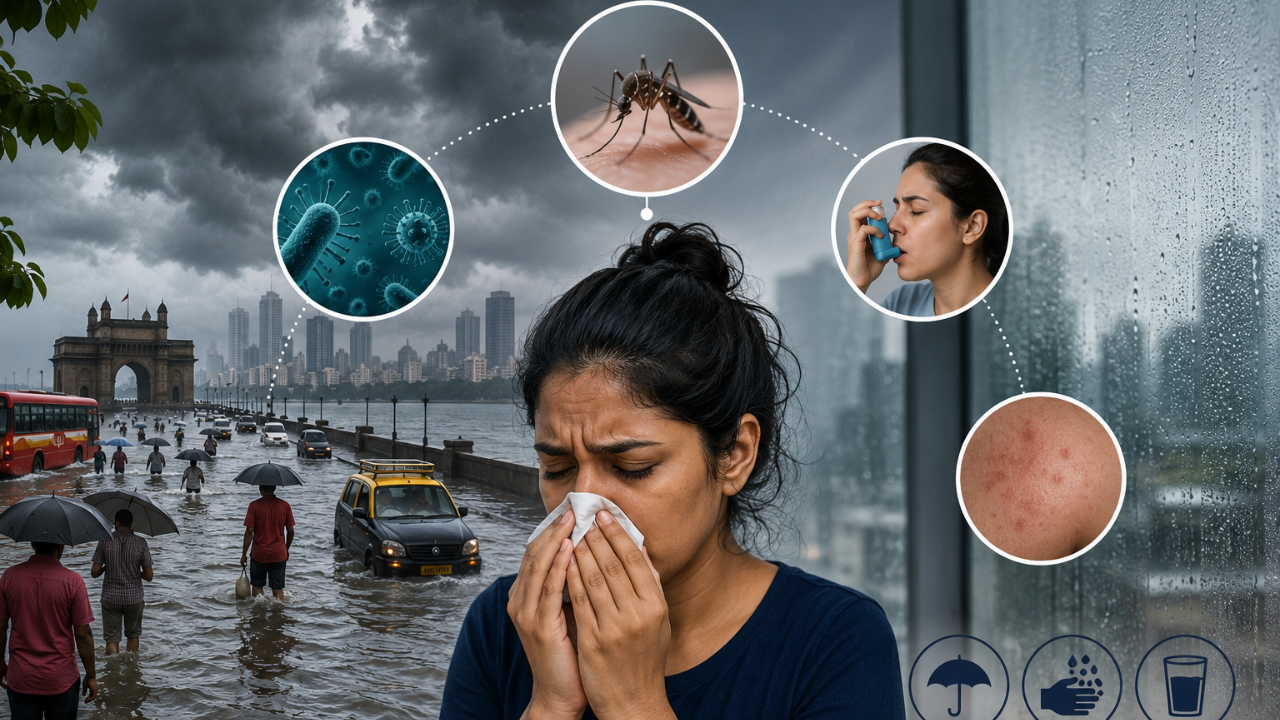
It's just July, and Mumbai’s monsoon has been swinging from tumultuous to alarmingly parched. When the climate shifts with such volatility, it’s bound to have an impact on your overall health. From dehydration risk to chances of gastrointestinal infections, here’s how rapidly changing weather can take a toll on your mental health. Impact Of Extreme Weather On HealthRespiratory Effects HealthandMe spoke to Dr. Abizer Manked, Consultant Physician and Diabetologist at Saifee Hospital, Mumbai. One of the health impacts extreme weather has is on the respiratory system. Due to the increase of irritants and allergens, several respiratory issues can be triggered. Dr Manked says, “The temperature and humidity can irritate our airways. This can trigger asthma, bronchitis, and allergies. It can also trigger coughing, giving us throat infections, and making it harder to breathe. This is especially true for people who already face breathing problems.” Allergy Triggers The expert says that allergy episodes increase significantly during the monsoon, especially when the rain is inconsistent. An increase in humidity paves the way for mould and fungi growth, which can make allergies worse. Cold And Flu-Like Symptoms When temperatures and humidity change rapidly, our immune response can take a hit. It can lead to frequent episodes of common cold, cough, and other flu-like symptoms. “When the weather changes quickly, it can also make us more likely to get infections like the common cold and flu. The weather itself does not make us sick. The sudden change can affect our body’s ability to fight off infections. When we are indoors with a lot of people during the rain, viruses spread easily,” Dr Manked explains.Also read: Delhi's Poor AQI, Monsoon Conditions Put Children's Lungs at Risk: Ways to Keep Kids Safe Heat Exhaustion And Dehydration When a heavy rain episode is followed by hot and humid weather, it can lead to increased risk of heat-related illnesses. Dr Manked says, “The humidity makes it hard for our bodies to cool down. This can make us tired, give us headaches, and leave us dehydrated more frequently. It can even lead to heat exhaustion. This especially holds true for people who work outside or spend a lot of time in the sun.” Viral And Parasite Infections In the monsoon, Mumbai sees the highest number of cases of viral and parasite infections like dengue and malaria. Flooding and waterlogging create breeding hotspots for mosquitoes, which can lead to more chances of infections. Poor hygiene and maintenance of surroundings further increase the risk. Fungal Infections Staying in damp clothes and shoes for long periods increases the risk of contracting fungal infections. The expert says it’s crucial to keep one’s clothes dry to avoid the riks of skin infections.Also read: Allergic Rhinitis Affects 1 In 10 Indian Adults. Here's Why Monsoon Makes It Worse, And What Helps How To Protect Yourself From Weather Changes? Simple precautions can go a long way in reducing health risks during an irregular monsoon: Drink clean, safe water, and avoid consuming food exposed to floodwater.Wash hands regularly with soap, especially before eating.Avoid walking through floodwater whenever possible.Wear waterproof footwear if you must step into waterlogged areas.Keep homes dry and well-ventilated to reduce mold growth.Empty containers that collect rainwater to prevent mosquito breeding.Stay hydrated even if the weather feels cooler.Change out of wet clothes promptly and dry your feet thoroughly.Seek medical attention if you develop persistent fever, severe diarrhea, breathing difficulties, or symptoms after exposure to floodwater. Children, older adults, and people with asthma, diabetes, high blood pressure, obesity, and other chronic illnesses are more likely to face these health effects during the monsoon. It is, therefore, crucial to take extra precautions and care for those with a weakened immune system.