
- Health Conditions A-Z
- Health & Wellness
- Nutrition
- Fitness
- Health News
- Ayurveda
- Videos
- Medicine A-Z
- Parenting
GLP-1 Drugs Don’t Just Curb Appetite; They Rewire the Brain, Shows Study

Credits: iStock
In a breakthrough investigation published in Nature Medicine found that GLP-1 medicines are not just weight loss drugs, but actually brain reprogramming drugs. The study highlighted how deeply GLP-1 medications influence our brain's reward circuits, cravings, and the electrical rhythm.
Case Study
The study took a 60-year-old woman who had a lifelong "food noise", and underwent deep-brain stimulation that targeted the nucleus accumbens, which is brain's craving centre. The woman was also to start tirzepatide, an antidiabetic medication used to treat type 2 diabetes and for weight loss, which is an active ingredient in Mounjaro. As she reached her full dose, her compulsive food thoughts went silent, however, five to seven months later, the neutral signal returned before her cravings did, while she was still on the medication.
How Was The Study Conducted?
Scientists from the University of Pennsylvania, monitored brain activity directly from the nucleus accumbens in people using tirzepatide.
The research followed three patients with severe food preoccupation and uncontrolled eating. Two underwent deep-brain stimulation, while the third received tirzepatide and also had electrodes implanted around the same time. When cravings or intense food thoughts occurred, researchers observed strong delta-theta waves in the nucleus accumbens. These slow brain signals are linked to reward, motivation, and compulsive eating.
Once the patient on Mounjaro reached the full therapeutic dose, the changes were dramatic: for nearly four months, they reported almost no episodes of “severe food preoccupation.” Their delta-theta activity also fell to very low levels, even during moments when cravings typically occurred. However, while initially there was a suppression in the brain activity that triggered cravings, the cravings returned over time.
Why Does This Matter?
This is the first time scientists have been able to directly record craving-related brain activity in real time and compare it before and after using a medication like Mounjaro. Although the study involved only three people, the findings help explain why medications in this class appear to influence more than just appetite. They may also reshape how the brain processes reward and desire around food.
The researchers say larger studies are needed, but early signs point to a clearer understanding of how obesity drugs change both behavior and brain biology.
What To Keep In Mind?
Dr Simon Cork, senior lecturer in Physiology, Angila Ruskin University said that there must be some caution that should be applied while looking at the findings of the study.
Dr Cork says, "This study specifically looked at a marker of brain activity associated with periods of “binge eating” in patients with obesity associated with food preoccupation. This is important because this is a specific (and rare) condition associated with obesity. They found that in three patients, periods of intense preoccupation with food was associated with a characteristic change in brain activity in a region of the brain associated with reward...While this study is methodologically very interesting, it has to be clear that this is only one patient with a very specific condition that is associated with obesity and so shouldn’t necessarily be generalised to the entire population.”
Woman Lost Weight On Mounjaro But Her Breasts Didn't Stop Growing, This Is Why...

Credits: SWNS (Tianna Moon)
Mounjaro, a popular weight loss drug that helped many lose weight, however, in this one case, a woman, who was on the same drug noticed something different. While she lost weight, she noticed that her breasts continued to grow. The 30-year-old Tianna Moon of East Anglia, a region in eastern England first realized something was not normal with her chest in 2024. This was when she started to use Mounjaro.
She was losing weight, but her breasts continued to grow. This is when Moon's doctor diagnosed her with a rare disease call gigantomastia, which causes breast tissue to grow rapidly and in excess.
Also Read: 15 States Sue Trump Administration Over Revised Vaccine Schedule
Woman Lost Weight On Mounjaro But Her Breasts Didn't Stop Growing: What Happened To Her?
Moon said that the doctors had thought that she had macromastia, a less severe, however, a similar condition. "But when I broke down medical history, the weight loss on Mounjaro and the increased growth and side effects, he was point-blank like, 'This is gigantomastia'," she said.
Moon also told that her breasts currently weight 39 lbs, which is approximately 20 per cent of her overall body weight.
Moon also said that while her large breasts are "normal" at this point in her life, she said the rare condition still comes with challenges.
"The side effects are having numb arms quite a lot and having quite severe indentations on my shoulders. I have some light scarring under my breasts where bras have rubbed and ripped the skin open."
She also said that laying on her back is something she cannot do for a long time, as it restricts the amount of airflow she can get in. She also said that when she goes out she tries to make her breasts look smaller than they are and strap them up. "I [still] get stares and double takes."
Also Read: Wegovy And Ozempic Will Cost Less In 2027, Novo Nordisk Slashes Weight Loss Drugs Prices By Half
Woman Lost Weight On Mounjaro But Her Breasts Didn't Stop Growing: What Is Gigantomastia?
As per Cleveland Clinic, it is a rare condition where your breasts become excessively large. It can also cause pain, infection, discomfort and issues with body image. It is also known as breast hypertrophy where one experiences rapid and disproportionate breast growth. The speed with which the breasts grow could vary depending on the person. It could take a few weeks to over several years. The tissue is almost never benign.
Gigantomastia is characterized by:
- Breasts that have an excess of at least 5 pounds of breast tissue.
- Extra breast tissue that equals more than 3% of your total body weight.
There are different types of gigastomastia:
- Juvenile gigantomastia: This type happens during puberty.
- Gestational gigantomastia: This is when gigantomastia occurs during pregnancy.
- Drug-induced gigantomastia (or medication-induced): This happens after taking certain drugs.
- Idiopathic gigantomastia: This is when the cause of gigantomastia is unknown or can't be determined. Idiopathic gigantomastia is the most common type.
Moon is now considering a breast reduction surgery. She has for now set up an account on OnlyFans. “I might as well try and reap the benefits of my medical condition rather than the negatives," she said.
Indigenous Td Vaccine Rollout In India To Boost Immunity In Children, Adults, Say Experts
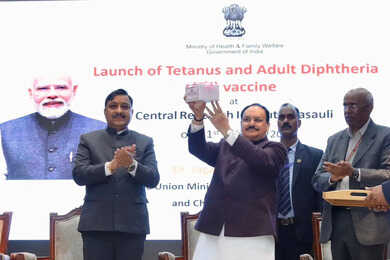
Credit: X
The recent launch of the indigenous Td vaccine in India by Union Health Minister JP Nadda will boost immunity and reduce the risk of tetanus and diphtheria in children and adults, said health experts.
Union Health Minister JP Nadda formally launched the indigenously manufactured Td vaccine in Himachal Pradesh last week.
With the launch, the Tetanus Toxoid (TT) vaccine has been replaced with the Tetanus and adult diphtheria (Td) vaccine in India’s immunization program for all age groups, including pregnant women.
The move comes amid increasing numbers of cases of diphtheria amongst older age groups. Tetanus and diphtheria can lead to hospitalizations or even cause death. The Td vaccine will help to decrease diphtheria outbreaks.
“In keeping with global practice, India has shifted from TT, which covers for tetanus, to Td, which covers for both tetanus and diphtheria. This vaccine is indigenously manufactured and is expected to significantly reduce the risk of both these diseases in older children as well as adults,” Dr. Rajeev Jayadevan, Ex-President of IMA Cochin and Convener of the Research Cell, Kerala, told HealthandMe.
What Is The Td Vaccine?
The Td vaccine, indigenously manufactured at the Central Research Institute (CRI), Kasauli in Himachal Pradesh, is a combination of tetanus and diphtheria with a lower concentration of diphtheria antigen (d), and is recommended for older children and adults.
The use of Td, instead of TT, is recommended during pregnancy to protect against maternal and neonatal tetanus and diphtheria during prenatal care.
Vaccination during pregnancy also serves to boost immunity and increase the duration of protection in pregnant women who have not received the full set of recommended booster doses.
The Td is a safe vaccine, and 133 countries are currently using it.
The Health Ministry, in a statement, said that the Central Research Institute will supply 55 lakh doses to the UIP by April 2026, with production expected to scale up progressively in subsequent years to further strengthen the Universal Immunization Program in India.
“India’s indigenous Td vaccine rollout marks a significant milestone in strengthening the nation’s immunization program by enhancing self-reliance, affordability, and supply stability,” Dr. Neha Rastogi, Senior Consultant - Infectious Diseases, Fortis Gurugram, told HealthandMe.
“Locally produced vaccines reduce dependency on imports, ensuring uninterrupted protection for adolescents and adults against tetanus and diphtheria. This initiative supports wider coverage, faster distribution to remote regions, and improved public health preparedness,” she added.
Tetanus And Diphtheria: Disease burden In India
As per the National Health Profile 2022, India has reported 1,586 cases and 22 deaths due to diphtheria in 2020, and 3,677 cases and 47 deaths in 2021.
Around 10 Indian states report the majority (84 per cent) of the cases.
As of 21 June 2024, Orissa has also reported six deaths and 21 suspected diphtheria cases. There has been more than 90 percent coverage of diphtheria vaccination in birth cohorts since 2014, but gaps in booster dose coverage are widely prevalent.
Plugging of gaps in the routine immunization, coupled with inclusion of booster doses in the national data on diphtheria vaccination, is the need of the hour.
“Diphtheria is one of the most dangerous infectious diseases known to man; it spreads easily through the respiratory route. It can cause death due to the bacterial toxin affecting the heart (Myocarditis). It is vaccine-preventable, but the immunity fades over time,” Dr. Jayadevan said.
Therefore, the Td booster shots at ages 10 and 16 are essential to maintain protection. Similarly, pregnant women should receive two doses to protect both mother and child.
Given the recent outbreaks of diphtheria in India and elsewhere, this transition is a public health priority, the expert said.
When Every Second Counts: Mastering Cardiovascular Emergencies

Credit: Canva
Cardiovascular emergencies remain among the most time-critical and life-threatening events in modern medicine. From sudden cardiac arrest to acute coronary syndromes and hypertensive crises, these conditions demand not only clinical excellence but also seamless systems of care. In an era where cardiovascular disease continues to dominate global mortality charts, preparedness is imperative.
Understanding Cardiovascular Emergencies
Cardiovascular emergencies encompass a spectrum of acute conditions that compromise cardiac output, coronary perfusion, or vascular integrity. These include myocardial infarction, cardiac arrhythmias, acute heart failure, aortic dissection, pulmonary embolism and cardiogenic shock. What unites them is speed: the window between reversible injury and irreversible damage is often measured in minutes.
Timely recognition of symptoms like chest pain, breathlessness, syncope, palpitations or sudden neurological deficits can dramatically alter outcomes. Delays, even minor ones, translate into myocardial loss, cerebral injury or death.
Acute Coronary Syndromes
Acute coronary syndromes (ACS) remain the cornerstone of cardiovascular emergencies. Plaque rupture and thrombosis can abruptly occlude coronary arteries, leading to unstable angina or myocardial infarction. Early electrocardiographic evaluation and cardiac biomarker guide diagnosis, but decisive action is paramount.
Rapid reperfusion, whether via thrombolysis or primary percutaneous coronary intervention, restores blood flow and salvages myocardium. Modern emergency cardiac care prioritises well-rehearsed protocols, ensuring that “door-to-balloon” times are aggressively minimised. In cardiovascular emergencies, hesitation is the enemy of survival.
When the Heart Loses Its Rhythm: Arrhythmias and Cardiac Arrest
Sudden cardiac arrest, often precipitated by malignant arrhythmias such as ventricular fibrillation or ventricular tachycardia, is the most dramatic cardiovascular emergency. Survival hinges on immediate cardiopulmonary resuscitation (CPR) and early defibrillation.
Equally dangerous are unstable bradyarrhythmias and supraventricular tachycardias, which can compromise haemodynamics within moments. Advanced cardiac life support protocols, continuous monitoring, and access to defibrillation and pacing are non-negotiable components of any emergency-ready healthcare facility.
Hypertensive and Aortic Emergencies
Hypertensive emergencies occur when severely elevated blood pressure causes acute target-organ damage, affecting the brain, heart, kidneys, or eyes. Stroke, acute left ventricular failure, and myocardial ischaemia are common and devastating consequences.
Aortic dissection, though less common, is among the deadliest cardiovascular catastrophes. Sudden tearing chest or back pain, pulse deficits, and blood pressure differentials demand immediate imaging and surgical consultation. Here, precision in diagnosis and blood pressure control can mean the difference between life and sudden death.
The System Behind The Save: Integrated Emergency Cardiac Care
Effective management of cardiovascular emergencies extends beyond individual expertise. It relies on an integrated ecosystem, trained emergency teams, rapid diagnostics, catheterisation laboratories, cardiac intensive care units, and post-event rehabilitation.
Hospitals that invest in protocol-driven care pathways, continuous staff training, and advanced cardiac technology consistently achieve superior outcomes. Equally vital is public awareness: early symptom recognition and prompt presentation to medical facilities significantly reduce mortality.
Preparedness Is The New Prevention
While prevention remains the long-term strategy against cardiovascular disease, preparedness defines survival during emergencies. From ambulance services equipped with defibrillators to hospitals offering round-the-clock cardiac intervention, readiness saves lives.
Cardiovascular emergencies do not announce themselves politely. They arrive uninvited, escalate rapidly, and punish complacency. In these moments, excellence is measured not in intent but in response.
- Follow Us :


© 2024 Bennett, Coleman & Company Limited