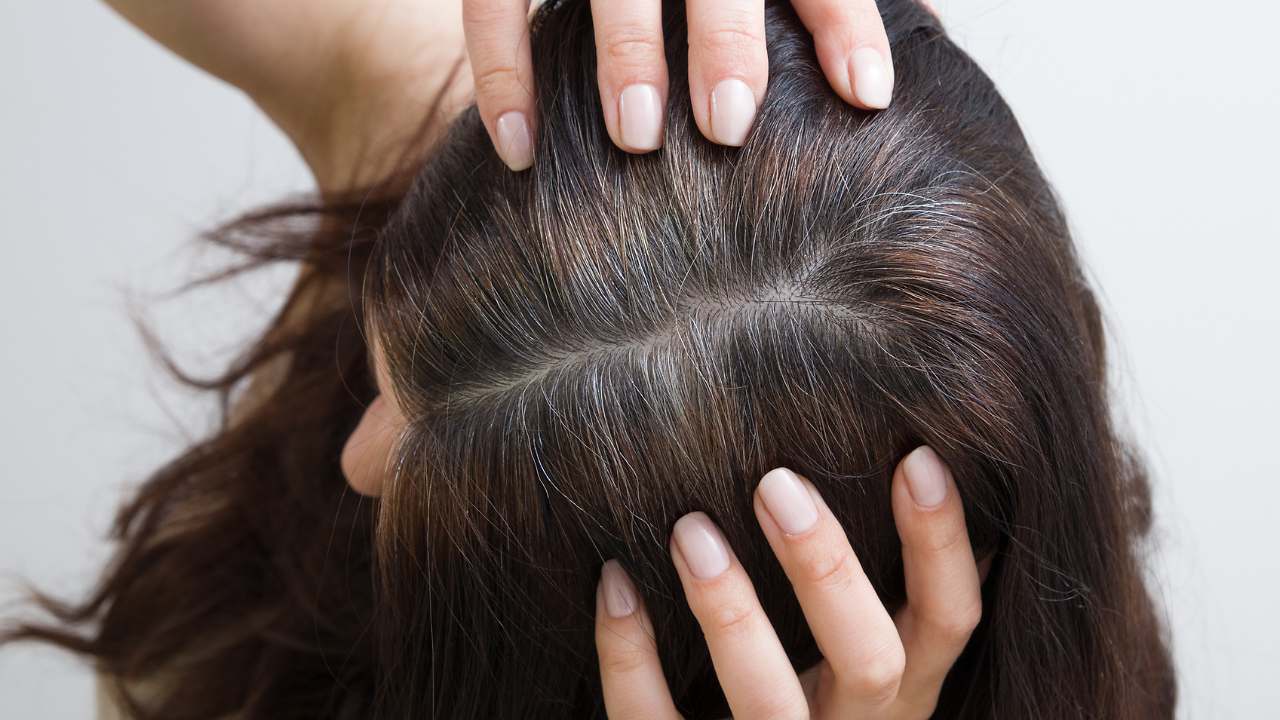
Worried about your graying hair? It may reflect a natural cellular response to DNA damage, according to a study by Japanese researchers.Hair color comes from melanocyte stem cells (McSCs), which live inside hair follicles and produce melanin, the pigment responsible for hair and skin color. These cells are especially sensitive to DNA damage from environmental and internal factors.While DNA damage is linked to both aging and cancer, researchers at the University of Tokyo found that McSCs can take different paths after being damaged — including one that leads to hair graying and another associated with melanoma, a type of skin cancer.How Does Gray Hair Act As A Defense?When McSCs suffer certain types of DNA damage, they can undergo a process called senescence-coupled differentiation, or seno-differentiation. The damaged stem cells permanently differentiate and are eventually lost, leading to hair graying.This response is driven by the p53–p21 pathway and may help eliminate damaged cells before they can become cancerous.Also read: Unusually High Cancer-Fighting Immune Cells Could Explain Why Some People Live Beyond 100: StudyWhat Did The Study Find?Published in Nature Cell Biology, the study examined how McSCs respond to different types of DNA damage.Professor Emi Nishimura and Assistant Professor Yasuaki Mohri used long-term in vivo lineage tracing and gene-expression profiling in mice to study the fate of these stem cells.The researchers found that DNA double-strand breaks triggered seno-differentiation. In this process, damaged McSCs irreversibly differentiate and are lost, resulting in hair graying.However, the response was different when the cells were exposed to certain carcinogens, including 7,12-dimethylbenz(a)anthracene, or ultraviolet B. In these situations, McSCs could bypass the protective differentiation process, retain their ability to self-renew and expand clonally.This process was supported by KIT ligand signals from the surrounding tissue and epidermis, which suppressed seno-differentiation and pushed the cells toward a tumor-prone state.“These findings reveal that the same stem cell population can follow antagonistic fates—exhaustion or expansion—depending on the type of stress and microenvironmental signals,” Nishimura said.“It reframes hair graying and melanoma not as unrelated events, but as divergent outcomes of stem cell stress responses,” she added.Does Gray Hair Prevent Cancer?Read More: Ferritin Face: Can Pale Skin Signal Iron Deficiency?Not necessarily. The study does not show that people with gray hair have a lower risk of cancer.Instead, the findings suggest that hair graying can be the result of a protective cellular response in which damaged stem cells are eliminated. When that response is bypassed, damaged McSCs may persist and contribute to melanoma development.The researchers say the findings offer a framework for understanding how the same stem-cell population can contribute to either tissue aging or cancer depending on the type of damage and signals from the surrounding environment.Can You Prevent Premature Graying?Genetics plays a major role in when hair turns gray. There are also some lifestyle changes that can prevent graying, support hair and overall health. These include:Managing stressEating a nutrient-rich dietProtecting your hair and scalp from excessive UV exposureAvoiding excessive heat and harsh chemical treatmentsAvoiding smoking.