
- Health Conditions A-Z
- Health & Wellness
- Nutrition
- Fitness
- Health News
- Ayurveda
- Videos
- Medicine A-Z
- Parenting
'Grunting' Won't Help You Poop, But This 'Interesting' Position Is Meant To Make It Easier

Credits: Canva
We know it’s a bit personal — but if you're sitting on the toilet right now, reading this, it’s time to rethink your bathroom strategy. Surprisingly, grunting your way through a bowel movement may be doing you more harm than good. Medical experts are now warning that the all-too-common habit of straining with sounds may actually make it harder for you to "go."
But if grunting doesn’t work, what does? Recent research is shining a light on an “interesting” — and more effective — position that could finally make bathroom time easier and healthier. Here’s everything you need to know.
While it might feel natural to push and grunt when you're struggling, studies show it’s not actually helping. In fact, releasing air and sound while straining reduces internal pressure, which is crucial for moving stool along.
When you grunt, you’re essentially letting out the very force that should be helping you pass stool. It's like trying to blow up a balloon with a leaky hole — the energy escapes instead of building pressure where it's needed most. This subtle loss of abdominal pressure means the effort you're making is, ironically, working against you.
A UK report even found that about a third of people are habitual loo-grunters. While it’s not going to cause immediate damage, it certainly won’t make things any easier.
How Your Pooping Position Changes Everything?
The conversation around healthy pooping habits took off globally with the introduction of devices like the Squatty Potty — a footstool designed to help you squat rather than sit during bowel movements. The buzz wasn’t just marketing hype; there’s real science behind it.
Humans, after all, were not designed to defecate while sitting. Evolutionary biology suggests that squatting is the body's natural position for elimination. When we sit, the puborectalis muscle — which wraps around the rectum like a sling — stays partially tense, creating a bend (like a kink in a garden hose) between the rectum and anus to prevent unwanted accidents. Squatting relaxes this muscle fully, straightening out the digestive tract and allowing for smoother, more complete bowel movements.
In other words, sitting keeps your "hose" bent; squatting straightens it out and lets everything flow.
A study published in Digestive Diseases and Sciences by researcher Dov Sikirov measured the time and effort needed for bowel movements in different positions. The findings were clear:
- Subjects who squatted completed their business in about one-third the time compared to those who sat.
- Squatters reported a much easier, more satisfying experience with significantly less effort.
- X-rays also show that the rectum straightens more when squatting, and pressure inside the abdomen is lower — meaning you're straining less and emptying more fully.
The benefits aren’t just about convenience either. Straining during bowel movements is a known contributor to constipation, hemorrhoids, and even pelvic floor issues. Cultures where squatting toilets are the norm, such as in parts of Asia and Africa, report lower rates of these problems, although diet may also play a role.
What Is Squatty Potty?
The Squatty Potty and similar products are simple footstools designed to elevate your knees above your hips while you're seated. This change mimics a squat position, relaxing the puborectalis muscle and straightening out the colon.
While you could technically squat without buying anything — simply by bending deeply at the knees and hips — the stool makes the position much easier to achieve, especially for older adults or those with mobility issues.
And yes, evidence shows it works. People using posture-changing devices report less straining, faster bathroom visits, and a greater sense of “full evacuation.” If you’ve ever left the toilet feeling like you weren’t quite done, a squat stool might be your solution.
Sit vs. Squat: Why the Right Position Matters for Your Health
Western toilets prioritize comfort and decorum over functional anatomy. But if you find yourself frequently constipated, straining, or dealing with hemorrhoids, your toilet posture might be part of the problem.
Squatting isn't just about easier elimination — it’s about long-term digestive health. By relieving pressure during bowel movements, you can potentially lower your risk for common and painful conditions like:
- Constipation
- Hemorrhoids
- Anal fissures
- Pelvic floor dysfunction
When waste moves out of the body more easily, it also means less trapped stool, less bloating, and potentially better gut health overall.
4 Reasons You Should Squat, Not Grunt
If you're still not convinced, here’s why adopting a squatting posture could change your bathroom experience for good:
Reduces Straining: Prevents excessive pushing and lowers the risk of hemorrhoids.
Unkinks Your Colon: Straightens the rectal canal for a smoother passage.
Increases Full Evacuation: Helps you feel more empty after using the bathroom.
Relaxes Your Body Naturally: Aligns with the body's natural anatomy for easier elimination.
Next time nature calls, skip the grunt-fest and rethink your position. Whether you invest in a Squatty Potty or simply use a low footstool to prop up your legs, small changes can lead to big relief.
Modern toilets may have revolutionized hygiene, but when it comes to the natural way to poop, a little squatting can go a long way toward improving your gut health and making every bathroom trip a whole lot easier.
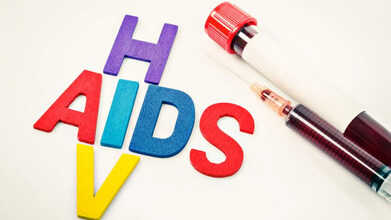
World AIDS Day 2025: Experts Explain Which HIV “Facts” Are Actually Myths
Credits: Canva
World AIDS Day is marked across the globe every year on 1 December to draw attention to HIV and AIDS. In India, the day is observed through awareness drives and community-level programmes held nationwide. The National AIDS Control Organization (NACO), which functions under the Ministry of Health and Family Welfare, leads these efforts and brings people together to support the ongoing battle against the illness.
This year, the government reported a strong decline in HIV cases, noting 49 per cent fewer new infections since 2010, an 81 per cent fall in deaths linked to AIDS, and a 75 per cent drop in mother-to-child transmission between 2010 and 2024.
The update, shared on Sunday for World AIDS Day 2025, also underlines how myths continue to harm people living with HIV. Misconceptions remain widespread, including the belief that the virus spreads through simple physical contact.
What is HIV/AIDS?
The Human Immunodeficiency Virus (HIV) harms the body by attacking helper T-cells, which are vital for immunity. Acquired Immunodeficiency Syndrome (AIDS) develops when these cells fall to very low levels, leaving the body exposed to infections and diseases, as described by the Mayo Clinic.
Common HIV Myths That You Should Know About
There are many myths surrounding HIV/AIDS that people continue to believe, though experts have clarified the truth behind them:- It is a myth that HIV spreads through coughing, touching or shaking hands. Routine contact or a cough does not transmit the virus. Transmission can occur only when the skin has open sores or breaks that allow the virus to enter.
- It is a myth that a person diagnosed with HIV will survive only a short time. With proper treatment that keeps the virus suppressed, people with HIV can live for many years.
- It is a myth that every child born to an HIV-positive mother will also have HIV. With antiretroviral therapy, a planned C-section and other precautions, the chance of passing the virus to the baby can be reduced to below 2 per cent.
- It is a myth that HIV, being a viral infection, cannot be linked to the use of antibacterial or antifungal medicines. Since HIV weakens immunity, those living with it may be prone to common bacterial and fungal infections and may need such medicines for long periods.
- It is a myth that there is no risk when two or more HIV-positive partners are intimate. Unprotected sex can still allow tougher or drug-resistant strains of the virus to evolve and spread.
- It is a myth that people who do not show symptoms cannot have HIV. It can take years for signs to appear, and the only way to confirm the infection is through testing.
- It is a myth that taking medicines before intercourse can fully prevent HIV. Pre-exposure prophylaxis lowers the risk but does not remove it entirely.
World AIDS Day, observed each year on December 1, is a time to pause, acknowledge and renew our commitment. It pays respect to those who lost their lives to AIDS-related illnesses, offers support to people living with HIV and reminds the world that prevention, treatment and rights-based care remain essential. The theme for 2025, “Overcoming disruption, transforming the AIDS response”, urges countries to build stronger systems, widen access to services and uphold the dignity of all communities affected by HIV.
Who Was Ludwig Minelli, Founder of the Swiss Right-to-Die Organization, Who Died by Assisted Suicide at 92?

Credits: AP
Ludwig Minelli, 92, died on Saturday just days before his 93rd birthday, which would have been on December 5. He was the founder of Swiss right-to-die organization Dignitas. He has died by assisted suicide.
The members of organization paid tribute to him and said that he had always led a "life for freedom of choice, self-determination, and human rights".
Right-To-Die By Minelli
Minelli founded Dignitas in 1998, which has helped many people to choose how they wish to die with dignity. He however began his career as a journalist and worked as a correspondent for the German news magazine Der Spiegel. He then studied law and that is when his interest in human rights took off.
Throughout his life, he campaigned for the right to die and gave Dignitas the slogan: "dignity in life, dignity in death".
"I am persuaded that we have to struggle in order to implement the last human right in our societies. And the last human right is the right to make a decision on one's own end, and the possibility to have this end without risk and without pain," he said in a 2010 BBC interview.
He founded Dignitas after he split from an older Swiss assisted dying organization, Exit, because he said the rules felt too restrictive.
The reason for Dignitas to become famous was because the way it operated. Dignitas offered assisted suicide to non-Swiss citizens who travel to Switzerland because assisted dying is not permitted in their own countries. In a 2008 interview to Der Tagesspiegel, he said that Dignitas assisted 840 people to die, and 60% of them were Germans.
His Life Amid Criticism And Legal Battles
While he devoted his life for a cause, he was not spared from criticism. He was often criticized for an alleged lack of transparency over the financial dealings of the organization. He was further criticized for offering assisted dying options to those who were not terminally ill, but wanted to end their lives. He also faced numerous legal battles, and many of which were also appealed to Swiss apex court.
The Wins He Made
As per Dignitas, his work had a lasting influence. In 2011, the European Court of Human Rights announced the right of a person capable of judgment to decide on the manner and the time of their own end of life.
While in his own country, assisted dying was permitted under Swiss law since 1942, under strict condition, of course, Euthanasia still remains illegal there.
The main difference is that in Switzerland, a physician cannot administer a lethal injection, which is what euthanasia is. However, a physician can provide the means for a person to end their own life, and the individual must perform the final act themselves.
The legality of assisted suicide is based on Article 115 of the Swiss Criminal Code from 1942, which prohibits assistance only if motivated by selfish reason. The conditions for assisted suicide includes that the assistance must not be for selfish motives and must be provided to someone of sound mind who has made a self-determined and enduring decision to die. The person must also be suffering from an unbearable and uncontrollable condition.
Your Butt Shape Could Be a Clue to Your Diabetes Type; Here’s How
Credits: Canva
The shape of your gluteus maximus, the largest muscle in your backside, may offer surprising clues about your likelihood of developing diabetes. New research suggests that the contours of this major muscle change with age and health conditions, helping scientists better understand how fitness, muscle health, and metabolism are connected.
Ageing, Weight, and Diabetes: What We Already Know
For years, the NHS has warned that ageing and excess weight increase the risk of developing Type 2 diabetes. However, this new study goes beyond traditional measures, proposing that the shape of the gluteus maximus itself shifts as people age or develop conditions such as osteoporosis or diabetes. These subtle muscular changes could provide valuable information about a person’s metabolic health.
Why the Gluteus Maximus Matters
Researchers from the University of Westminster highlighted that the gluteus maximus plays a key role not just in movement but also in metabolic regulation. Healthy, well-maintained muscles can improve blood sugar control and reduce the burden on organs involved in glucose processing.
Dr Marjola Thanaj, co-author of the study from the university’s Research Centre for Optimal Health, explained, as reported by Independent: “People with higher fitness, as measured by vigorous physical activity and hand grip strength, had a greater gluteus maximus shape, while ageing, frailty and long sitting times were linked to muscle thinning.”
Mapping the Muscle
To understand these differences, researchers used advanced MRI 3D mapping to create a detailed anatomical model of the gluteus maximus. By analyzing more than 61,000 MRI scans from the UK Biobank database, they discovered that the shape, not the size, of the muscle varied significantly between individuals with diabetes and those without it.
What the Study Found
The MRI analysis revealed distinct, sex-specific patterns linked to Type 2 diabetes. Among male participants living with the disease, those classified as “frail” showed widespread muscle shrinkage across the gluteus maximus, indicating a loss of muscle quality and strength.
Women with diabetes, on the other hand, had enlarged muscle shapes — not because of increased muscle strength, but because of fat infiltrating the muscle tissue. This type of fat infiltration often signals declining muscle function and poorer metabolic health.
Dr Thanaj said these patterns underline a crucial point: men and women can experience the same illness in very different biological ways, which may influence diagnosis and treatment strategies in the future.
Why Maintaining Muscle Mass Matters
Beyond appearance or strength, muscle health is essential for long-term wellbeing. Maintaining muscle mass supports blood sugar regulation, reduces the risk of cardiovascular disease, and lowers the likelihood of developing fatty liver disease, all conditions closely linked to metabolic health.
Professor Louise Thomas, senior author of the study, told The Times: “Maintaining muscle mass as we age is one of the most important things we can do for our long-term health. If people understand how important their muscles are, and make small changes to keep them healthy, that could have a huge impact on disease across the population.”
Small Steps to Strengthen Your Glutes
Improving glute muscle health doesn’t require intense gym sessions. Simple actions such as taking the stairs instead of the lift, adding squats or lunges to your routine, or breaking up long periods of sitting can help tone and strengthen the gluteus maximus.
- Follow Us :


© 2024 Bennett, Coleman & Company Limited