
- Health Conditions A-Z
- Health & Wellness
- Nutrition
- Fitness
- Health News
- Ayurveda
- Videos
- Medicine A-Z
- Parenting
Harvard Physician Sue Goldie Finally Reveals After 4 Years About Her Parkinson's Disease
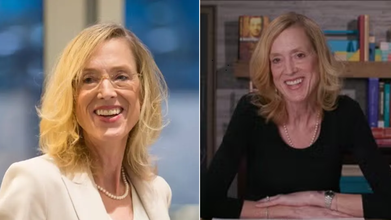
Credits: Harvard TH Chan
"I wouldn't use the word hide," said Dr Sue Goldie to NPR, she is a professor at the Harvard TH Chan School of Public Health, who has finally told the world after four years about her Parkinson's.
She learned about her diagnosis in 2021. She told NPR, "I think I was really trying to give myself room and time to fall apart, to panic, to think about what it meant for me.” For Goldie, silence wasn’t secrecy, it was self-preservation.
She revealed she needed space to understand to first accept that it is happening with her, and secondly to understand how to live with a condition that would alter her movements, her voice, and even her sensing. So she calls the 4-year-gap of not telling anyone as a "process of figuring out how I could be OK."
Parkinson's Disease: How Does It Start?
We often read about Parkinson's disease, what is it, and what it does to someone. However, what we do not talk a lot about is how it starts. We don't talk about the subtle signals one's body sends.
Goldie says it started with a tremor. It was so slight, that it was almost invisible. Then, a running coach mentioned her off cadence. The New York Times (NYT) reports that a trainer noticed her left arm did not lift properly in the pool. Eventually, afterwards, her fingers began twitching. Goldie, then was 50.
She was also at the height of her academic career and was newly obsessed with triathlons. She was in fact, training for Ironman races, reported NYT.
When tests confirmed Parkinson’s, a degenerative neurological disease that affects movement and coordination, her first reaction was disbelief. Then fear. Would her students notice? Would colleagues see her differently?
The diagnosis left her confronting an identity crisis. At what point, she wondered, does a disease become who you are?
Sue With Parkinson's, Who Lived Two Lives
Goldie began to divide her world. At Harvard, she was the confident professor and global health leader, still producing intricate teaching materials and mentoring students. In triathlons, she was freer, surrounded by people who saw her as an athlete, not a patient.
But the effort to maintain that balance came at a cost. As reported by NYT, early mornings were the hardest: walking unsteadily to the bathroom before medication took effect, hiding tremors from colleagues, managing the dopamine pills that controlled her symptoms. “You have no idea how hard it is to trick you into thinking I’m OK,” she later said.
Eventually, she could no longer keep it private. “Starting today, I am Sue with Parkinson’s,” she decided. Most of the people in her professional life would learn about it through her story.
The Camera For Healing
When Goldie's hand tremors made writing impossible, she began to record thousands of video diaries. They were often short, unfiltered glimpses of her daily struggle, which were filmed in her office, car, or home. Sometimes, calm, sometimes in tears.
Her videos began with a "Hello Sue", talking to her future self. In one video as posted by the NYT from 2023, she confessed, “I’m trying hard to do all this stuff that will help, but I’m not feeling OK... I just need to not be alone with it.”
Goldie refused to stop training. Her research had shown that exercise helps manage Parkinson’s symptoms. So, she doubled down, calling herself “an N of 1” — a one-person experiment. She adapted creatively: pink tape on her hands to guide her swim strokes, modified gear on her bike so she wouldn’t lose balance.
In 2022, she completed the Lake Placid Ironman, a 140.6-mile challenge. She crossed the finish line after collapsing, crying, and reapplying lipstick. Her small team called her S.F.G., with the middle initial standing for an unprintable word that captured her spirit.
As her symptoms progressed, Goldie’s fears shifted from physical decline to the erosion of identity. Parkinson’s, she realized, isn’t just about tremors; it’s about dignity, perception, and the quiet grief of being misunderstood.
She worried about whispers at Harvard, about whether others would still see her as capable. When she finally told university leaders, she felt both vulnerable and relieved.
Still, her mission remained unchanged. “I can’t change this,” she told The New York Times in 2024. “So what happens when I get worse?”
She continued teaching, designing, and mentoring. Her hands might tremble, but her mind stayed sharp. “I want to get things done while I’m still the best me,” she said.
Shared Lipsticks, Makeup Items May Spread Herpes: Here’s How To Stay Safe
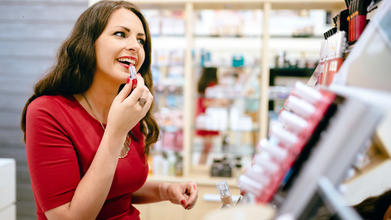
Credit: iStock
In a shocking incident, a woman contracted the herpes virus after using shared lipstick samples at a cosmetic store, raising concerns about makeup hygiene.
The incident highlights the risks involved in trying products that come into direct contact with the skin and are shared with a lot of people.
Also Read: World Autism Awareness Day 2026: Can Cell Therapy Be The Future Of Autism Treatment?
What Is Herpes?
The herpes simplex virus (HSV) is very common, and the infection is lifelong. But the symptoms can come and go over different periods of life. Many people never get any symptoms linked to their infection.
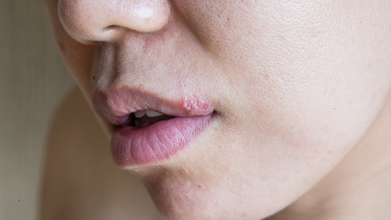
The common virus, carried by up to 50 to 80 percent of adults, can cause painful blisters or ulcers. It primarily spreads by skin-to-skin contact. It is treatable but not curable.
There are two types of herpes simplex virus: HSV-1 and HSV-2.
HSV- 1 is the most common and usually spreads by oral contact. It causes infections in or around the mouth (such as oral herpes or cold sores), as well as genital herpes.
Common oral herpes symptoms include
- blisters (cold sores)
- open sores (ulcers) in or around the mouth or lips.
HSV-2 generally spreads by sexual contact and causes genital herpes.
Its symptoms include painful
- bumps,
- blisters,
- open sores (ulcers) around the genitals or anus.
How Makeup Testers Can Spread Infection
Experts warned that makeup testers can become a breeding ground for germs. The repeated use of the open samples can spur their growth and can then spread by “double-dipping” — reusing an applicator after touching the skin. This can transfer viruses and bacteria between users.
“You can absolutely get a herpes infection from a makeup tester," Dr. Whitney Bowe, a dermatologist in New York City, told TODAY. "The more ‘double dipping’ that occurs, the higher the chance of spreading viruses or bacteria at a makeup counter.”
A 2010 study by researchers from Rowan University in New Jersey found that cosmetic samples harbored strep, E.coli, and staph.
For two years, the team examined makeup testers at makeup counters, specialty stores, and drug stores. They found that Saturday is the busiest day of the week, and 100 percent of the samples carried some sort of germ.
How To Stay Safe?
To reduce the risk of infection, experts recommend:
- Much like the toothbrush, personal cosmetics and cosmetic brushes must not be shared.
- Wash and dry your brushes regularly to avoid bacterial growth.
- Avoid applying testers directly to your lips or skin
- Use disposable applicators
- Test products on your hand rather than your face
- Avoid using testers if you have cuts, chapped lips, or active infections.
Why Inclusive Opportunities Matter For Individuals with Autism: Unlocking Untapped Potential
Credit: Canva
April 2 is celebrated worldwide as “Autism Awareness Day” and April as Autism month to create awareness and promote inclusivity and acceptance in society for individuals with autism.
So what exactly is Autism, and why do we need to create a culture of awareness and acceptance?
As per DSM V (Diagnostic and Statistical Manual of Mental Disorders) criteria, in simple terms, there is poor eye contact, impaired social communication skills, repetitive patterns (certain movements or fixation on certain toys, objects), difficulties with sensory processing - extreme sensitivity to sensory inputs (dislike loud noises, sensitive to touch), etc.
As a child, these individuals may not respond to name-calling, have poor eye contact/lack gestures like pointing, etc., lack imagination in play, and may not be able to relate and respond to the emotions of others. They have set routines and dislike changes to their routines. All this can cause significant disruption to their day-to-day functioning.
This year’s theme of -Autism and Humanity- Every Life has Value” reiterates the need for inclusion of autism, ensuring equitable representation of these individuals. Ensuring that society not only recognizes them but also treats them with equal respect and dignity.
Educational Support and Inclusive Workplace
Sarva Shiksha Abhiyan (SSA) was one of the Government's flagship programs, along with Action for Autism, to disseminate information in schools regarding inclusive education for autism. Education is a key foundation to ensure children with autism get suitable opportunities as adults. Special educators, with additional support in schools, can go a long way in ensuring their potential is maximized.
Many IT giants like Microsoft, Google, and SAP encourage tapping the potential of individuals with autism and their exceptional skills. In our country, organizations and NGOs, including Action for Autism, offer training for future employment opportunities.
There is a spectrum of Autistic Spectrum Disorders (ASD) known as Asperger’s syndrome, and these individuals have normal to above average intelligence and can have some exceptional skills, and the world includes some living examples of these with a higher IQ, some of whom are the most successful and famous personalities. Even on the other end of the spectrum, autistic individuals have exceptional skills, some of which include great attention to detail, creativity, problem-solving, and lateral out-of-the-box thinking.
Options for flexible working hours (part-time), understanding their need for routines, and explaining them beforehand regarding important changes to schedules can help them adapt better to an otherwise challenging workplace.
The Need For Sensitization
Understanding individuals with autism may need little extra support, being a little flexible with time deadlines, giving simple instructions, especially written/visual ones, and allowing them time to overcome their communication barriers can go a long way in ensuring they feel heard and valued like anyone else in the workplace.
Sensitization of all major organization employees to foster a culture of acceptance and awareness, and an accessible work environment, is the need of the hour. Autistic individuals do well in a variety of job profiles, including IT, technology, finance, art and creativity, and administration.
Environmental modifications like background noise cancellation with headphones help those with sensory processing issues. At the end of the day, none of us is perfect, it's recognizing our special skills and strengthening them.
Possibilities are endless if we wish to encourage and make these individuals heard. So, let’s carry the Autism Awareness Day beyond a mere day of awareness and light it up blue. Let’s value and acknowledge them being different, but also empower them to act on their special skills to earn them a dignified place in society and the workplace.
World Autism Awareness Day 2026: Origin, Theme, Significance
Credit: UN
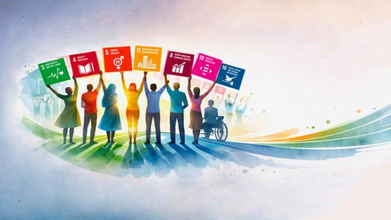
World Autism Awareness Day is observed every year on April 2. The day is important to raise awareness about autism — a neurodevelopmental condition affecting communication, social interaction, and behavior — affecting millions of people globally.
According to the World Health Organization (WHO), one in 127 people worldwide is diagnosed with the lifelong brain health condition. It is also among the top 10 conditions contributing to health loss globally.
The first child diagnosed with autistic symptoms was Donald Grey Triplett. Labelled as Case 1, he went on to become an American banker, demonstrating that, if provided with the right and inclusive support and opportunities individuals with autism be as productive as others.
“Like anyone else, autistic people should be able to shape their own lives — and help to shape our shared future,” said
António Guterres, UN Secretary-General.
World Autism Awareness Day: Date and History
April 2 was designated as World Autism Awareness Day (WAAD) by the United Nations General Assembly in 2007.
The 2007 General Assembly resolution highlighted the need to raise public awareness of autism.
It stated that "children with disabilities should enjoy a full and decent life, in conditions which ensure dignity, promote self-reliance and facilitate the child’s active participation in the community, as well as the full enjoyment of all human rights and fundamental freedoms on an equal basis with other children".
World Autism Awareness Day: Theme
This year, World Autism Awareness Day is held under the theme "Autism and Humanity - Every Life Has Value".
The 2026 theme highlights and affirms the dignity and worth of all autistic people. While there are international human rights conventions safeguarding the rights of people with autism, they continue to face stigma, discrimination, and barriers to participation.
“Access to timely, quality health care and support services remains limited, driving inequalities across the life course," the WHO said. The global health body urged "sustained action and greater investment" to address these challenges. It also called for developing inclusive policies and services that uphold the rights of autistic people.
This year's theme, thus, is a call to action to recognize the inherent dignity and equal rights of all people with autism.
Guterres highlighted the need for "equal education, fair employment, and accessible health systems" for all persons with autism and to provide inclusive opportunities to participate and thrive, along with others.
Also read: Expert Reveals Why Childhood Autism Is Going Undetected In India
What is Autism?
The National Health Service (NHS) UK defines autism as not an illness or a medical condition with treatments or a "cure", but a developmental condition that affects how people communicate, learn, behave, and interact with others.
It is a spectrum, which means "everybody with autism is different".
People with autism spectrum disorder (ASD) may have difficulty with social interaction, exhibit atypical behavior and activities, or find it hard to communicate.
Early Signs Of Autism
Studies show that symptoms of autism are usually diagnosed within the first 3 years of birth. These include:
- Limited to zero eye contact
- Delayed responses
- Repeating words or actions such as hand-flapping
- Being strong-headed about following the same routine
- Easily annoyed, throws tantrums
- Difficulty understanding and expressing emotions
- Sensitive to certain sounds, textures, lights, or smells.
- Follow Us :


© 2024 Bennett, Coleman & Company Limited