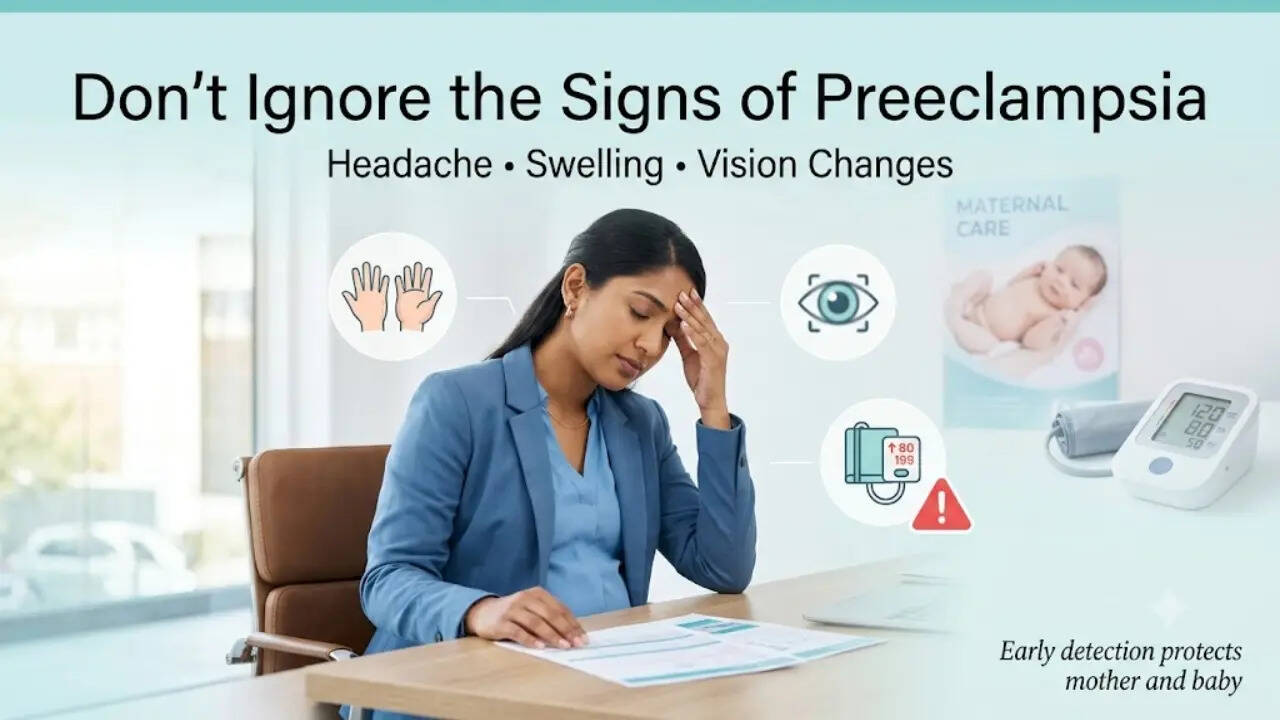
Many working women who are pregnant tend to dismiss signs such as headaches, swelling, or vision changes, thinking that they are common during pregnancy. However, these issues can be caused by preeclampsia, a serious condition that requires timely attention, especially among busy working women.What is preeclampsia?Dr Prachi Sarin Sethi, Senior Consultant – Obstetrician, Gynaecologist & Laparoscopic Surgeon, Motherhood Hospitals, Gurgaon, said, "Pregnancy comes with many physical changes, and it is common for women to experience discomfort such as swelling, fatigue, or headaches. However, sometimes these symptoms may point to something more serious, namely preeclampsia, a pregnancy-related condition that can affect both the mother and baby. Working women tend to ignore the signs of this condition and struggle in silence. Preeclampsia is a condition that usually develops after the 20th week of pregnancy. It is mainly characterised by high blood pressure and can affect organs such as the liver and kidneys. If not managed in time, it can lead to serious complications for both mother and baby."What are the causes of preeclampsia?The exact cause of preeclampsia is not known. Certain factors increase the risk, including:High blood pressure before pregnancyFirst pregnancyMultiple pregnancies (twins or more)Obesity or diabetesHigh stress levels and lack of restWhat are the symptoms of preeclampsia?Many symptoms of preeclampsia are mistaken for normal pregnancy changes. These include:Persistent headachesSwelling in the face, hands, or feetBlurred vision or light sensitivitySudden weight gainPain in the upper abdomenConsequences of untreated preeclampsiaWorking women may ignore these signs due to work pressure, long hours, or frequent travel, assuming they are just tired or stressed. If left untreated, preeclampsia can lead to serious complications such as:Preterm deliveryLow birth weight of the babyOrgan damage in the motherSeizures (a severe condition called eclampsia)Early detection and proper care can help manage the condition and reduce risks.This is why working women miss the signsIn today’s fast-paced lifestyle, many women continue working through pregnancy without slowing down. Long working hours, stress, irregular meals, and lack of rest tend to worsen symptoms. Many women delay check-ups or ignore warning signs, thinking they are minor issues.What can women do?Report any signs and symptoms, such as headaches and vision changes, to a doctor. De-stress by practising yoga and meditation. Monitor blood pressure regularly, avoid overexertion, and maintain a balanced diet consisting of fresh fruits, vegetables, whole grains, and pulses. Avoid junk, oily, and canned foods. It is also necessary to stay hydrated, attend regular health check-ups, and follow-up appointments.