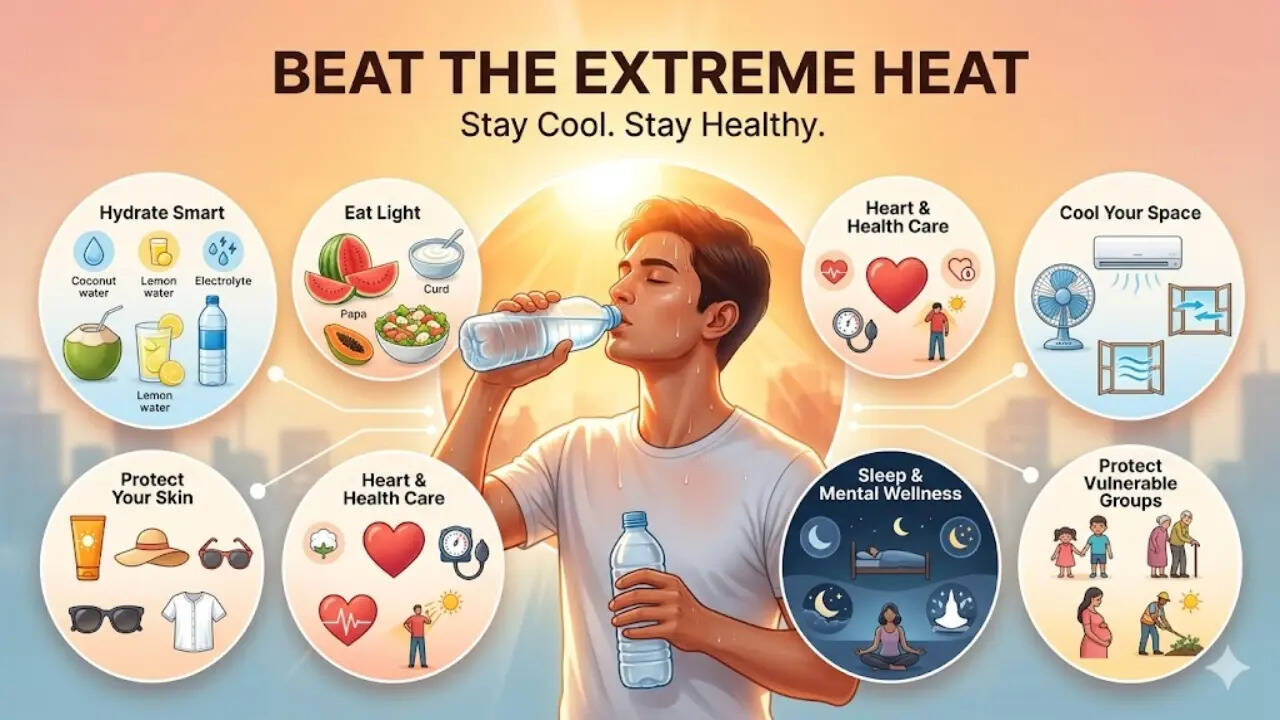
When Indian summers touch 48 degrees, it’s no longer just uncomfortably hot—it’s a serious public health challenge. Extreme heat affects everything from hydration levels in the body to digestion, the health of your skin, heart, and even mental well-being. Surviving (and staying healthy) through such brutal temperatures requires 360-degree body care, not just an extra glass of water or switching on the AC.Dr P. Venkata Krishnan, Senior Consultant & Director—Internal Medicine, Narayana Hospital, Gurugram, in an interview with Health and Me, shared a complete and practical survival plan to help your body cope with the extreme Indian summer—inside and out.Hydration: Go Beyond Plain WaterIn intense heat conditions, your body loses water and electrolytes very quickly through sweat. Electrolytes help carry water to the blood and tissues. Hence, drinking only plain water in summer may not suffice. Try sipping water consistently at regular intervals instead of gulping large quantities at once. Electrolyte-rich fluids like coconut water, lemon water with a pinch of salt, or buttermilk are healthy, affordable options to soothe parched throats. Avoid excess caffeine, colas, and alcohol, as they increase dehydration; if you must indulge, have a glass of water before your coffee or alcoholic drink.Pro tip: Check your urine colour—dark yellow is a warning sign of dehydration.Eat Light, Cool, and SmartOur digestive systems are also tired in extreme summers. Spicy, heavy, and oily foods generate more internal heat, which puts an additional burden on digestion. Opt for seasonal fruits like watermelon, muskmelon, papaya, and berries instead of chips and snacks.To ease digestion, add items like curd, rice, cucumber, and bottle gourd to your meals. Avoid red meat and fried foods during peak summer days. Smaller, lighter meals are easier for the body to process in extreme heat. Find ways to increase hydration through fruits and vegetables in your food too, apart from water intake.Protect Your Skin from Heat DamageHeat doesn’t just tan your skin—it accelerates ageing, causes pigmentation, and triggers rashes. Incorporating a summer skincare regimen can help prevent damage to your skin.Use a broad-spectrum sunscreen daily, even if you’re indoors.Wear loose, breathable cotton or linen clothing.Take cool (not ice-cold) showers to soothe overheated skin.Seek medical advice for prickly heat, fungal infections, or sudden rashes—they thrive in sweaty conditions.Mind Your Heart and Blood PressureExtreme temperatures put additional stress on the cardiovascular system, especially in people with hypertension, diabetes, or heart conditions. There are just a few things to bear in mind. When the temperature outside sizzles, avoid stepping outdoors for prolonged periods, especially between 12 pm and 4 pm, when the sun beats down mercilessly.Take all prescribed medications exactly as advised—don’t skip doses even if you experience heat-induced nausea. If you feel dizzy or experience palpitations or severe fatigue, consult your doctor as soon as possible. Heat exhaustion can silently progress to heatstroke, which is a medical emergency.Smart Cooling at Home and WorkAir conditioning is helpful, but overexposure can lead to dry skin, headaches, and respiratory discomfort. However, since the emphasis is more on cooler environments in summer, there are a few ways to avoid overexposure to AC.Once every two or three hours, step away from your desk for a few minutes. Walk or stand, and sip some water. Open windows, if possible, to avoid thermal shock. Set AC temperatures between 24 and 26 degrees, despite the urge to cool the surroundings further. Use fans and cross-ventilation whenever possible, relying a little less on air conditioning in the process. Never move directly from extreme heat into freezing AC environments, or vice versa, as it can impact your body suddenly.Sleep & Mental Well-being Do MatterPoor sleep due to heat can increase irritability, anxiety, and fatigue. Include some calming activity before bedtime. Put away screens, as they radiate heat too. Some tips to help you sleep better:A lukewarm shower before bed.Well-ventilated bedrooms.No heavy dinners or eating late at night; ideally, finish dinner before 9 pm, leaving a gap of a couple of hours afterwards before going to sleep.Mindful slow breathing or short meditation helps control heat-related restlessness.Special Care for Vulnerable GroupsChildren, elderly individuals, pregnant women, and outdoor workers are at higher risk of heat-related health concerns. They should particularly ensure that they hydrate more frequently.Watch for signs like dry mouth, lethargy, confusion, or reduced urination. Seek a doctor’s advice if needed.Include cooling foods to prevent dehydration and encourage lighter, frequent meals instead of full, heavy meals.Never leave children or pets inside parked vehicles or in spaces without ventilation—even for a few minutes.A holistic approach covering hydration, nutrition, skincare, heart health, and mental well-being can help your body adapt and stay resilient. Extreme heat is not “just a bad summer." Treat it seriously, listen to your body, and make smart daily choices, because protecting yourself from the heat today prevents long-term health problems tomorrow.