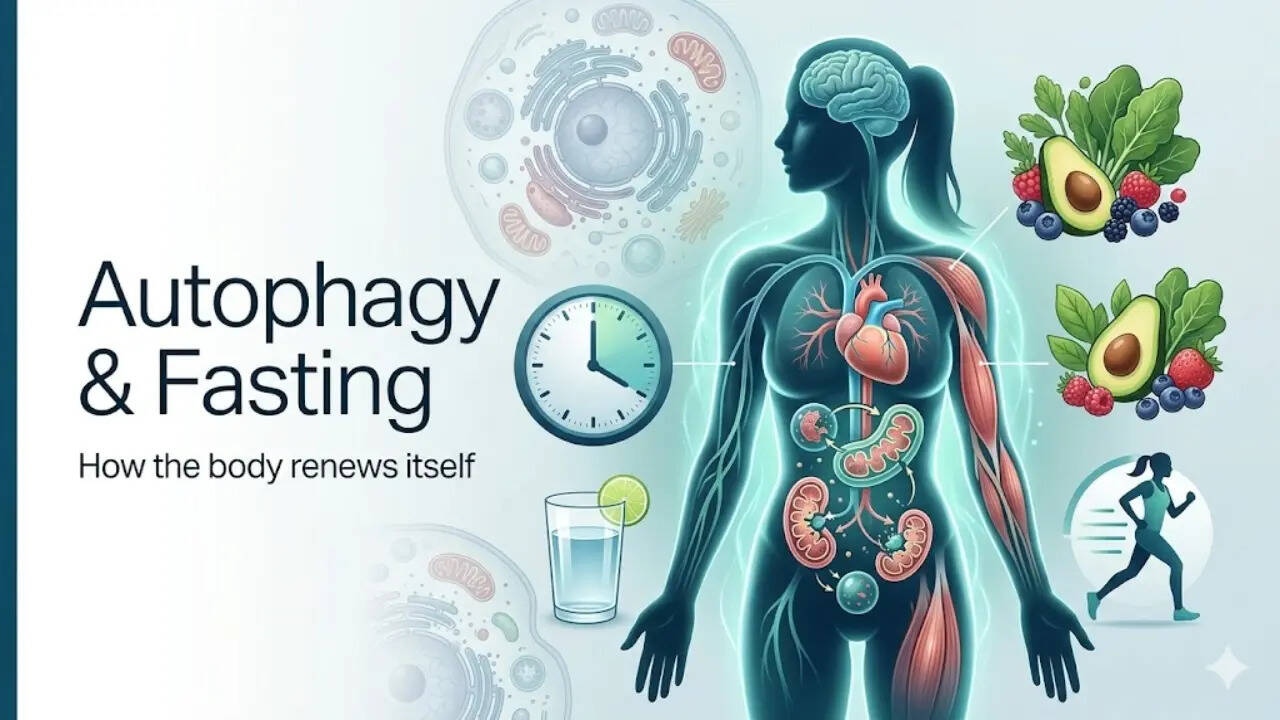
When it comes to weight loss, many try their own ways to drop the extra kilos. While portion control is advised, there are many who turn to starvation just to drop the extra kilos. In 2016, Japanese scientist Yoshinori Ohsumi won the Nobel Prize for his findings on autophagy. These findings facilitated a better understanding of conditions like dementia and Parkinson's disease. Autophagy refers to natural regeneration, which occurs at a cellular level. It reduces the chances of contracting diseases while also increasing lifespan.Since then, drugmakers have been working towards coming up with a drug that can stimulate the process; wellness and diet experts have been willing to find a way to naturally induce the process by restricting carbs, fasting, and engaging in high-intensity exercise.What do scientists have to say?Experiments were also conducted on mice, and it was found that the ones who were put on genetic tools, fasting, or drugs had a tendency to live longer and remain in better overall shape. However, it is still unclear how the same effect can be replicated in humans. In mice, for instance, the effects of fasting on the brain are evident within 24 hours. In other body parts, such as the liver, the effects occur more quickly. Despite knowing that fasting is good for health, experts are unsure about the ideal duration of fasting for maximum health benefits. Researchers say that fasting does not induce autophagy, but it does have other health benefits.What is autophagy?Autophagy is derived from "self" and "phagein," which means "to eat." The process involves cells degrading and recycling their components. It provides fuel for energy and building blocks for cell renewal. Post-infection, it can destroy viruses and bacteria. Cells use the process to get rid of damaged organelles and proteins, and it helps counteract the adverse effects of ageing.Autophagy was discovered in the 1960s, but its importance was recognised after Yoshinori Ohsumi's research. Researchers said that what they discovered protected against diseases like Huntington's, Parkinson's, and some forms of dementia. It also seemed beneficial in the context of infection control, along with protecting against excessive inflammation. New lifestyle books now suggest that the process can be switched on by making changes to diet and lifestyle or by observing a fast.The impact on muscle massA book titled Glow 15 by Naomi Whittel shares a 15-day programme including 16-hour fasts three times a week. It shares a plan that reduces protein intake on some days, involves eating carbs later, and combines all this with high-intensity exercise. In the basic tests themselves, volunteers at Jacksonville University in Florida experienced several health benefits. Some of the participants lost about 3.5 kilos in 15 days. Others saw improvements in lean muscle mass, blood pressure, and a reduction in fine lines. Researchers said that none of these changes could cause harm to health.Is fasting safe for all?Researchers note that fasting too much is not a good idea for anyone. Before making drastic or major changes to lifestyle or diet, it is advised to check with a doctor first. Experts look at autophagy with optimism, and studies show that proteins together form clumps in the nerve cells of Alzheimer's and Parkinson's patients.