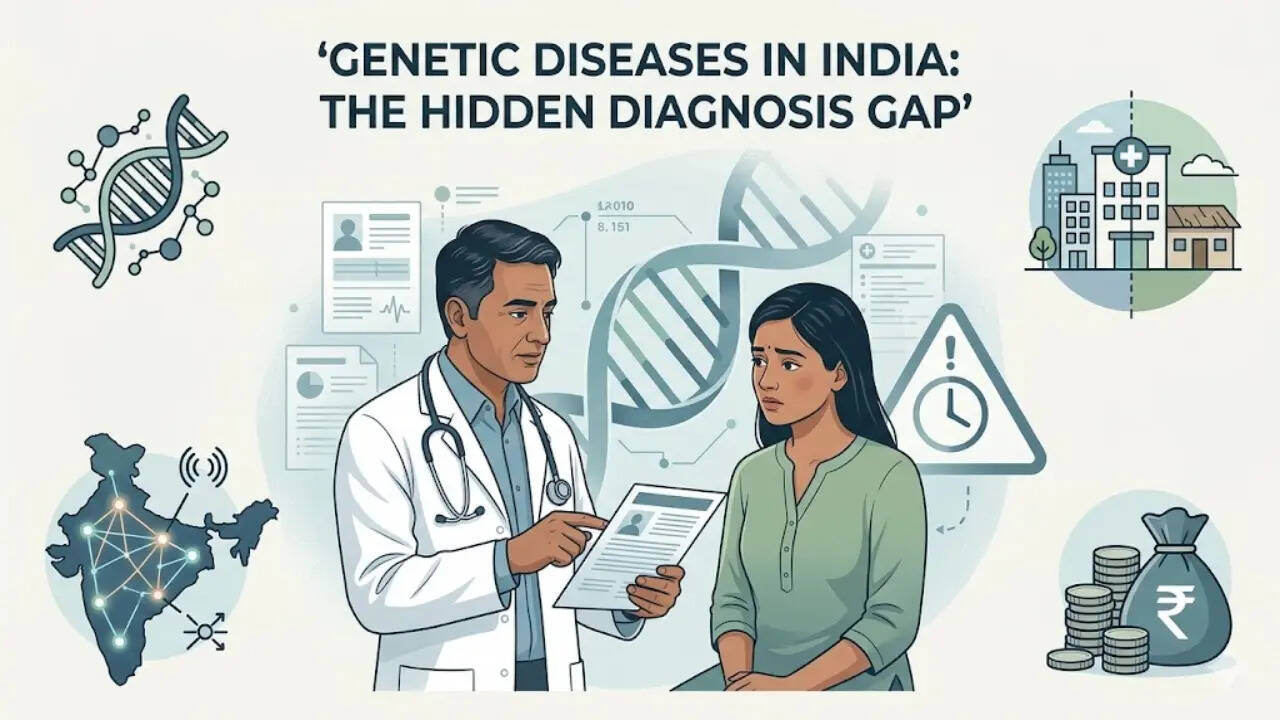
Genetic diseases in India constitute one of the most understated issues in the realm of public health in the country, owing to the presence of several interconnected factors. As per estimates, there are at least tens of millions of affected individuals who suffer from various genetic diseases. However, most of them remain undiagnosed until they become seriously ill. There could be several reasons behind this problem; one of the key factors contributing to this is the complexity associated with genetic diseases. Most of these diseases have non-specific presentations that can easily mimic other common ailments. As a result, the diagnosis process becomes protracted, whereby patients may require consulting several physicians and receive treatments before their exact condition is diagnosed.What are the challenges in accessing genetic diagnostic services?Dr Bhavini Shah, Head of Clinical Microbiology at Neuberg Diagnostics, Ahmedabad, said, “The first major barrier relates to the availability of genetic services. Currently, most advanced diagnostic tools, such as next-generation sequencing, molecular tests, and other methods, are only available in tertiary care centres situated in urban areas, leaving out a considerable percentage of the population. Additionally, there is a significant lack of trained medical geneticists and counsellors. Currently, the number of trained medical geneticists and counsellors in India is minimal, leading to many specialists managing various responsibilities and being involved in different tasks. Consequently, the process becomes less efficient, with medical experts unable to provide patients with adequate attention.”Why is there a lack of reliable data on genetic diseases in India?The second major barrier includes the lack of a unified and integrated framework to monitor and collect national-level data on genetic diseases. There have been several initiatives to create a registry or monitoring system; however, the process remains fragmented and incomplete. Therefore, there is no comprehensive information on the actual prevalence and geographical distribution of genetic diseases in India. For example, certain regions in India have more cases of beta-thalassaemia and sickle cell disease than other places.How do financial limitations affect diagnosis and treatment?Dr Shah also spoke about financial limitations. The expert said that financial limitations play another important role in complicating the issue. Although there have been many advancements in diagnosing diseases, such procedures can still be quite costly and are not always covered by public health insurance, limiting their accessibility to a wide range of people. Without the availability of low-cost or free testing facilities, many individuals are unable to undergo diagnosis at all or only do so when the disease has already developed considerably. Moreover, the unavailability of extensive newborn or prenatal screenings leads to many genetic disorders being overlooked.What steps can help address the issue of undiagnosed genetic disorders?Dr Shah said that to overcome the issue of genetic disorders going unnoticed in India, there needs to be a systematic approach towards solving this problem. Some ways through which this can be achieved would be by providing affordable genetic testing facilities to people, ensuring that clinicians have adequate knowledge regarding genetics, and incorporating the use of genome screenings within the framework of preventive care for the population. In addition, it is necessary to develop region-specific research initiatives and databases, which will help us understand the unique genetics of each region.Why is awareness about genetic testing still low?"An important yet not much talked about reason for underdiagnosis is the low level of awareness and knowledge about genetic testing among healthcare professionals and patients. Several primary care doctors and specialists do not immediately suspect a genetic cause in illnesses that present with a variety of symptoms and can be confused with other diseases, which means patients do not get the right tests on time. On the other hand, patients are often not informed about genetic testing and may consider it to be related only to very rare or family diseases. They are not aware that it can be used as a preventive or diagnostic method. The consequence of this is that the chances of early detection, the use of targeted medicines, and informed family planning are lost. Therefore, enhancing understanding of genetics among doctors through continuous education, along with raising public awareness through health campaigns, is key to addressing this problem of underdiagnosis," Dr Shah concluded.