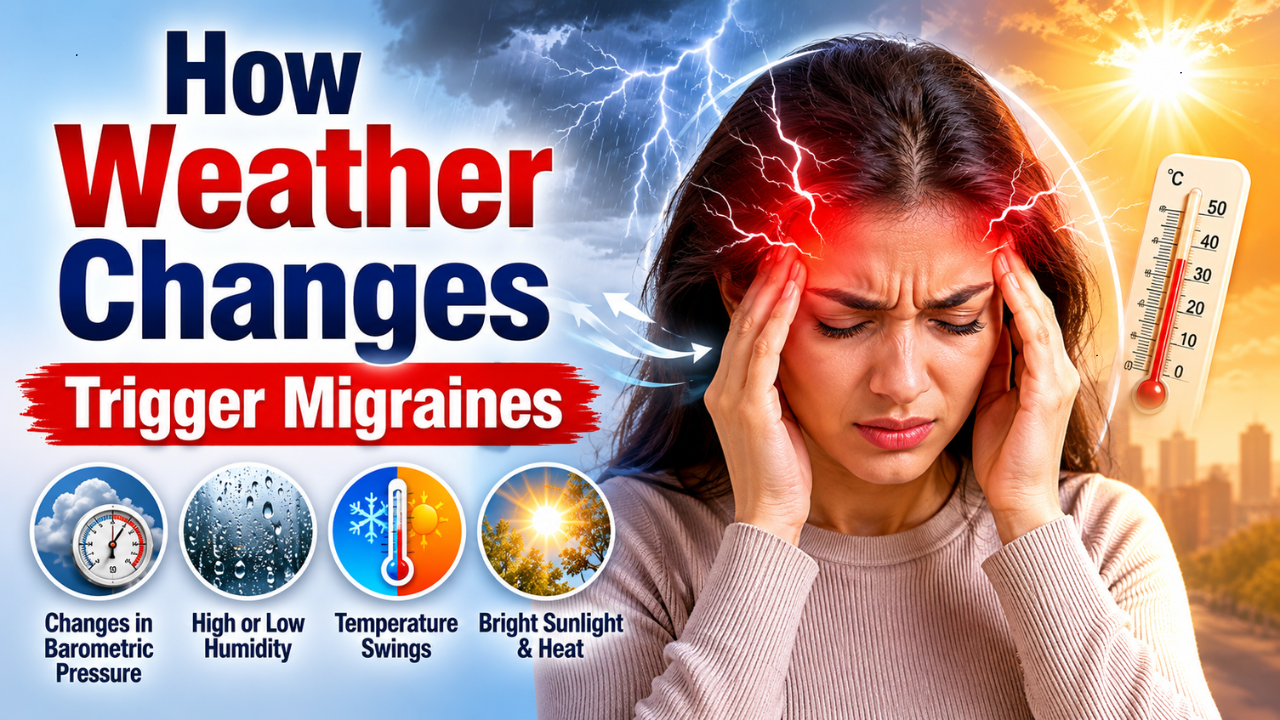
New Delhi's weather is fluctuating sharply, with Western Disturbances driving bouts of intense heat and sudden pre-monsoon showers. The city is currently hovering in the mid-30s°C but is also bracing for a return to scorching heat, with maximum temperatures forecast to climb into the low to mid-40s°C this week.Such weather fluctuations can play a significant role in triggering migraine attacks, said Dr. Vivek Kumar, Principal Director - Neurology, Max Super Speciality Hospital, Patparganj.Weather Factors That Can Trigger MigrainesSpeaking to HealthandMe, Dr. Vivek noted that many components of weather are reported to affect migraine. These include:Barometric pressureHumidityTemperatureSeasonsDr. Kumar explained that a drop in atmospheric pressure, often seen before storms, can create a pressure imbalance between the environment and the sinuses or inner ear, stimulating nerves and leading to headaches."Rapid temperature changes, as well as exposure to extreme heat or cold, can also trigger migraine episodes," he said.Similarly, both high humidity and very dry air have been associated with the onset of migraine symptoms. Bright sunlight and intense sun exposure, particularly when reflected off surfaces such as snow or water, are also recognized migraine triggers.Also read: Global Temperatures Likely To Stay Near Record Levels For Next Five Years: WMOHow Does The Weather Trigger Migraines?According to Dr. Kumar, weather changes can affect brain chemistry by influencing serotonin levels, a neurotransmitter involved in migraine development. They may also contribute to inflammation or pressure differences within the sinuses.Further, the expert noted that seasonal transitions can be particularly challenging."Spring and summer may trigger migraines because of heat and allergens, while winter's cold and dry air can also contribute to headaches and sinus discomfort," he said.Notably, weather is often only one factor among several. Allergies during spring or viral illnesses during autumn may also combine with environmental changes to trigger headaches, Dr. Kumar stressed.Migraine Vs Sinus HeadacheRead More: What Can You Learn About Your Health From Ice Cream Headaches?Migraine is also frequently mistaken for a sinus headache because the symptoms often overlap.Dr. Kumar noted that migraine attacks can cause forehead and facial pressure, as well as nasal congestion or a runny nose. Unlike migraine, however, sinus infections may be accompanied by fever.He explained that migraine can activate nerves in the face, a phenomenon known as cranial autonomic activation, which can create sensations of nasal blockage and congestion.While weather changes are difficult to avoid, monitoring weather forecasts may help people prepare for potential triggers. Preventive treatment may also reduce sensitivity to environmental changes and allow greater freedom in daily activities.Tips To Prevent MigraineDr. Kumar advised:Keeping a migraine diary for at least 90 days to help identify specific weather-related patterns associated with attacks.Treating migraine attacks early when weather-related triggers are suspected. Early treatment can shorten the duration of an attack and prevent symptoms from becoming severe.Maintaining adequate hydration, particularly during hot weather or physical activity. Carrying water when outdoors can help compensate for fluid loss through sweating.For those sensitive to bright sunlight, staying indoors during peak daylight hours may be beneficial. When outdoor exposure is unavoidable, protective sunglasses or hats can help reduce glare and light sensitivity.