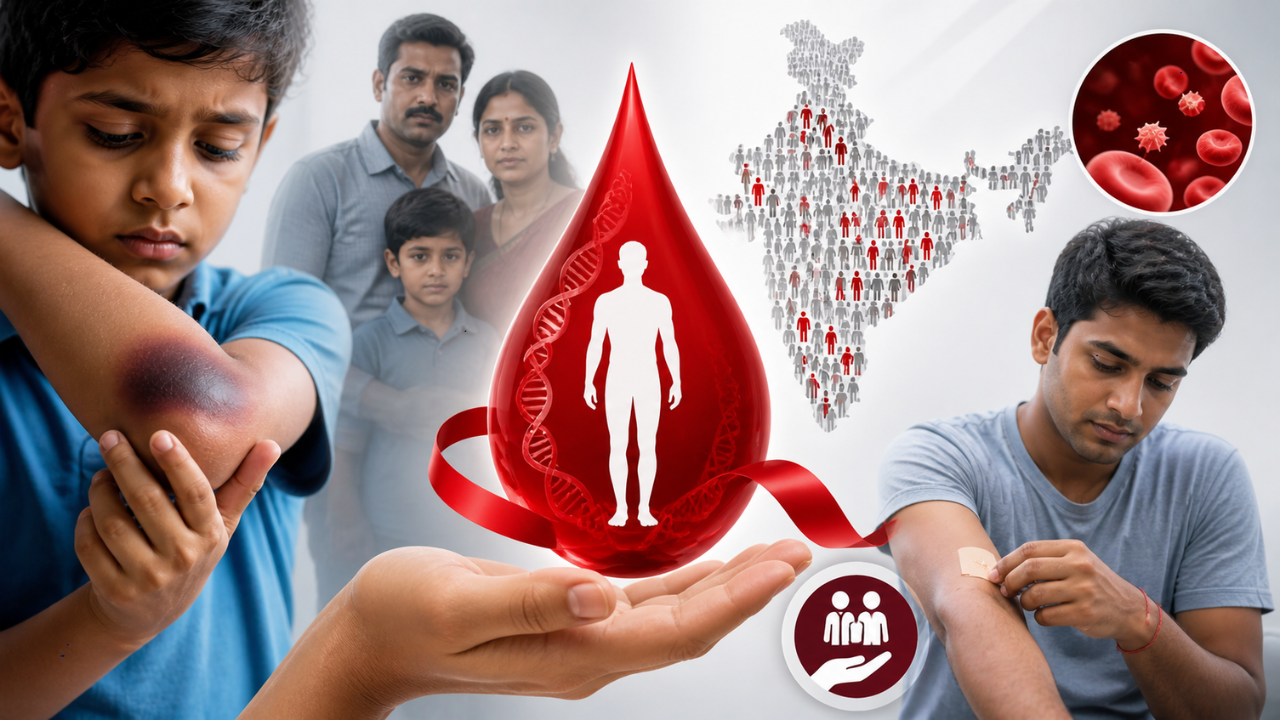
Although classified as a rare disease, hemophilia in India is widespread and overlooked. According to the World Federation of Hemophilia (WFH), about 75 percent of individuals affected by hemophilia are undiagnosed across the globe, hence lack proper healthcare, which is associated with an elevated incidence of complications. Hemophilia: The Undiagnosed Populations In India, the gap is stark. The WFH has provided statistics that indicate that India has one of the largest hemophilia populations worldwide, with approximately 24,000 patients registered, whereas the estimated prevalence is approximately 1.2 lakhs, indicating that a large pool remains undiagnosed or outside the care pathway. The implications of being undiagnosed or not receiving appropriate medical care are both clinical and non-clinical. Many people are losing milestones, dreams, or are otherwise negatively affected by the anxiety associated with living with an undiagnosed condition. For clinicians, this "hidden population" poses a daunting and deeply concerning challenge. They are not missing; rather, they remain unseen due to delayed recognition, often presenting only after irreversible damage has already set in. Hemophilia: SymptomsChildren with persistent symptoms of joint swelling, unexplained excessive bleeding after sustaining minor injuries, and other symptoms are usually diagnosed with other health conditions, like bone injuries or nutrient deficiencies. This period of clinical ambiguity can extend for months or even years before appropriate diagnostic testing and referrals are initiated. Joint damage is often established by the time a conclusive diagnosis is made, and may lead to reduced mobility or early deformity, chronic pain, disability, and loss of functional independence. Severe complications, including intracranial hemorrhage, continue to pose significant risks in inadequately treated patients. Hemophilia: Importance Of Timely Diagnosis The barriers to timely diagnosis are both clinical and systemic, ranging from limited awareness and low suspicion among primary care providers to fragmented referral pathways and frequent misdiagnosis. At the systemic level, uneven access to the diagnostic infrastructure persists. The availability of coagulation tests and specialists is mainly limited to the tertiary settings, thus posing a problem for patients from tier 2 and tier 3 regions. It is vital to understand the costs associated with a delay in diagnosis in the context of how far hemophilia care has evolved. Hemophilia: The Role Of Prophylaxis Over the past decade, advances in treatment have significantly improved patient outcomes. Clinical goals are no longer limited to managing bleeds as they occur, but to preventing them altogether, making “zero bleeds” an achievable reality. This is where prophylaxis takes centre stage. Where on-demand therapy treats hemophilia symptoms only after a bleeding episode has occurred, prophylaxis seeks to prevent bleeding completely and is considered the gold standard of care globally. It can bring about reductions in bleeds by up to 90% and maintain healthy joints, allowing children to achieve near-normal musculoskeletal development. When initiated early, prophylaxis can prevent the onset of joint damage. However, when patients are diagnosed late, they often enter care only after irreversible complications have already occurred. This makes early identification not just important, but decisive in altering disease trajectory.Hemophilia: Progress Is VisibleEncouragingly, progress is visible. Several Indian states have demonstrated that publicly funded hemophilia programs, including access to prophylaxis and decentralized care models, can significantly improve patient outcomes. Initiatives that integrate early patient identification, diagnostic access, and coordinated care pathways are beginning to reduce delays and expand equitable access. These state-led efforts offer important lessons for making prophylaxis the national standard of care in India. Recognizing hemophilia early and initiating prophylaxis in time is not just a clinical goal; it is the most critical step in changing the life course of these patients.