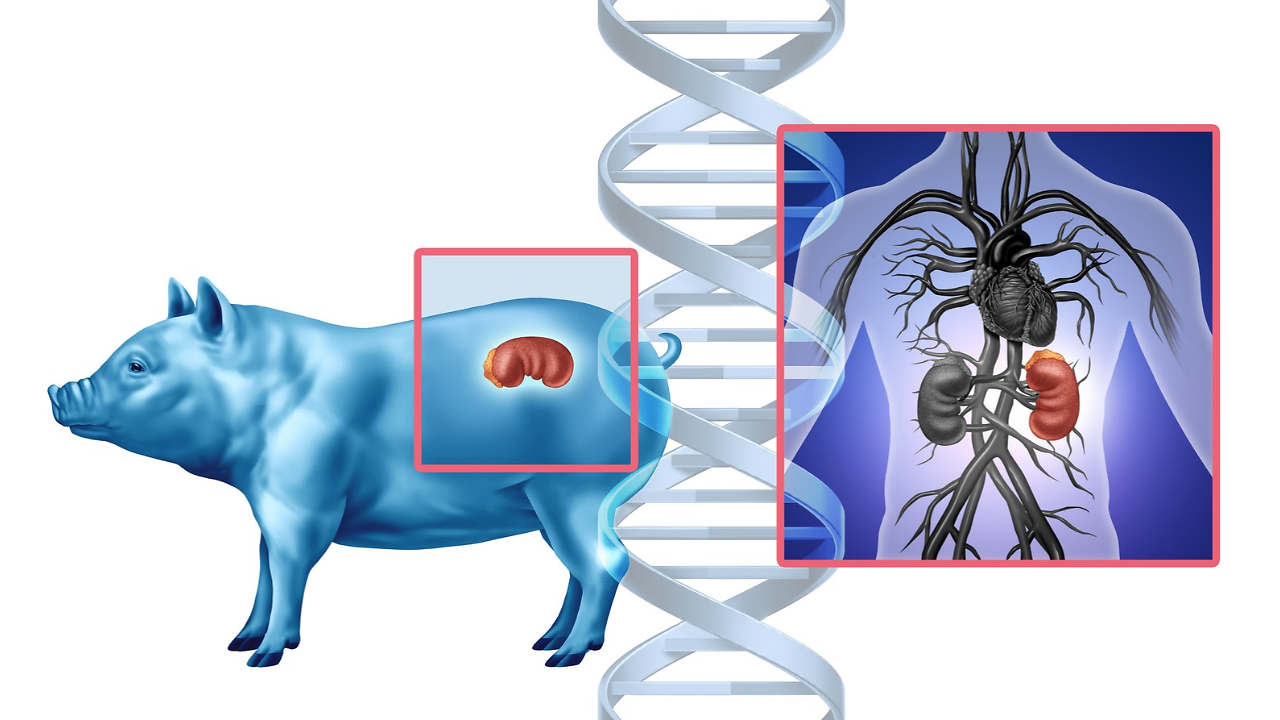
In a significant step toward advancing xenotransplantation—the transplantation of organs or tissues from animals into humans—in India, a dedicated department has been established, with research and regulatory work underway. The country’s first animal-to-human organ transplant could follow, subject to government approval and the establishment of legal and ethical guidelines.The initiative aims to help bridge the organ shortage in the country, Dr. Shikhar Tripathi, Director of the Department of Xenotransplantation Sciences at Sir Ganga Ram Hospital, New Delhi, helming the project, told HealthandMe.Dr. Tripathi, who has trained with Dr. David K. C. Cooper, a British surgeon-scientist and pioneer of modern xenotransplantation, believes India could perform its first xenotransplant within six months of receiving government permission.The push comes as xenotransplantation continues to make progress internationally. In 2025, a patient received a genetically engineered pig kidney and lived without dialysis for 271 days before subsequently receiving a human kidney transplant.India recorded 20,138 organ transplants in 2025, ranking third globally. However, the gap between the demand for and supply of organs remains significant, with deceased-donor donations accounting for a small share of transplants.Dr. Tripathi estimates India’s annual organ shortage at around 90,000. According to data reported by hospitals and transplant centers on the National Organ and Tissue Transplant Organization (NOTTO) National Registry Portal, the waiting list for major organs stood at 89,839 as of March 3, 2026.Kidneys accounted for the largest share of patients on the waiting list, followed by livers, hearts, lungs and pancreases.In an interview with HealthandMe, Dr. Tripathi, who is also working with Dr. Cooper at the Thomas E. Starzl Transplantation Institute in Pittsburgh, US, discussed the scientific barriers, infection risks, regulatory requirements and potential of xenotransplantation in India.Also read: Pig Kidney Works In Human Body For 271 Days: Why Xenotransplants Could Bridge The Organ Transplant GapQ. A pig kidney functioned for 271 days without dialysis in a human. What does this milestone mean for xenotransplantation?Dr. Shikhar Tripathi: Xenotransplantation has achieved significant milestones, but researchers are still working toward long-term viability. For now, it could serve as a bridge for patients who need an organ while researchers work to address complications and improve graft survival.“Xenotransplantation has achieved some really significant milestones in the last year or so.”Q. What are the main barriers to long-term survival of a transplanted animal organ?Dr. Tripathi: Genetic engineering has helped researchers modify the pig genome to reduce the risk of early rejection. The challenge now is managing late complications, particularly in kidney xenotransplantation.Two major concerns are proteinuria, or leakage of proteins through the kidney, and thrombotic microangiopathy (TMA), which involves injury to microscopic blood vessels.“The current barrier we face is late complications of xenotransplantation.”He added that his group has published research identifying potential pathways involved in proteinuria and TMA and is investigating ways to address these complications.Read More: World Organ Donation Day 2026: Too Old Or Too Sick To Donate Organs? Doctors Bust Key MythsQ. What are the infection risks associated with xenotransplantation, and why is lifelong monitoring important?Dr. Tripathi: One concern is zoonosis, or the transmission of infection from an animal or animal organ to a human. Genetic modifications are intended to address this risk.“There have been as many as 69 gene edits that have been done by eGenesis,” he said, referring to the company developing genetically engineered organs for transplantation.Dr. Tripathi believes the risk of zoonotic infection is minimal, but this does not eliminate the risk of infection. Patients also face infections associated with immunosuppression, which is used to prevent their immune systems from rejecting a transplanted organ.Dr. Tripathi’s group is also working toward accommodation and tolerance, which could allow transplanted organs to function with less immunosuppression.He said lifelong monitoring of recipients will be needed to track outcomes and ensure continued medical care.Q. India continues to face a significant organ shortage. How could xenotransplantation help bridge the gap between demand and supply?Dr. Tripathi: India’s annual organ shortage is around 90,000, and it is increasing. The challenge is not just finding donors but ensuring they are medically fit and compatible with recipients.He recalled a case in which an 85-year-old father-in-law was willing to donate a kidney to his daughter-in-law, but his age made him unsuitable, and no other family member was a match.“The question is not whether you have a donor available. It’s also whether your donor is healthy or not,” he said.He also raised ethical concerns about dependence on deceased-donor organs, arguing that patients should have alternatives that do not depend on another person’s death.“I think xenotransplantation is not just going to solve a medical problem. It’s going to solve a moral problem,” he said.READ: India Records 20,138 Organ Transplants In 2025; Deceased Donor Transplants Reach 3,526Q. What is Sir Ganga Ram Hospital doing to advance xenotransplantation in India?Dr. Tripathi: The aim is to carry out the first procedure with scientific support and within the necessary legal and ethical framework.The team is prepared to move forward once the required guidelines are established and government permission is granted.Q. How soon could India perform its first xenotransplant, and which type of transplant might reach clinical practice first?Dr. Tripathi: I believe pancreatic islet-cell xenotransplantation could reach clinical practice before whole-organ transplantation.Islet cells in the pancreas produce insulin, making them a potential area of research for conditions such as type 1 diabetes.“It’s my scientific belief that islet-cell xenotransplantation would be the first one to hit the clinics,” he said.As for India’s first xenotransplant, the timeline depends on government approval. “Potentially, six months from the day of the permission, we can perform the first transplant,” he said.Q. What scientific, regulatory and biosecurity hurdles must India overcome before its first xenotransplant, and what lessons does the 1997 pig-organ transplant case involving Dr. Dhaniram Baruah in Assam offer today?Dr. Tripathi: India’s first xenotransplant will have scientific, legal and ethical backing, along with patient consent. He said there was no comparison with the 1997 case involving Dr. Dhaniram Baruah in Assam, in which the patient died seven days after the procedure following multiple infections. “We will not take a single step out of the legal ambit or the ethical ambit,” he said.Q. Looking ahead five years, could India become a global leader in xenotransplantation?Dr. Tripathi: India could play a leading international role. “India will be one of the leaders,” he said.India can also establish its own xenorgan facilities over the next five to eight years. Until then, transporting organs from overseas companies could be an option, provided a secure transportation system is established in coordination with government authorities.