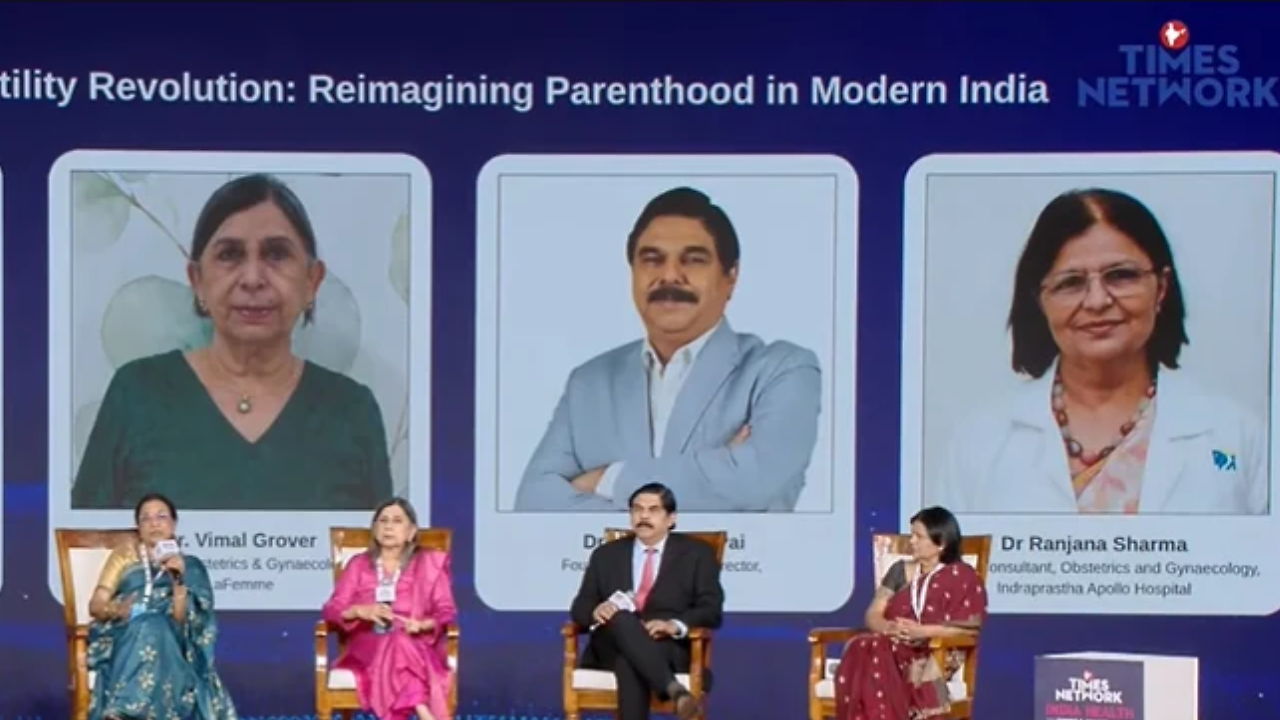
With infertility affecting an estimated one in six couples, experts at the Times Network India Health Summit 2026 spoke about the importance of seeking timely reproductive health advice and acquiring awareness about treatment options.They discussed how advancements in fertility treatment have improved the chances of conception, but in vitro fertilisation (IVF) cannot guarantee a pregnancy.During a panel discussion titled “The Fertility Revolution: Reimagining Parenthood in Modern India,” experts also examined how technology is shaping fertility care, while focusing on the limits of treatment, the cost of repeated IVF cycles and the dire need to address stigma around infertility.IVF Is A Ray Of Hope For Many Couples But Not A GuaranteeDr. Hrishikesh Pai, Founder and Managing Director of Bloom IVF India, spoke about the improvement in IVF outcomes over the past three decades. “When I started my own area in 1990, the success rate was 5%. Now it has gone to 30%,” he said.Pai also spoke about the expansion of India's fertility treatment sector, saying the country had moved from an emerging field to one with centres capable of matching international units in performance.Technology is also fueling more possibilities in reproductive treatment. Pai discussed the use of artificial intelligence (AI) to assist with embryo selection, egg assessment and sperm identification, alongside emerging techniques like robotic-assisted microinjection.However, Dr. Abha Majumdar, Emeritus Consultant in IVF and Human Reproduction at Sir Ganga Ram Hospital, cautioned against allowing these advances and spoke about the importance of maintaining unrealistic expectations.“IVF is not a miracle,” she said, emphasising that patients should receive accurate information about likely outcomes and the limitations of treatment.Majumdar also raised concerns about AI-generated advertisements promising successful IVF cycles. She stressed that technological progress does not remove the responsibility to communicate treatment outcomes honestly and compassionately.Age And Fertility PreservationAlso read: Unspoken Side Of Breast Cancer: Experts Discuss Recurrence Risk, Emotional Toll & Societal Impact At Times Health Summit 2026For couples considering parenthood later in life, understanding age-related fertility decline is important. Dr. Ranjana Sharma, Senior Consultant in Obstetrics and Gynaecology at Indraprastha Apollo Hospital, explained that women are born with a finite supply of eggs, which declines over time. She highlighted the need for greater awareness of reproductive timing and the options available to people who plan to delay pregnancy.Majumdar also discussed reproductive autonomy, noting that women increasingly have the freedom to decide when, or whether, to have children. However, she cautioned against viewing egg freezing as a guarantee of future pregnancy, describing it instead as a form of insurance.Fertility preservation may also be relevant for people facing medical treatments that could affect their reproductive potential. Pai highlighted egg freezing before chemotherapy or radiation therapy as an option for some women who wish to preserve the possibility of having children later.Sperm freezing can similarly help some men preserve fertility before cancer treatment or in circumstances where future fertility may be a concern.Financial Burden Of IVFAlso read: Excessive Screen Time & Mental Health: Expert Urges Parents To Limit Children's Screen Time At Times Health Summit 2026Even when treatment is available, its cost can be anobstacle. Some patients require more than one IVF cycle, making the overall expense staggering.Majumdar warned that repeated treatment can become expensive for some families. Although access to fertility services and insurance coverage have improved, affordability remains an important concern.She also emphasised that patients need realistic information before beginning treatment, including an understanding that one cycle may not result in pregnancy.Dr. Vimal Grover, who spoke about rising infertility and changing reproductive patterns, identified delayed marriage and childbearing, along with work-related stress, among the factors she had observed. She also pointed to AI's potential role in transforming fertility care.“One in six couples is infertile,” Grover said. The figure highlights the scale of the infertility crisis in the country. Male Infertility Remains Overlooked The panel also addressed the tendency to blame women when couples experience difficulty conceiving. Sharma said women are often held responsible for infertility, even though reproductive difficulties can involve either partner. She also said that fertility specialists increasingly make a point of consulting both partners to encourage shared responsibility for getting tested and treated.Pai similarly emphasised the importance of evaluating male fertility. Alongside sperm freezing before chemotherapy or radiation therapy, he highlighted its relevance for men with low sperm counts and some patients who may need fertility treatment in the future.The experts urged couples experiencing difficulties conceiving to seek medical advice rather than feel ashamed or assume that infertility is solely a woman's concern.The panel was part of the Times Network India Health Summit 2026, held in New Delhi under the theme “The Blueprint for a Future-Ready Healthcare Ecosystem – Innovation. Access. Self-Reliance.” The summit brought together healthcare leaders, clinicians, researchers, policymakers and industry stakeholders to discuss the future of India's healthcare system.