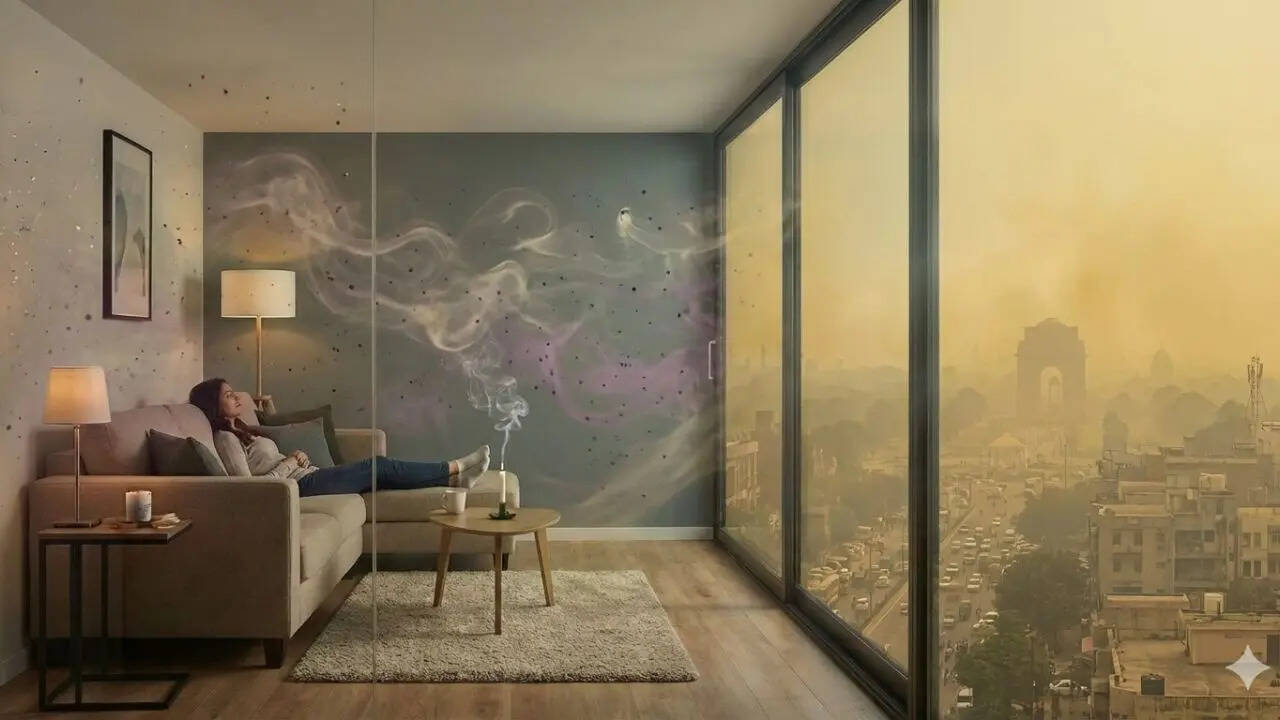
Dense, toxic smog covered India’s capital on Monday, driving air pollution to its highest levels in weeks, disrupting travel, and prompting authorities to enforce the strictest containment measures. More than 40 flights were cancelled, with several dozen more delayed. Over 50 trains arriving and departing from New Delhi faced delays of several hours, officials reported. Healthcare experts urged residents to stay indoors as hospitals recorded a surge in patients with breathing problems and irritated eyes. Now, a pulmonologist is warning that indoor air in Delhi might actually be more hazardous than the smog outdoors.Delhi Pollution: Indoor Air More Toxic Than Outdoor SmogIndoor air quality in Delhi is reportedly worse than the air outside, according to a lung specialist. Dr. Vivek Nangia, head of pulmonology at Max Healthcare, said indoor spaces can have particulate matter, or PM2.5 levels, nearly two-and-a-half times higher than outdoor readings, even when there are no direct pollution sources indoors.Also Read: Delhi Sees Rising Cancer Burden With Sharp Increase in Oral and Lung Cancers; Breast Cancer Remains Most Common“Indoor air can be 20 to 30 times more polluted than outdoor air, so it’s important to monitor and improve it,” he explained. Studies have shown that lung-damaging tiny particles inside homes are “substantially higher” than what nearby government monitors report outdoors. This was also confirmed by a study conducted by the Energy Policy Institute at the University of Chicago (EPIC) between 2018 and 2020, which surveyed thousands of Delhi households across different income levels, finding that both rich and poor families are affected equally.Researchers noted that wealthier households were 13 times more likely to own air purifiers than low-income ones, yet indoor pollution in those homes was only about 10% lower than in disadvantaged settings.“In Delhi, the bottom line is—whether someone is rich or poor, nobody gets to breathe clean air,” said Dr. Kenneth Lee, the study’s lead author. “It’s a complex, vicious cycle.”Also Read: Delhi Is a Gas Chamber Where Nothing Comes In or Goes Out, Says Expert; Neighboring States Not to Blame for AQIHow Does Indoor Air Quality Affect Your Lungs?Poor indoor air quality (IAQ) can harm the lungs by causing inflammation, weakening the body’s defenses, and triggering or worsening conditions such as asthma and COPD. Pollutants like dust, mold, VOCs, and smoke can lead to coughing, wheezing, infections, and long-term lung damage, even raising the risk of lung cancer over time. Because the lungs are constantly exposed to air, they are extremely sensitive to irritants, which can reduce lung function and capacity—particularly in children, older adults, and those with pre-existing conditions, according to the American Lung Association.Dr. Nangia noted that patients are now showing a different kind of chest congestion. “These days we’re seeing two kinds of patients—those who never had lung issues before but are now coming in, saying their coughs, sneezing, and chest congestion started once air quality worsened, and those with existing lung problems who are experiencing much worse symptoms,” he said.How To Protect Yourself From Indoor Toxic Air?According to the American Lung Association, protecting yourself from indoor air pollution involves controlling sources of pollutants (no smoking, using low-VOC products), improving ventilation (opening windows, using exhaust fans), using HEPA air purifiers, cleaning regularly (dusting and vacuuming), managing humidity to prevent mold, and wearing N95 masks on days with high outdoor pollution to reduce indoor air infiltration.