
- Health Conditions A-Z
- Health & Wellness
- Nutrition
- Fitness
- Health News
- Ayurveda
- Videos
- Medicine A-Z
- Parenting
Is Holding A Grudge Only A Woman's Problem? Science Explains The Gender Difference

(Credit-Canva)
The phrase, “hell hath no fury like a woman scorned” may hold more truth than we led on. Women are always thought of as the less aggressive, more forgiving and expected to be more rational than men. However, how much of that is a biological factor and how much of it is societal expectation?
While many people believe women are more forgiving, the results of many studies suggest otherwise. This 1997 research, which was published in the Proceedings of the National Academy of Sciences (PNAS) USA, compared men and women to see if there were differences in how they forgive. The study looked at how forgiving people are in general, as well as how they forgive themselves, others, and situations they can’t control.
Why Women Hold More Grudges
The study, which included 625 people (mostly women), found that men were more forgiving overall than women. Men also showed a greater willingness to move past feelings of unforgiveness. However, when it came to the more positive aspects of forgiveness, like being accepting and compassionate, there was no major difference between the genders.
Both men and women in the study showed similar emotional patterns related to forgiveness. Things like negative emotions, anxiety, and holding in anger were all linked to being less forgiving. On the other hand, positive emotions were linked to being more forgiving. An interesting difference was seen with anxiety control: for women, controlling their anxiety was linked to being less forgiving, but for men, it was linked to being more forgiving.
How Emotions and Gender Affect Forgiveness
The study found that a person's gender can change the way certain emotions are connected to forgiveness. This was especially true for forgiving oneself and forgiving situations that are out of one's control. Forgiveness of others, however, was not significantly affected by these gender differences. This suggests that while everyone's emotions play a role in forgiveness, gender can influence how those emotions shape our ability to let go of certain types of hurt.

Are Men More Forgiving Than Women?
Another 2021 study, published in the Journal of Religion and Health, on average, men were more forgiving than women, especially when it came to overcoming feelings of unforgiveness toward themselves and situations they couldn't control. However, there was no significant difference in the more positive aspects of forgiveness, such as a compassionate mindset.
- The research also found a link between emotions and forgiveness for both genders:
- Negative emotions, like sadness, anxiety, and anger, made it harder for people to be forgiving.
- Positive emotions were associated with being more forgiving.
An interesting finding was how controlling emotions affected men and women differently. For women, trying to control their anxiety was linked to being less forgiving. For men, controlling their anxiety was actually linked to being more forgiving, particularly of themselves and difficult situations.
How Does Serotonin Affect Your Brain?
According to a study published in the Biological Psychiatry, the study showed that when serotonin was low, the connection between two key brain areas became weaker. To find this, researchers adjusted the diets of healthy volunteers to lower their serotonin levels. Using an fMRI brain scan, they observed how the volunteers' brains reacted to faces showing angry, sad, or neutral expressions. They found that these 2 areas of the brain became weak,
- The amygdala, which is the emotional part of the brain that creates feelings of anger.
- The prefrontal cortex, which is the part that helps us regulate and control our emotions.
- This suggests that with low serotonin, it's harder for the prefrontal cortex to manage the anger signals coming from the amygdala. This can make a person more likely to act aggressively.
Why Some People Are More Prone to Aggression
The researchers also gave the volunteers a personality test to see who had a natural tendency toward aggression. They found that in these individuals, the link between the amygdala and the prefrontal cortex was even weaker when serotonin was low. This means that people who are already more prone to aggression are the most sensitive to drops in serotonin, which makes it even harder for them to control their angry feelings.
These findings highlight that while everyone's emotions play a role in forgiveness, gender can influence how those emotions shape a person's ability to let go of certain types of hurt.
Vaping And Cancer Risk: Emerging Evidence Raises Serious Health Concerns
Credit: Canva
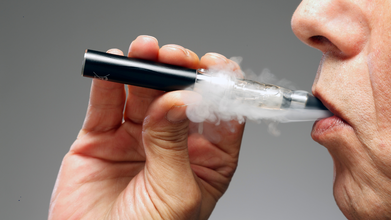
The consumption of vapes or the practice of vaping has seen a surge among the younger generation. People have often considered vapes to be a substitute for their everyday cigarettes, and therefore, they have replaced their traditional smoking habits. They do not carry the right knowledge about this common practice and fail to take the right measures to cut down on its usage. Research institutions and government bodies are now making collective efforts to establish the facts and make the general populace more aware and healthy.
How Can You Detect The Early Signs Of Oral Cancer?
Oral problems and an increased risk of oral cancer are considered to be the common problems associated with vaping. The presence of harmful chemicals in its formation makes it harmful to the human body. Along with your oral cavity, they can also damage the lining of your mouth. It has been proven that excessive consumption of vapes can lead to an increased risk of oral cancer.
Oral cancer can be prevented with early detection and immediate medical intervention. It can be identified with signs like abnormal bleeding inside the mouth, ulcers that won’t heal, chronic soreness, and red and white patches on the tongue and gums. The common signs are often discarded as an allergy, and people fail to seek the right treatment. Even with the available medical care and support, they are not able to counter this deadly disease.
The Impact of Vaping on Oral Tissues
The risk of vaping is not limited to increased chances of getting oral cancer. It can also impact your overall health. A vape is made with excessive heat and other harmful chemicals, which can damage the tissues of your gums and cause inflammation. It can lead to a condition known as gingivitis. One might also experience a dryness in their mouth, which is caused by reduced saliva production, which is considered to be a defense mechanism against bacterial production.
There can be far-reaching implications of having a constant dry mouth. It can lead to a breeding ground for harmful microbes. It can also increase one’s chances of having tooth decay, foul smell in the mouth, and oral infections.
Also read: Vaping Becomes Major Nicotine Threat Among Children Under 5 in US, Warns Study
The presence of flavoring agents and harmful chemicals in vapes makes them more damaging to the enamel of your teeth. In the short run, it might not seem like a major problem, but it can lead to tooth sensitivity if not handled at the right time.
Which Is More Harmful- Smoking or Vaping?
As the practice of vaping does not include combustion, people consider it safer than regular smoking. They often forget that vapes contain a significant amount of nicotine, which promotes survival and rapid growth of cancerous cells.
Vaping can reduce the blood flow to your gums and affect your healing capabilities. It can also increase your probability of periodontal disease. As the younger generation considers vaping to be a safer alternative, it can lead to its more frequent usage. As vaping does not follow any pattern like traditional smoking, it can be consumed at any time during the day, and increases your exposure to harmful chemicals.
The younger generation has reported an increasing number of oral health issues that are linked to vaping. Some of these problems include inflammation of your gums and decay of
your tooth enamel. As these issues seem visibly minor, they can often get ignored, and the person might not seek the required treatment. Consequently, they might develop long-term oral problems.
The younger generation gets influenced by the internet fads and more affordable alternatives to their daily smoking. As they keep increasing their consumption of vapes, they fail to identify the potential side effects.
Conclusion
The ongoing research has proven that vaping can be detrimental to both your oral and overall health. Research has suggested that this problem is more common among the younger generation, who might feel more inclined to replace the traditional forms of smoking. With ease of usage and accessibility, this malpractice has youngsters across the globe under its grip.
If one does not make the right effort to reduce their usage, it can lead to serious complications in the long run. Both the government officials and healthcare professionals need to spread more awareness about its detrimental effects and make efforts to conduct regular oral checkups. In this way, there will be a community-level effort to put a stop to its usage.
Bob Harris: BBC Radio 2 Host Hospitalized For Prostate Cancer Treatment

Credit: Bob Harris/Instagram
Bob Harris, the renowned BBC Radio 2 host, has informed his listeners of being hospitalized again for prostate cancer treatment.
Posting on social media platform Instagram, Harris said he is receiving treatment for an issue that has developed over the past few weeks.
“As many of you know, I suffer from prostate cancer, and every now and again I experience setbacks that need attention. Now is one of these moments,” he wrote, along with a picture of himself lying in a hospital bed while smiling for the camera.
Harris noted that he’s taking short break away from his programs. However, he confirmed that this week’s Country Show is scheduled as planned, and his Sounds of the 70’s episode on 12th April will feature an 80th birthday celebration special he recorded before attending the C2C Festival with Zoe Ball.
Noting that he can’t state the day of his return as the host, he said: “I know that I will come back… and come back stronger”.
“I hate missing programs and I am keen to get back into the studio as soon as I can”.
Calling himself “blessed” for the support he received from friends and family and listeners of his show, Harris said that during his absence, Darius Rucker will guest on Country, while Shaun Keaveny will cover Sounds of the 70’s for a few weeks.
"I am so blessed to have the love of my family and the support of my friends who have rallied round me at what has proved to be an unexpectedly testing time,” Harris said.
Prostate Cancer: The UK’s Most Common Male Cancer
Prostate cancer remains the most common cancer among men in the UK, with around 55,000 cases diagnosed every year. Despite this, there is currently no national screening program because of concerns over the accuracy of PSA tests.
In November 2025, former UK Prime Minister David Cameron revealed his prostate cancer diagnosis and also called for a targeted screening.
Also read: Joe Biden Is Diagnosed With Aggressive Prostate Cancer: All That You Need To Know
In an interview with Times, he said, "You always hope for the best. You have a high PSA score - that is probably nothing. You have an MRI scan with a few black marks on it. You think, ‘Ah, that’s probably OK.’ But when the biopsy comes back, and it says you have got prostate cancer. You always dread hearing those words. And then literally as they’re coming out of the doctor’s mouth you’re thinking, ‘Oh, no, he’s going to say it. He’s going to say it. Oh God, he said it.’"
The former PM, said that he had a prostate-specific antigen (PSA) test for the screening that looks for proteins associated with the form of the disease. His result was high, and a biopsy after that revealed his cancer.
In October 2024, six-time Olympic gold medallist Chris Hoy revealed he had been diagnosed with terminal stage 4 cancer. His prostate cancer had spread to his shoulder, pelvis, hips, ribs and spine.
Health Tests Every Woman Should Do Once A Year

Credit: iStock
A woman’s health check-up is not about being paranoid. It's about refusing to treat your body as an afterthought.
You may not be able to control every diagnosis you ever get. But you can control how late you meet it. That's what preventive care is all about. Early detection through these screenings helps manage hormonal changes, cancer risks, and metabolic health.
From routine blood tests to specialized screenings, Dr. Supriya Bali, Director, Internal Medicine, Max Super Speciality Hospital, Saket, spoke to HealthandMe on specific tests crucial for women, right from their 20s
In Your 20s: Laying A Strong Foundation
Your 20s are all about establishing healthy habits that will carry you through life. Even if you feel great, this is a crucial time to get in the habit of seeing your doctor regularly.
Recommended screening includes:
- Blood pressure check – Every 1-2 years if normal; more often if elevated
- Pap smear – Start at age 21 (or by age 25 if you’ve never been sexually active); every three years if results are normal
- Chlamydia and gonorrhea screening – Annually for sexually active women under 25
- HPV vaccine – If not already completed by 26
- Skin check – Monitor moles and sun damage, especially if you tan easily
- Mental health screening – Don’t ignore stress, anxiety, or depression
In Your 30s: Reproductive And Preventive Health In Focus
As the body begins to undergo subtle changes in the 30s, regular screenings, hormonal health checks, and lifestyle adjustments are increasingly important.
Recommended screenings in 30s include:
- Pap + HPV co-test – Every 5 years starting at 30 (or Pap every 3 years)
- STI screening – Based on risk factors and symptoms
- Blood pressure and cholesterol check – Especially if you have a family history
- Blood sugar test – Especially if you’re planning a pregnancy or have had gestational diabetes
- Breast exam – Regular self-monitoring and breast ultrasound if you suspect a lump.
- Mental health and sleep – Ongoing check-ins with your doctor
- Fertility discussions – If you're planning or delaying pregnancy
Also read: 'Husband Stitch': A Medical Necessity Or Just A Tool To Objectify Women's Bodies?
In Your 40s: Monitoring Long-Term Risk Factors
This is a time when early signs of chronic conditions may start to show up, especially if there’s a family history of heart disease, diabetes, or cancer.
You should get these screenings at certain times:
- Mammography screening: Begin at 40 years of age (earlier if you have a family history of breast cancer).
- Pap smear & HPV test: Pap and HPV every 5 years or Pap alone every 3 years.
- Cholesterol & Blood Pressure Testing: Every 1-2 years.
- Blood glucose test (diabetes screening): especially if you're overweight or at risk for diabetes.
- Thyroid function testing is optional—especially if you feel tired, cold, or have been losing weight or have changes in your bowel habits.
- Weight discussions regarding healthy nutrition and active lifestyle—assist with maintaining a healthy weight.
- Perimenopause begins in your 40's; if you experience mood swings or changes in sleep, hot flashes, or irregular cycles, please speak with your doctor.
Also read: What Your Mammogram Says About Your Heart?
In Your 50’s: Maintain Strength, Stay Ahead of Aging
Maintaining your strength, the ability to prevent illness/disease from affecting you, and remaining proactive against the challenges that arise due to aging will be your focus at this stage.
Every individual will have their own unique series of recommended screenings; however, everyone will benefit from some type of recommended screening.
Some commonly recommended screenings include:
- Mammogram screening program; every 1-2 years.
- Colorectal cancer screening, beginning at age 45 through age 75.
- Bone density scan-if at high risk.
- Hearing/Vision checks annually or as required (on an as-needed basis).
- Blood pressure, cholesterol, and diabetes screening every year.
- Lung cancer screening among those with a history of smoking.
- Vaccines--including shingles, pneumonia, flu, and COVID-19 booster.
- Cognitive screening - to discover memory concerns, changes in mental sharpness, or cognitive function.
- Follow Us :


© 2024 Bennett, Coleman & Company Limited