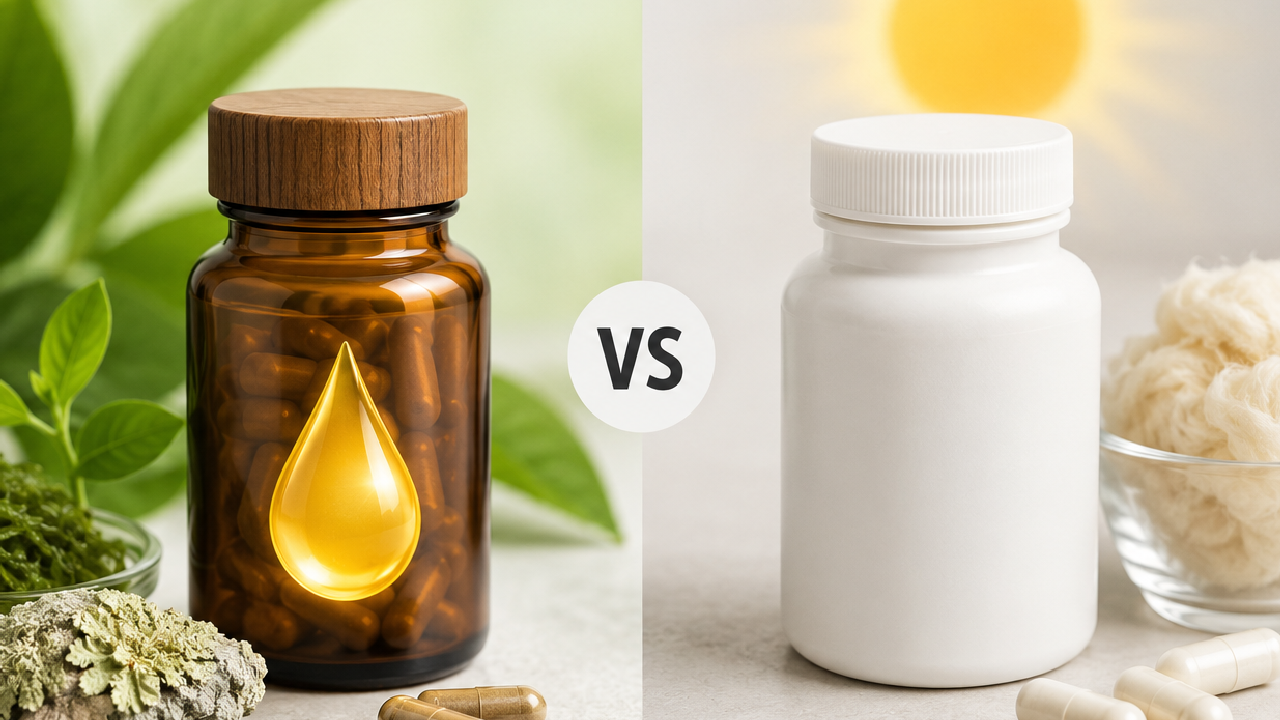
Plant-based Vitamin D3 is often marketed as a healthier or superior alternative to traditional supplements, but doctors say that's not necessarily the case.According to Dr. Murtaza S. Bagwala, Head of Emergency Medical Services at Saifee Hospital in Mumbai, existing research shows that plant-based Vitamin D3 is just as effective as conventional Vitamin D3 in increasing the body's vitamin D levels."Current evidence suggests that plant-based Vitamin D3 performs similarly to conventional Vitamin D3 supplements. For people who prefer vegan or plant-based products, it is a suitable alternative," he told HealthandMe.Echoing this view, Dr. Sudhir Kumar, Neurologist at Apollo Hospitals in Hyderabad, said that plant-derived Vitamin D3—usually obtained from lichen, algae, or modern fermentation methods—provides an animal-free option without sacrificing effectiveness.In a post on X, he noted that while plant-based Vitamin D3 is welcome news for vegans and those seeking cruelty-free supplements, both forms work equally well. He added that there is no medical need for people to switch if they are already taking conventional Vitamin D3 supplements.Also Read: Chandipura Virus Claims 3 Children In Gujarat, Rajasthan: Why Kids Are At Risk Of This Rare Brain InfectionIndia has approved its first plant-based Vitamin D3 (cholecalciferol) ingredient, a move that could expand options for food fortification and dietary supplements while addressing the country's widespread Vitamin D deficiency.The Food Safety and Standards Authority of India (FSSAI) has cleared VITADEE Green, developed by Fermenta Biotech, for use in health supplements, nutraceuticals and food products.The company stated that the ingredient is produced using an India-patented process and offers a sustainable, scalable and vegetarian-friendly source of Vitamin D3.The approval allows Indian manufacturers to incorporate the ingredient into fortified foods, beverages and dietary supplements.It is particularly significant for vegetarians and vegans, who have traditionally had limited access to Vitamin D3 because most supplements are derived from lanolin, a by-product of sheep's wool.The approval also supports India's broader efforts to improve nutrition through food fortification, an area where experts say Vitamin D remains a major gap.What Is Vitamin D3?Vitamin D3, often called the "sunshine vitamin," is produced by the body when the skin is exposed to sunlight.It helps the body absorb calcium, maintain healthy bones and teeth, and lowers the risk of fractures. In children, severe deficiency can lead to rickets, while in adults it increases the risk of osteoporosis, muscle weakness, and falls.Beyond bone health, Vitamin D3 also supports immune function. Research suggests low Vitamin D levels may be associated with increased susceptibility to infections and higher levels of inflammation.Who Should Take Vitamin D3 Supplements?The experts said the key question is whether supplementation is needed, not whether the source is plant- or animal-derived."The source matters mainly for ethical, dietary or personal preference—not for efficacy," Dr. Sudhir said.Dr. Bagwala cautioned against taking high-dose Vitamin D without medical advice, as excessive intake can raise calcium levels and increase the risk of kidney stones and other complications.