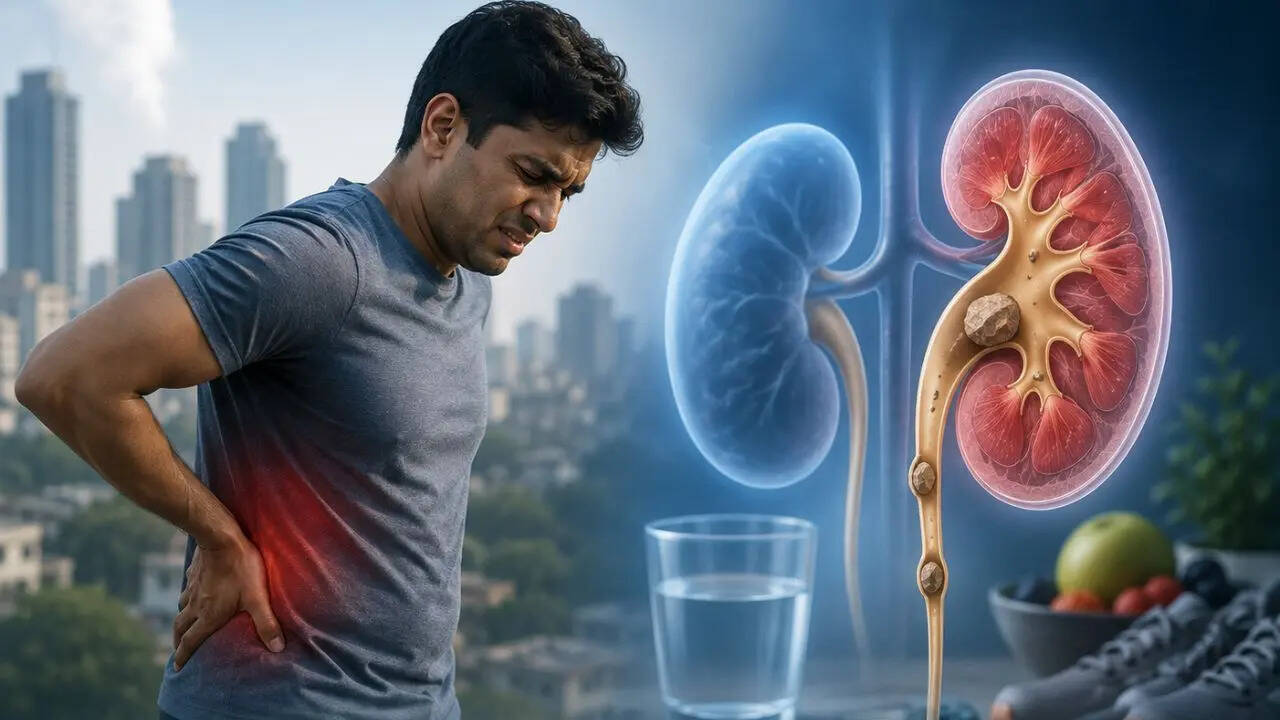
Kidney stones are no longer a disease seen only in middle-aged adults. Across urban India, nephrologists are witnessing an increasing number of young professionals developing kidney stones. Sedentary lifestyles, inadequate water intake, unhealthy dietary habits, obesity, and rising temperatures are all contributing to this growing problem. It is estimated that nearly one in every ten Indians will develop a kidney stone during their lifetime, and almost half of these patients may experience recurrence if preventive measures are not adopted. Why Are Kidney Stones Becoming More Common? Kidney stones form when minerals and salts in the urine become highly concentrated and crystallize inside the kidneys. Several lifestyle factors increase this risk: Drinking too little water Excessive salt intake Frequent consumption of processed foods and sugary beverages High intake of animal protein Obesity and sedentary lifestyle Diabetes and hypertension Prolonged exposure to hot weather causing dehydration Busy work schedules, air-conditioned offices, frequent travel, and ignoring the urge to drink water have become common contributors in urban populations Also read: Adult Kidney Transplant Recipients Who Took COVID-19 Drug Remdesivir At Lower Risk Of Transplant FailureWarning SignsThe symptoms depend upon the size and location of the stone. Small stones may pass unnoticed, while larger stones can produce severe pain. Common symptoms include: Sudden severe pain in the back, side, or lower abdomen Pain radiating towards the groin Burning during urination Blood in urine Increased frequency or urgency of urination Nausea and vomiting Fever with chills, especially if infection develops Persistent pain, fever, or difficulty passing urine should never be ignored, as these may indicate obstruction or infection requiring urgent medical attention Also read: Why Dialysis Patients Should Check Their Fistula Every DayCan Kidney Stones Be Prevented? The answer is yes. Most kidney stones can be prevented through simple lifestyle modifications. The most important preventive measure is adequate hydration. Adults should drink enough fluids to produce at least 2–2.5 litres of urine daily, which generally requires about 2.5–3 litres of water per day, depending on climate and physical activity. Other preventive measures include: Reduce salt intake Limit processed and packaged foods Moderate consumption of red meat Avoid excessive sugary drinks Maintain a healthy body weight Exercise regularly Control diabetes and high blood pressure Contrary to popular belief, dietary calcium should not be avoided unless specifically advised by a doctor. In fact, normal calcium intake helps reduce oxalate absorption and lowers the risk of stone formation.Modern Treatment Has Changed the Outlook Fortunately, advances in technology have made kidney stone treatment highly effective and minimally invasive. Small stones often pass with increased fluid intake, pain relief, and medications that relax the urinary tract. However, larger or obstructing stones require specialist treatment. Current treatment options include: Extracorporeal Shock Wave Lithotripsy (ESWL): Non-invasive shock waves break stones into smaller fragments Ureteroscopy (URS): A thin endoscope is passed through the urinary tract to remove or fragment stones Retrograde Intrarenal Surgery (RIRS): Flexible laser technology allows treatment of stones inside the kidney without any external incision Percutaneous Nephrolithotomy (PCNL): Recommended for large or complex kidney stones through a small skin incision Compared with conventional open surgery, these procedures offer higher success rates, less pain, shorter hospital stays, and faster recovery The Take-Home Message Kidney stones are becoming increasingly common but are largely preventable. Adequate hydration, healthy dietary habits, regular exercise, and timely medical evaluation can significantly reduce the risk. Those who have already developed one stone should undergo metabolic evaluation and follow preventive advice, as recurrence is common. Early diagnosis and timely treatment not only relieve pain but also protect kidney function and improve long-term health.