
- Health Conditions A-Z
- Health & Wellness
- Nutrition
- Fitness
- Health News
- Ayurveda
- Videos
- Medicine A-Z
- Parenting
Life After Chikungunya: Top Tips On Managing Joint Pain and Regaining Mobility
Credits: Canva
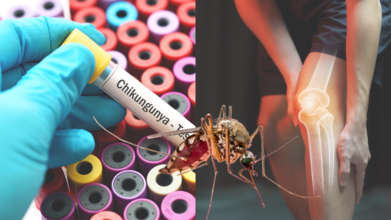
Recovering from chikungunya could be a little tough; while the high fever often lasts less than a week, the “stiffness, swelling, and pain in joints” can linger for months, sometimes even a year. And this post-viral arthritis does not just hurt; it tampers with everyday life. Walking to the kitchen, climbing stairs, or even stirring something can suddenly feel too much. But it is not like recovery is impossible; with the right mix of patience, care, and clever hacks, it definitely is.
Understanding Post-Chikungunya Joint Pain
The first thing to know, Dr. Sameer Bhati, Public Health Expert, says, is that the lingering pain is not just weakness; it is inflammation caused by the virus itself. Knees, ankles, wrists, and fingers are usually the worst hit, often on both sides of the body, making mobility feel like a double whammy. “Recognising this as a post-viral complication helps patients take it seriously and not just dismiss it as leftover fatigue,” he points out.
Rest a Little, But Don Not Overdo It
While rest is essential, too much of it backfires. “Extended bed rest may worsen stiffness,” warns Dr. Bhati. Instead, he advises short bursts of activity like a slow walk around the house, a bit of dusting, or mild stretches. The best thing is balance. Move enough to keep muscles from weakening, but listen to your body and pause when the pain flares.
Simple Natural Approaches
Your kitchen may already hold some answers. “Warm compresses help relax stiff muscles, while cold packs soothe inflammation during flare-ups,” says Dr. Bhati. He also points out turmeric and ginger for their anti-inflammatory powers. Sprinkle them into curries or sip them in tea. And do not underestimate the power of water. Staying hydrated keeps joints lubricated and speeds up recovery.Physiotherapy and Exercise
When it comes to exercise, less is more. “Low-impact routines like yoga, swimming, or cycling gently increase flexibility without overloading the joints,” advises Dr. Bhati. Stretching the ankles, knees, and wrists daily can slowly restore function. Once the stiffness eases, light resistance training can strengthen muscles and support fragile joints. But he stresses regular follow-ups with doctors to rule out more serious issues like rheumatoid or osteoarthritis.Nutrition for Healing
Your plate can be your medicine cabinet. According to Dr. Bhati, omega-3-rich foods such as walnuts, flaxseeds, and fatty fish help cool inflammation. Fresh fruits, leafy greens, and lean proteins promote tissue repair. On the flip side, avoid ultra-processed snacks, sugary sodas, and deep-fried indulgences—they only fan the inflammatory fire.
The Role of Medicines
Sometimes lifestyle changes are not enough. “Painkillers like NSAIDs may be prescribed to manage discomfort,” Dr. Bhati says. In rare chronic cases, rheumatologists may consider disease-modifying agents, but he cautions against self-medicating. “Patients must never start or adjust these medicines on their own,” he warns.Caring for the Mind and Emotions
Pain does not just live in the body; it creeps into the mind. “Frustration, anxiety, and even depression are common after long stretches of joint pain,” says Dr. Bhati. Techniques like guided imagery, deep breathing, and mindfulness can ease mental stress. He also suggests joining support groups, whether online or in person, to find comfort in shared experiences.Preventing Re-Infection
Of course, no one wants a sequel of chikungunya. “Prevention is crucial,” stresses Dr. Bhati. That means eliminating stagnant water, using repellents, and wearing protective clothing. Small actions at home can save you from a repeat performance of the painful drama.Understand that recovering from chikungunya is less of a sprint and more of a marathon. It requires patience, lifestyle tweaks, and an open mind to try a mix of remedies. As Dr. Bhati sums it up, “Rest, movement, self-care, physiotherapy, nutrition, and medication together help people manage joint pain and regain mobility.” The aches may feel endless, but they do not last forever.
Ramadan Fasting: Avoid Excess Salt And Caffeine To Boost Kidney, Prostate Health, Say Experts

Credit: Canva
Dehydration is a serious concern for people fasting during the month-long Ramadan period, and can severely impact kidney and prostate health. Experts suggested that avoiding excess salt and caffeine can help.
While Ramadan fasting is generally safe for people with early-stage chronic kidney disease (CKD), maintaining adequate hydration between iftar and sehri -- the two important meals each day for faithful observing the fasting -- is of significant importance.
Dehydration can lead to acute kidney injury and electrolyte imbalances for individuals with advanced CKD. As prolonged fasting hours -- more than 12 hours a day -- urine becomes concentrated, increasing the risk for kidney stones and Urinary Tract infections (UTIs).
For men with prostate problems, fasting during Ramadan can pose challenges, such as Benign Prostatic Hyperplasia (BPH) or an enlarged prostate, primarily due to dehydration.
“As a practicing urologist and kidney transplant surgeon in India, I often notice a rise in kidney stone pain and urinary infections during Ramzan. When patients fast for long hours -- especially in our warm climate -- urine becomes highly concentrated. That increases the risk of stones and UTIs. Men with prostate enlargement sometimes report worsening urinary flow because they consciously reduce fluid intake,” Dr. Pankaj Panwar, Additional Director, Urology, Fortis Escorts Okhla, New Delhi, told HealthandMe.
The doctor advised people “to hydrate strategically between Iftar and Sehri, avoid excess salt and caffeine”.
How Excess Salt And Caffeine Impact Ramadan Fasting
Consuming high-sodium foods such as processed meats, pickles, salty snacks, and fast food during iftar or sehri can increase thirst and dehydration.
High salt intake forces the body to pull water from cells to dilute the sodium, leading to severe thirst. It can also lead to bloating.
Similarly, caffeine in coffee, tea, chocolate, and energy drinks can be diuretic and cause the body to lose fluids and salts through increased urination. Particularly, drinking coffee or tea at sehri -- the pre-dawn meal -- can lead to faster dehydration during the day.
Caffeine consumption, especially late in the evening, can also interfere with sleep, making it harder to wake up for sehri.
“Ramzan is a sacred month of fasting, but prolonged abstinence from water, especially in hot climates, can increase dehydration risk. Concentrated urine puts stress on the kidneys and may worsen kidney stones or trigger urinary tract infections,” Dr. Mangesh Patil, Urologist at Saifee Hospital, Mumbai, told HealthandMe.
Dehydration during Ramadan fasting can lead to symptoms like headaches, extreme thirst, fatigue, and dizziness. But in case of severe dizziness, fever, confusion, or blurred vision, the experts warned of immediate medical help.
“Do not ignore warning signs like flank pain, fever, or difficulty passing urine. A little planning can prevent an emergency hospital visit,” Panwar said.
Patil said warning signs include severe flank pain, burning urination, fever, vomiting, blood in urine, or reduced urine output. Men with Benign Prostatic Hyperplasia may notice worsening urinary symptoms.
Tips To Prevent Complications
- Drink 2-3 liters of water between iftar and sehri
- Include water-rich fruits
- Avoid excess salt and caffeine
- Individuals with kidney disease, stones, UTIs, or prostate issues should consult their doctor before fasting.
The Common Colon Cancer Sign You Need To Look Out For
Credit: Pinterest
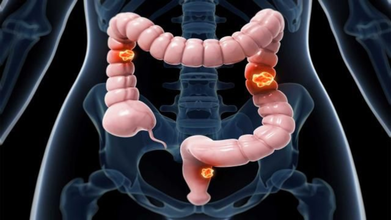
Colon (colorectal) cancer begins when small growths called polyps form on the inner lining of the colon or rectum. Over time, changes in the DNA of these cells can cause the polyps to become cancerous.
As abnormal cells multiply, they replace healthy cells and eventually form a mass known as a tumor. This process develops slowly, often taking up to ten years for a precancerous polyp to turn into cancer and begin showing symptoms.
Colon cancer poses serious health risks because cancerous cells can invade healthy tissues. Over time, they may break away and spread to other parts of the body, making detection more difficult since the symptoms can resemble other conditions.
What Is the First Sign of Colon Cancer You Shouldn’t Ignore?
Colon cancer can be difficult to detect because it often develops without obvious symptoms. However, doctors emphasize that the number one warning sign is rectal bleeding or blood in your stool.
"Colon cancer can be hard to diagnose because it can develop asymptomatically,” said Dr. John Nathanson, a gastroenterologist at New York-Presbyterian Allen Hospital.
Dr. Pratima Dibba adds that this symptom should not be misdiagnosed as hemorrhoids, infection, or constipation, since early signs of colon cancer can look similar.
She urges patients to get checked promptly to rule out serious conditions.
Research from the Cleveland Clinic also shows that blood in stool can originate anywhere in the gastrointestinal tract, including the colon.
Detecting colon cancer early is critical, as survival rates can be as high as 90 percent when caught in its initial stages.
What Are Other Symptoms Of Colon Cancer?
Persistent changes in bowel habits (diarrhea, constipation, or narrowing of stool). Other signs include:
- Abdominal (belly) pain
- Bloated stomach
- Constipation or diarrhea
- Feeling like there’s still poop in your bowel even after you go to the bathroom
- Feeling tired or weak
- Unexplained weight loss
Present Day Scenario In India
Colorectal cancer (CRC) is a major health concern worldwide. In India, it is the fourth most common cancer among both men and women. In 2022, there were 64,863 new cases and 38,367 deaths.
Projections suggest that incidence will continue to rise by 2026, reflecting both lifestyle changes and improved detection.
Compared to developed countries, survival rates in India remain lower, largely due to late-stage diagnosis and limited access to screening programs.
The American Cancer Society notes that colorectal cancer is a cancer that starts in the colon or the rectum. Colorectal cancer impacts around 1.9 million people every year, noted the World Health Organization (WHO) as per its 2022 data.
Some of the risk factors include risk factors involve being over the age 50, family history, certain genetic syndromes (like Lynch syndrome), inflammatory bowel diseases, and lifestyle factors (diet high in red meat, alcohol, smoking, inactivity).
The most effective way to prevent colorectal cancer is through annual colonoscopies, screening and stool tests.
Study Finds Strong Links Between Borderline Personality Disorder And Alcohol Use
Credits: Canva
Alcohol use problems are far more common in people living with borderline personality disorder than many clinicians may assume. A large meta analysis has found that more than half of individuals diagnosed with the condition also struggle with alcohol use disorders. The finding strengthens calls for mental health care that treats both issues together rather than separately.
Why Alcohol Is A Major Risk
Borderline personality disorder, often called BPD, is a complex psychiatric condition marked by intense emotional swings, impulsive behavior, unstable relationships, and a fragile sense of self. Many people with BPD experience overwhelming emotional distress and may turn to alcohol as a way to cope, calm themselves, or escape difficult thoughts.
For years, research has hinted at a strong connection between BPD and substance misuse. However, the actual scale of the problem has been unclear because individual studies reported very different numbers. Some suggested moderate overlap while others pointed to extremely high rates.
Alcohol misuse in BPD is not just a side issue. It can worsen mood instability, increase the risk of self harm, and make therapy harder to stick with. People may miss appointments, struggle with medication routines, or act more impulsively while intoxicated. This makes understanding the true prevalence important for both diagnosis and treatment planning.
What Did The Research Find?
To clarify the picture, researchers reviewed 15 studies including 15,603 adults diagnosed with borderline personality disorder. The team analyzed data collected across multiple countries and databases up to March 2024 using established systematic review methods.
The results were striking. About 55.28 percent of people with BPD had an alcohol use disorder. Around 44.59 percent met criteria for alcohol dependence and 18.84 percent for alcohol abuse.
When compared with the general population, the contrast becomes sharper. Alcohol use disorders occur in roughly 8.6 percent of men and 1.7 percent of women overall. The prevalence in BPD is therefore dramatically higher.
In simple terms, alcohol related conditions are not occasional in BPD. They are common and clinically significant.
What This Means For Treat
The findings suggest that mental health services cannot treat borderline personality disorder in isolation. Screening for alcohol misuse should become routine during psychiatric assessment. Likewise, addiction services should look for underlying personality disorders rather than focusing only on drinking behavior.
Integrated treatment approaches are likely to work better. Therapy that addresses emotional regulation, impulsivity, and coping skills alongside addiction support may reduce relapses and improve long term outcomes.
Early identification is key. When both conditions are recognized together, patients are more likely to stay engaged in care and avoid severe complications. The research ultimately highlights a simple but important point. For many patients, recovery depends on treating the person as a whole, not just the diagnosis they first walk in with.
- Follow Us :


© 2024 Bennett, Coleman & Company Limited