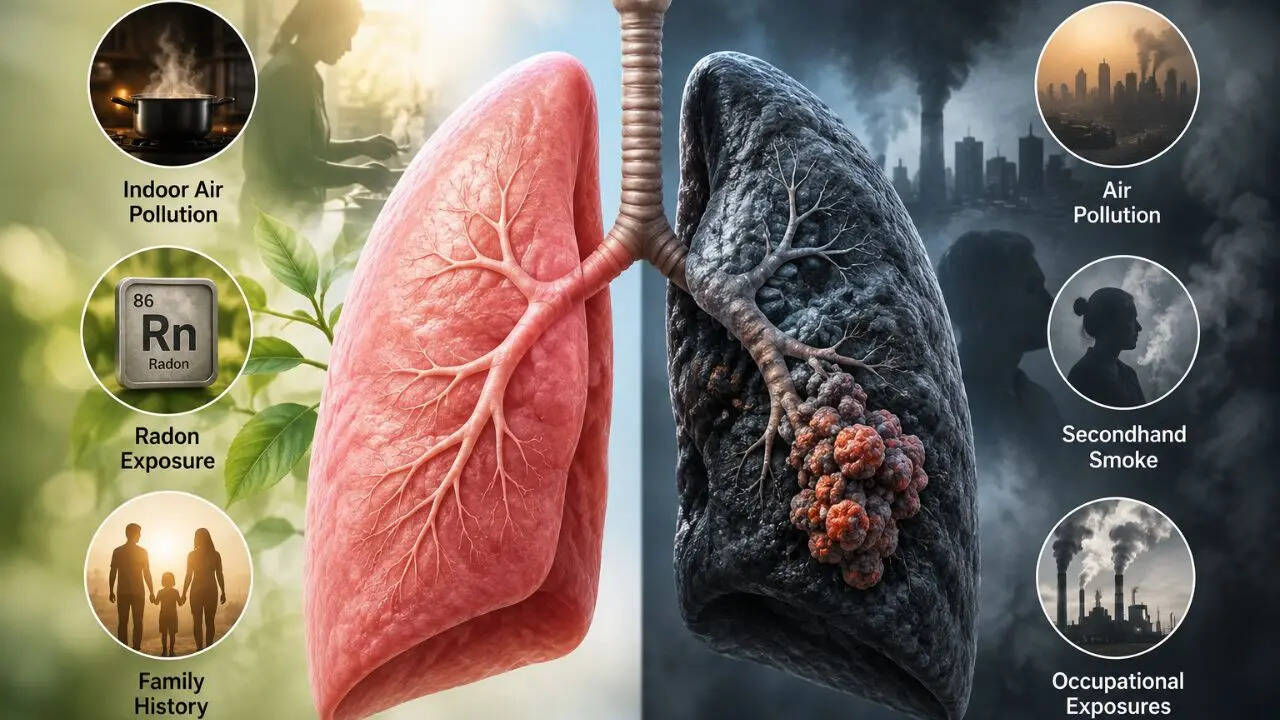
For many people, the first thing that comes to their minds when hearing the term “lung cancer” is smoking. Although smoking remains the primary causative factor for this cancer, many other risk factors have been identified that need to be considered. Lung cancers develop in non-smokers too and form a rather large percentage of all cases. Thus, it is very important to enlighten people about other possible causes of lung cancer.Hidden Risk Factors That Deserve Attention Second-hand smoking is one of the major risk factors that leads to the development of lung cancer in non-smokers. Exposing oneself to a smoker in your family, workplace, and in your surroundings for a prolonged period of time can result in accumulation of smoke and carcinogens found in cigarette smoke even in a non smoker’s lung. The other reason for the development of the disease is air pollution which is critically worsening by the day, especially in large cities where the proportion of particulate matter is rising in the air. Chemical exposure at workplace to harmful substances and carcinogens such as asbestos, silica dust, diesel exhaust, arsenic, and other industrial chemicals also increase the risk. Using protective wear at work is essential in industries dealing with such chemicals is very essential. The presence of radon gas in some geographical locations is another lesser known cause. Invisible and odorless in nature, exposure to high levels of radon gas has been known to cause lung cancer.Also read: The 'Safer Than Smoking' Myth? Doctors Warn Vaping May Carry Its Own Lung Cancer Risks Family History and Personal Health Matter. People with a family history of lung cancer in their immediate family could be more prone to developing lung cancer, even without having ever smoked. The factors contributing to this are not hereditary or genetic as directly as other cancers, but more as a result of shared environmental exposure and lifestyle factors. Certain lung conditions, such as COPD, pulmonary fibrosis, and some long-standing lung infections, can also increase the risk. Age is another important factor. Lung cancer is more commonly diagnosed in older adults, but it can also occur in younger people. That is why it is important to be aware of the symptoms and seek medical attention early, regardless of age.Also read: Don't Fear The Biopsy, Fear The Delay Recognising the Warning Signs Early The main problem in diagnosing lung cancer is that this disease has no symptoms until it develops to a certain extent and has symptoms such as coughing persistently, coughing up blood, chest pain, unexplained weight loss, shortness of breath, chest infection, and exhaustion. None of these symptoms can be ignored as lung cancer can still be treated in its early stages. Awareness Can Save Lives Preventing lung cancer entails more than just not smoking. Measures to ensure good air quality at home, to protect against any occupational dangers and hazards, to reduce exposure to air pollutants whenever possible, and to undertake regular health examinations can help in prevention and early detection. Just as crucial is the awareness of symptoms and the fact that anyone can get lung cancer, including people who have never smoked.