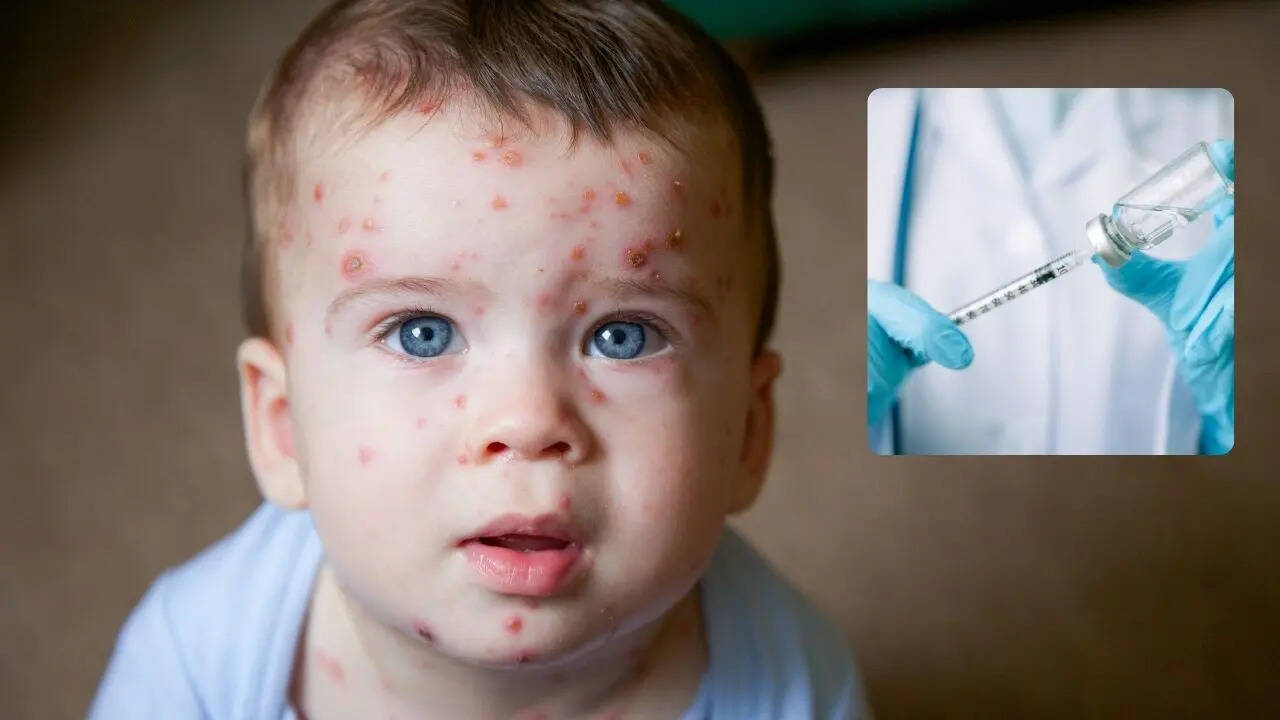
Hundreds of thousands of children are set to receive an additional vaccine under the NHS routine childhood immunisation programme. Health officials have confirmed it will be given alongside the existing MMR jab, which protects children in England against measles, mumps and rubella.Chicken pox Vaccine Starts By NHSThe decision follows advice from the Joint Committee on Vaccination and Immunisation and will see the current MMR jab replaced with a combined MMRV vaccine. This single injection protects against measles, mumps, rubella and chickenpox. Studies estimate that chickenpox in childhood leads to around £24 million a year in lost earnings and productivity across the UK. Alongside reducing this impact, the rollout is expected to save the NHS about £15 million each year in treatment costs linked to the illness.Dr Claire Fuller, National Medical Director for NHS England, said: “This marks a very positive step for children and families, offering protection against chickenpox for the first time and strengthening the range of routine vaccinations we already give to help shield children from serious diseases.“From now on, the combined vaccine covering measles, mumps, rubella and chickenpox will be offered at children’s routine vaccination appointments. This will help keep children healthier, prevent illness caused by these highly infectious viruses, and support the NHS shift from treating sickness to preventing it, while keeping more children safe and in school.”Recent figures show that around half of children will have chickenpox by the age of four, with nine in ten catching it before they turn ten. Children who develop chickenpox are usually advised to stay away from school until all spots have crusted over, which typically happens about five days after the rash appears.With the new vaccine in place, fewer children are expected to miss time at nursery or school. This should also reduce the amount of work parents need to take off to look after them.Who Can Get The Chickenpox Vaccine On The NHS?Protection against chickenpox is being offered through a new combined vaccine known as MMRV, which replaces the existing MMR jab. The MMRV vaccine protects against measles, mumps, rubella and varicella, the virus that causes chickenpox.Children born after 1 January 2026 will automatically be offered two doses of the MMRV vaccine, given at 12 months and again at 18 months.A catch-up programme will also provide one or two doses for older children, depending on when they were born:children born on or after 1 January 2025 will be offered two doses, one at 12 months and one at 18 monthschildren born between 1 July 2024 and 31 December 2024 will be offered two doses, one at 18 months and another at 3 years and 4 monthschildren born between 1 September 2022 and 30 June 2024 will be offered one dose at 3 years and 4 monthschildren born between 1 January 2020 and 31 August 2022 will be offered a single dose later in 2026GP practices will contact families directly to arrange vaccination appointments when they are due.How Does The New Chickenpox Vaccination Work?Specialists say adding the varicella vaccine to the NHS childhood immunisation schedule will significantly cut the number of people who get chickenpox, resulting in far fewer severe cases.While the vaccine does not guarantee lifelong immunity, it greatly lowers the chances of catching chickenpox or developing a serious form of the illness. Serious side effects, including severe allergic reactions, are extremely uncommon.The vaccine is a live vaccine, meaning it contains a weakened form of the chickenpox virus. Because of this, it is not recommended for people with weakened immune systems due to conditions such as HIV or treatments like chemotherapy.The change brings the UK in line with countries that already include routine chickenpox vaccination, such as Germany, Canada, Australia and the United States.In the past, there were concerns that vaccinating children against chickenpox could lead to an increase in shingles later in life, but a large long-term study from the US has since shown this is not the case.The Joint Committee on Vaccination and Immunisation, which advises the government, recommended the introduction of the MMRV vaccine for all children in November 2023.The government confirmed plans to roll out the MMRV vaccine in August 2025, after new figures showed that none of England’s main childhood vaccinations reached the 95 percent uptake target in 2024 to 2025.According to the UK Health Security Agency, 91.9 percent of five-year-olds had received one dose of the MMR vaccine. This figure was unchanged from 2023 to 2024 and remains the lowest level recorded since 2010 to 2011.