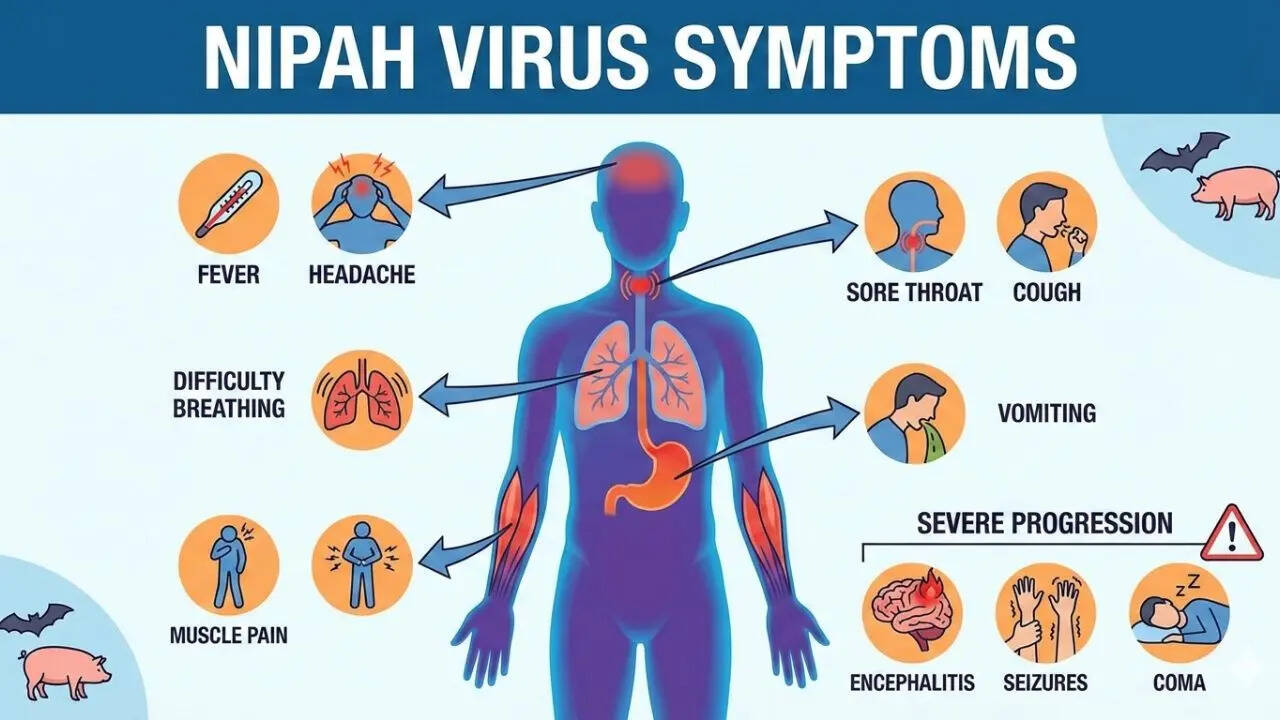
Health authorities have urged the public to stay alert to Nipah virus symptoms after doctors warned that up to 75 per cent of infected patients may not survive. The UK Health Security Agency (UKHSA) has classified Nipah as a “high priority pathogen” because of its severe fatality rate and the absence of any proven treatment.In India, the federal health ministry has confirmed two cases in the eastern state of West Bengal. This has triggered large-scale containment measures, with local officials placing nearly 200 people who had contact with the infected individuals under quarantine.Also Read: Vitamin D Supplements Under Scrutiny As It Fails Safety TestIn response, several Asian nations have stepped up airport checks and health surveillance for travellers arriving from India. Professor Paul Hunter, an infectious disease specialist at the University of East Anglia, said identifying Nipah cases at borders is challenging, as symptoms can take a long time to appear.What Is Nipah Virus?According to UKHSA, Nipah virus is a zoonotic infection, meaning it can pass from animals to humans. It can also spread through contaminated food or via direct human-to-human contact. The virus was first discovered in 1999 during an outbreak affecting pig farmers in Malaysia and Singapore.Fruit bats, especially those belonging to the Pteropus species, are the virus’s natural carriers. Research shows that Nipah can also infect other animals, such as pigs, dogs, cats, goats, horses and sheep.Nipah Virus SymptomsUKHSA lists the following as common symptoms of Nipah virus infection:Sudden onset of fever or general flu-like illnessDevelopment of pneumonia and other breathing-related problemsSwelling or inflammation of the brain (encephalitis) or meningitisSymptoms usually appear between four and 21 days after exposure, although longer incubation periods have occasionally been reported. More severe complications, including encephalitis or meningitis, can develop between three and 21 days after the initial illness begins.Also Read: Nipah Virus Outbreak In India: All That You Need To Know About This InfectionNipah Virus Symptoms Explained As Doctors Warn 75% Fatality RateUKHSA has cautioned that between 40 and 75 per cent of people infected with Nipah virus may die. Those who survive can experience long-term neurological effects, such as ongoing seizures or changes in behaviour and personality. In rare instances, the virus has been known to reactivate months or even years after the first infection.Nipah Virus: Can You Prevent It From Spreading?For people travelling to regions where Nipah is known to occur, prevention largely involves reducing exposure risks:avoid contact with bats, their habitats, and sick animalsdo not drink raw or partially fermented date palm sap; if consuming date palm juice, make sure it has been boiledwash all fruits well with clean water and peel them before eating; avoid fruits found on the ground or those that appear partly eaten by animalsuse protective clothing and gloves when handling sick animals or during slaughter and cullingmaintain good hand hygiene, especially after caring for or visiting ill individualsavoid close, unprotected contact with anyone infected with Nipah virus, including exposure to their blood or bodily fluidsNipah Virus Symptoms Can Be Transmitted Easily?Many Nipah infections have been linked to eating fruit or fruit-based products contaminated by the saliva, urine or droppings of infected fruit bats. Human-to-human transmission can also occur through close contact with an infected person or their bodily fluids, according to Mirror.Such transmission has been documented in India and Bangladesh, with cases often involving family members or caregivers tending to infected patients. At present, there is no specific, proven treatment for Nipah virus infection, and no licensed vaccine is available to prevent it.So far, no Nipah virus cases have been reported in the United States or the United Kingdom.