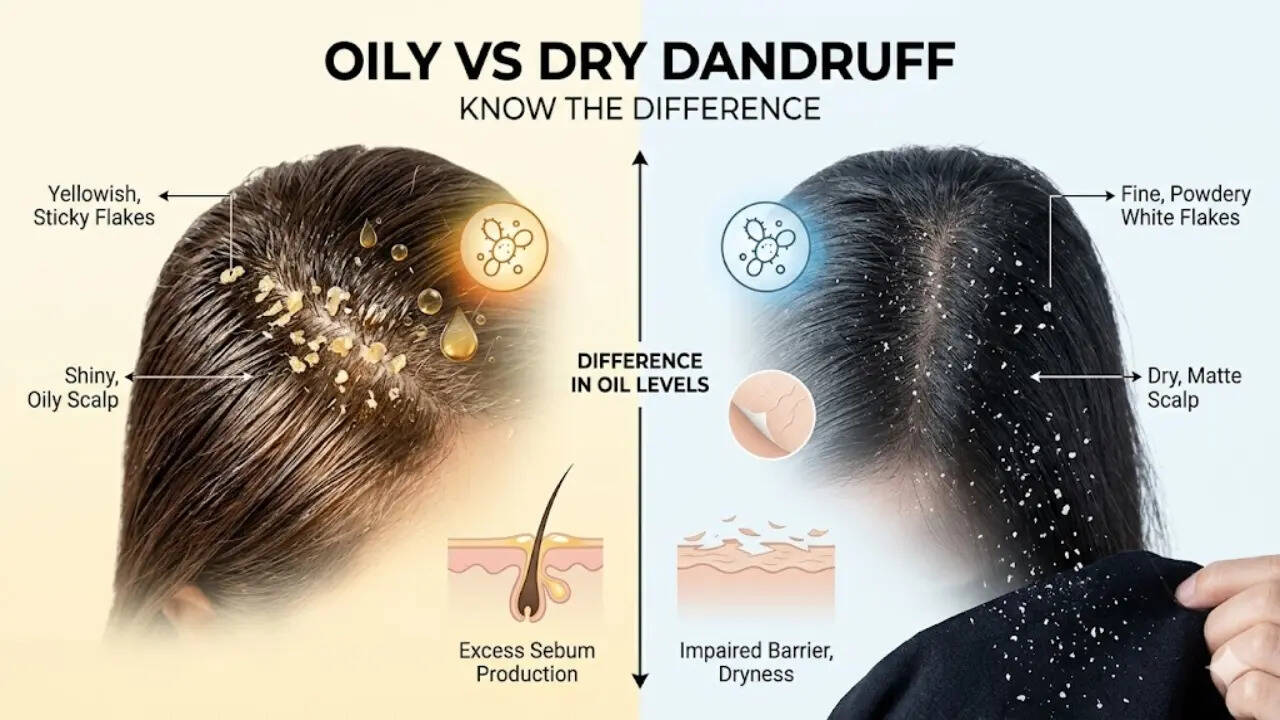
Most people assume dandruff simply means white flakes. In clinical practice, however, we commonly see two different patterns—oily dandruff and dry dandruff. Both can cause flaking and itching, but the scalp environment, type of flakes, and recurrence pattern can differ significantly. Understanding which type you have helps in choosing the right scalp care. Using random shampoos without understanding your scalp often provides only temporary relief, and the flakes keep returning.Dr Ankur Sarin, Dermatologist at Sarin Wellness and Co-founder, sarinskin.com, in an interview with Health and Me, explained the differences and management approaches.What Causes Dandruff?Dandruff is a common scalp condition linked to an imbalance involving a naturally occurring yeast called Malassezia. This organism lives on most human scalps and feeds on sebum, the natural oil produced by the scalp.In some individuals, the scalp becomes sensitive to the by-products produced when this yeast breaks down sebum. This irritation can lead to inflammation and faster turnover of skin cells.Normally, scalp skin sheds invisibly. However, when cell turnover speeds up, these cells accumulate and appear as visible flakes. Mild itching, irritation, and redness can also occur. The amount of oil present on the scalp often influences how dandruff appears, which is why the condition can show up as either oily or dry flaking.Oily Dandruff: When Excess Oil Drives the FlakingWhat It Looks Like: Oily dandruff usually appears as yellowish or off-white flakes that look slightly sticky or clumped together. These flakes often stick to the scalp or nails rather than falling freely on clothing.What It Feels Like: The scalp may feel greasy within one or two days after washing. Itching is usually persistent but moderate. Some people may also notice mild redness.What’s Happening on the ScalpExcess sebum creates a favourable environment for Malassezia yeast to grow more actively. Factors that can worsen oily dandruff include:Humid weatherSweatingHelmet useHeavy styling productsInfrequent scalp cleansingSimply washing more often or using cosmetic shampoos may remove surface oil temporarily, but they do not control yeast growth, so flakes tend to return quickly.Dry Dandruff: Fine Flakes That Fall Like SnowWhat It Looks Like: Dry dandruff appears as fine, powdery white flakes that easily fall onto the shoulders, especially visible on dark clothes.What It Feels Like: The scalp may feel slightly tight or dry. Itching is usually mild to moderate rather than intense.What’s Happening on the ScalpDry dandruff is often confused with simple scalp dryness caused by cold weather, harsh shampoos, or over-washing. However, recurrent fine flaking is still frequently associated with Malassezia-related irritation, even if the scalp does not feel very oily. This means that simply increasing oiling or switching to moisturising shampoos may improve comfort but may not completely resolve the flaking.Why Each Type Needs Slightly Different CareThe key difference between oily and dry dandruff lies in scalp oil levels and flake texture.Oily dandruff requires controlling excess oil along with antifungal action.Dry dandruff requires maintaining scalp balance without excessive stripping while still addressing yeast activity.Many regular shampoos simply cleanse the hair. They may wash away flakes temporarily but do not treat the underlying microbial imbalance. For better control, it helps to look for clinically studied antifungal ingredients. One such ingredient is piroctone olamine, which helps reduce the growth of dandruff-associated yeast.Benefits of Piroctone Olamine in Scalp CareEffective antifungal activityGentle on the scalp barrierSuitable for regular useWorks across different climates and scalp typesConsistent use helps maintain scalp balance and reduce recurrence.How to Identify Your Dandruff TypeA few simple observations can help:Does your scalp become greasy quickly after washing?Are the flakes sticky and clumped?Or are they fine and powdery?Do flakes persist even when you moisturise the scalp?A simple home check is to press a small strip of butter paper on the scalp parting. If it quickly shows oil marks, your scalp may lean towards the oily side.The TakeawayChecking the ingredient list and using shampoos with proven antifungal ingredients regularly can help maintain long-term scalp health. Consistency matters — because dandruff is a recurring condition that needs ongoing scalp care, not a one-time fix.