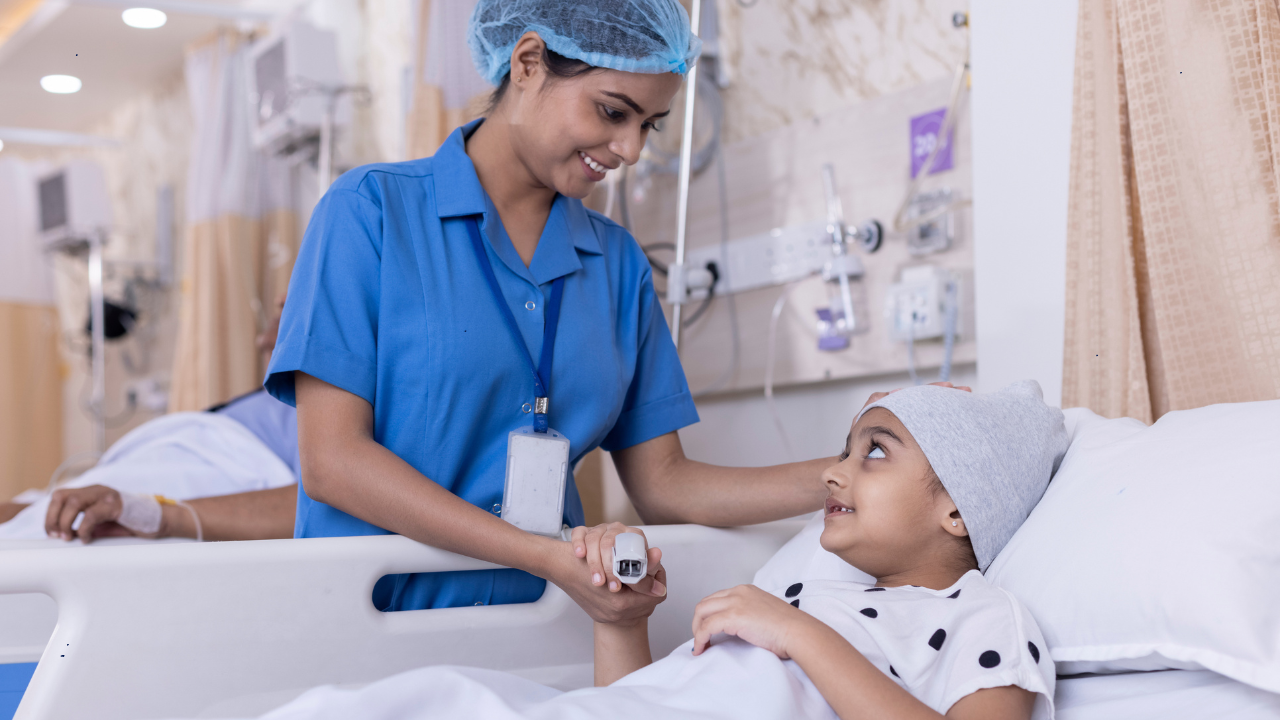
In my journey as a neonatologist, one truth has remained constant—no healthcare system can succeed without strong nursing care. We often celebrate breakthroughs in technology and clinical expertise, but at the bedside, where outcomes are truly shaped, it is the nurse who makes the difference.Nowhere is this more evident than in the Neonatal Intensive Care Unit (NICU), a space I have spent decades working in. Caring for extremely premature babies—sometimes born as early as 24–26 weeks—requires far more than advanced machines or protocols. These fragile lives demand minute-to-minute monitoring, swift clinical judgment, and unwavering attention. It is the nurse who notices the subtle drop in oxygen levels, the slight change in skin tone, or the early signs of infection. Many times, it is their timely intervention that prevents a complication from becoming a crisis. I have witnessed countless such moments—quiet, uncelebrated, yet life-saving.What we see in practice is strongly supported by global data. Research has consistently shown that for every additional patient assigned to a nurse, the risk of patient mortality increases by nearly 7%. Hospitals with optimal nurse-to-patient ratios report lower infection rates, shorter hospital stays, and significantly better survival outcomes. These are not marginal gains—they are decisive factors in patient care.And yet, as healthcare advances, a critical gap is becoming increasingly visible.Over the past five to six decades, medicine has transformed dramatically. We have moved from general practice to highly specialized and super-specialized care—interventional cardiology, robotic surgeries, advanced oncology, and neonatal care that can support extremely preterm infants. These advancements have contributed to a remarkable rise in life expectancy in India—from around 41 years in the 1960s to over 69 years today.But while medicine has rapidly specialized, nursing training has not evolved at the same pace. This imbalance is one of the most pressing challenges in healthcare today.The Global Shortage For NursesIndia, like many parts of the world, faces a significant workforce gap. The World Health Organization estimates a global shortage of nearly 6 million nurses. While we continue to train and recruit more nurses, the real challenge lies in specialized skill development. In many hospitals, nurses are assigned to departments based on immediate needs rather than structured career pathways. They learn on the job, often in high-pressure environments, building expertise through experience.While this speaks volumes about their dedication and resilience, it also highlights a systemic limitation. Specialized medicine cannot function optimally without specialized nursing.In a NICU, for instance, managing non-invasive ventilation, performing neonatal resuscitation, ensuring strict infection control, and counselling anxious parents are not basic skills—they are specialized competencies. These require structured training, repeated practice, and continuous upskilling.Bridging The Gap: Training Initiatives In PracticeRecognizing this gap, we recently conducted 10 focused workshops across Karnataka as part of the State Neonatal Nurses Conference. These workshops were designed to strengthen critical skills such as the Neonatal Resuscitation Program (NRP), Non-Invasive Ventilation (NIV), and effective communication within the NICU. What stood out was the response.Participation exceeded capacity by nearly four times. Nurses travelled long distances, eager to learn, engage, and enhance their skills. This was not just enthusiasm—it was intent. It was a clear indication that nurses are ready to grow, to specialize, and to deliver better outcomes. What they need is access—structured, scalable, and sustained opportunities to learn.Globally, the impact of investing in nursing education is well documented. Hospitals with a higher proportion of well-trained nurses have reported up to 20% lower mortality rates in certain patient groups. Healthcare systems that prioritize continuous professional development for nurses consistently demonstrate better patient safety outcomes and higher satisfaction levels.The Need for Systemic Change in Nursing EducationIndia has begun to take steps in this direction. Initiatives such as the Neonatal Nurse Fellowship introduced by the National Neonatology Forum are important milestones. However, these programs, while valuable, are not accessible to all. Financial constraints, time commitments, and geographical limitations often restrict participation.This calls for a shift in approach.Training must move beyond select programs and become an integral part of the healthcare system. We need modular learning formats, simulation-based training, in-hospital skill development programs, and digital platforms that allow continuous learning. Every nurse—irrespective of location or institution—should have access to opportunities that help them grow.Because ultimately, no matter how advanced our systems become, outcomes depend on the people delivering care.I often remind my teams of a simple reality—without strong nursing care, the success of any medical speciality is less than 50%.Beyond systems, statistics, and strategy lies the human side of nursing—a dimension that cannot be measured but is deeply felt.In the NICU, nurses are not just caregivers to fragile newborns; they are also a source of strength for parents navigating uncertainty and fear. I have seen nurses hold the hands of anxious mothers, explain complex medical situations with patience, and provide reassurance during some of the most difficult moments a family can experience. They are the bridge between clinical excellence and emotional care.And yet, despite their central role, nurses often remain under-recognized and under-supported. If we are serious about strengthening healthcare, this must change.Empowering nurses is not just about improving skills—it is about acknowledging their value, creating structured career pathways, and ensuring they are included in decision-making processes. It is about building a culture of respect, where nursing is seen not as support, but as a critical pillar of care delivery.The future of healthcare will not be defined by technology alone. It will be defined by the strength, capability, and empowerment of its workforce.And at the heart of that workforce are our nurses. If we want safer hospitals, better clinical outcomes, and resilient healthcare systems, the path forward is clear—we must invest in our nurses, not just in numbers, but in their growth, training, and empowerment. Because in every critical moment I have witnessed, one truth stands out—quietly, consistently, and powerfully: Empowered nurses don’t just support care. Empowered nurses save lives.Dr. R. Kishore Kumar is President – National Neonatology Forum, Karnataka Chapter