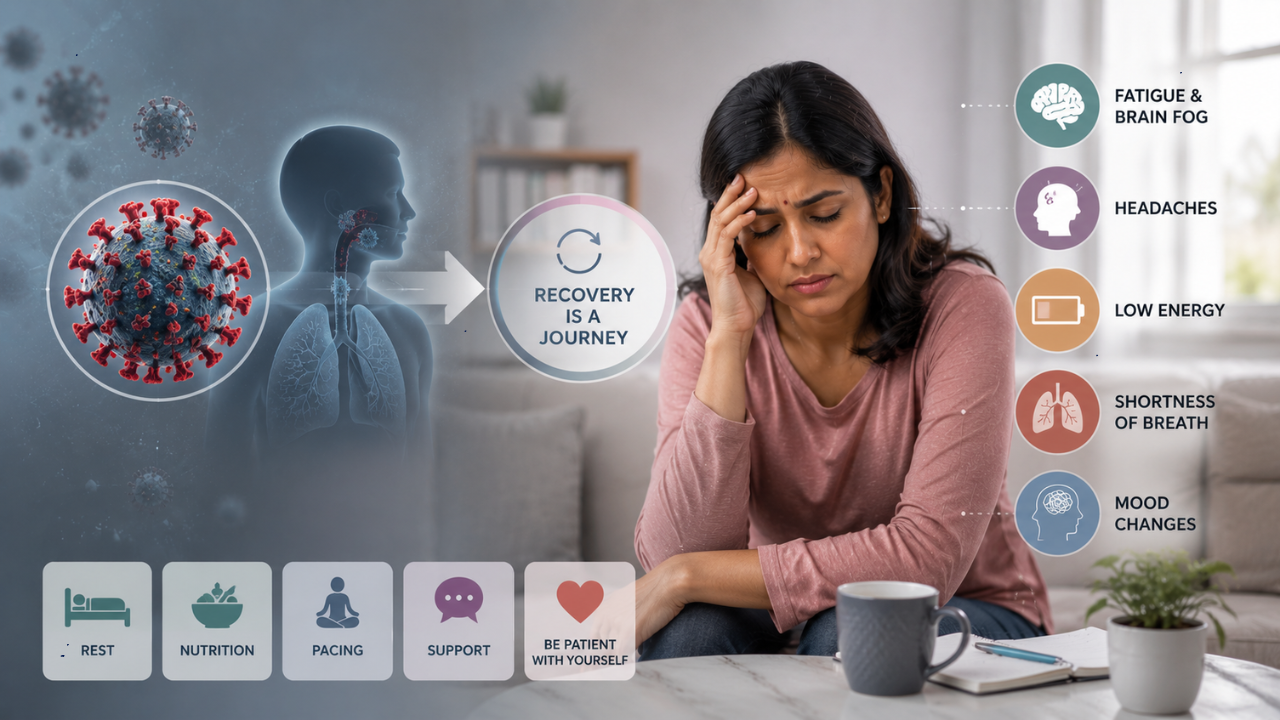
Post-viral syndromes are a classic example of the body not feeling better even after the viraemia is over. When a viral infection ends, most people expect life to quickly return to normal. For many, it does, but for some, recovery stretches on for weeks or even months. This condition, often called a post-viral syndrome, is now being seen more clearly across the country, especially after the COVID-19 pandemic. Thus, the main question that arises is why doesn’t recovery end when the infection is gone? The answer is that the body does not always ‘reset’ immediately.Why Symptoms Continue After the Infection Clears? During an infection, the body’s defense system becomes highly active to fight the virus. In some people, this response does not completely settle down even after the virus has been cleared. This can lead to ongoing tiredness, body aches, or a general feeling of being unwell. This could be due to the immune system remaining partially activated. In certain cases, the body’s defense system may even start reacting in an unbalanced way, affecting normal tissues. This is why some people develop symptoms like joint pains, palpitations, or dizziness after a viral illness, even though tests may not show an active infection.Another important reason is energy depletion. Viral infections can temporarily affect how the body produces and uses energy. As a result, even small physical or mental efforts can feel exhausting. Many patients describe a pattern where they feel better, try to return to normal activity, and then feel worse again. This cycle can delay full recovery. The nervous system can also be affected. Some people experience what is commonly called ‘brain fog’, poor sleep, or a sense of imbalance in heart rate and blood pressure. These symptoms are real and are part of the body’s recovery process.POTS SyndromeAlso, there is something called POT (Positional Orthostatic Tachycardia) syndrome. Patients, when they get up and stand, develop mild giddiness and palpitations. It is also important to understand that the body may take time to rebuild strength. Muscle loss, physical inactivity, and lack of appetite are common effects following an illness. Why Recovery Should Not Be Rushed Consequently, when an individual has recovered from the virus, it is more than just getting rid of the virus. It involves restoring and getting stronger over time. Most importantly, recovery should never be rushed. Pushing too hard or returning to high levels of activity too soon after becoming ill can lead to worsening of symptoms and therefore prolong the recovery time.A more effective way to recover is by taking a gradual, steady approach. Recovery involves resting adequately, maintaining a nutritious diet, engaging in light exercise and receiving adequate amounts of sleep and at the same time being aware of how your body feels. Long-term symptoms are not in your head. They are part of the process of healing that occurs after some forms of infection. Most people will recover, but patience and using proper methods are key to recovering completely. It is also important to understand that recovery involves rebuilding the strength that the body needs time to restore this balance. It is important not to get carried away assuming post-viral syndrome, but consult a physician and not miss out on an underlying medical disorder, and investigate appropriately.