
- Health Conditions A-Z
- Health & Wellness
- Nutrition
- Fitness
- Health News
- Ayurveda
- Videos
- Medicine A-Z
- Parenting
Perimenopause Isn’t Just Hot Flashes, Doctors Explain the Lesser-Known Signs

Credits: iStock
Many in their late 30s and early 40s find themselves Googling weird stuff, including 'why am I having a tingling feelin in my arm?' 'why do I feel like something is brushing across my arm?', and more. This is what many call a phantom feeling arm, which means there is nothing actually tickling, but you feel it anyway. Medically, it is known as paresthesia, a tingling feeling or numb sensation, usually what people refer to as the pins and needles sensation. This is caused by temporary pressure on a nerve or any underlying nerve damage issue.
If you look up anything like that, many women claimed, it instantly shows: perimenopause.
Despite an increased awareness around it, perimenopause and menopause still remain a taboo. In a survey, it was found that 54 per cent of women were concerned about the uncertainty they are about to face in their perimenopause and menopause period.
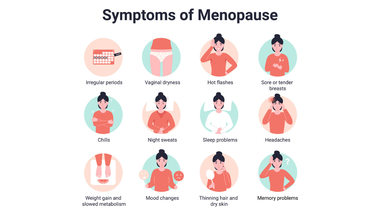
Menopause is not just hot flashes, it is much more than that. Dr Mahima Gulati, an endocrinologist at UConn Health points out symptoms like gaining weight despite "doing everything right", brain fog, aching joints, sleepless nights, exhausting days, and depleted energy. She says "These symptoms are real. This is not something women are imagining, and it is not just aging. There are real biological changes happening, and women deserve evidence based care and support as they move through them."
What Can Help Women Dealing With Menopause and Perimenopause?
Before going into the solution, let us first understand what these term really mean.
Perimenopause: It is the period when a menstruator transitions to menopause, or when the period stops permanently. This phase is characterized by fluctuating hormone levels, irregular periods, which could be shorter, longer, heavier, or lighter, hot flashes, sleep problems and mood changes.
Menopause: This is the natural, permanent end of menstruation defined as 12 consecutive months without a period. This typically occurs between ages 45 to 55.
What Can Help In Menopause And Perimenopause?
Form Connections
“For women to sit in a room and realize they are not alone is incredibly therapeutic. Connection itself reduces the burden of chronic conditions,” points out Dr Gulati.
The doctor points out that women often learn from each others’ experience and this is why social connections are extremely important in this time.
Pay Attention On Sleep
Sleep problems are one of the most common and exhausting symptoms of perimenopause and menopause. Hormonal changes can disrupt deep sleep, causing women to wake up in the early hours, deal with night sweats, and struggle to fall back asleep. When this happens regularly, it leads to severe energy drain, not just tiredness.
To improve sleep, Gulati focuses on simple, practical habits. These include keeping a regular sleep schedule, avoiding caffeine and alcohol in the evening, reducing screen time after 7 p.m., keeping phones out of the bedroom, and practicing calming activities like yoga or meditation. Drinking enough water during the day can also help regulate body temperature at night and reduce hot flashes.
Managing Stress Differently
Instead of trying to eliminate stress, which is often unrealistic, Gulati encourages women to change how they respond to it. Stress is treated as a signal to reassess priorities, set boundaries, and ask for support when needed. This shift helps build resilience and prevents burnout.
Movement Beyond Exercise
Physical activity becomes especially important in midlife, but it’s not just about workouts. Strength training helps protect muscles and bones, while regular movement throughout the day, balance exercises, and flexibility work support long-term health. Reducing long sitting hours is just as important as planned exercise.
Reducing Harmful Habits
Gulati also advises cutting back on alcohol and avoiding tobacco. After menopause, alcohol can worsen sleep, increase belly fat, and raise the risk of conditions like breast cancer and osteoporosis. Limiting late-night screen use can further improve sleep quality.
Eating to Support the Body
Nutrition is another key focus. Rather than aiming for perfection, Gulati encourages small, steady improvements like eating more vegetables and protein, staying hydrated, and choosing foods that may ease menopausal symptoms. The goal is better energy, sleep, and overall health, not just weight loss.
No Smoking Day: Are There Science-backed Methods To Quit Smoking?

Credits: Canva
On No Smoking Day, we drive our focus to science-backed methods that can help one leave smoking. Smoking is one of the leading causes of preventable deaths worldwide. It also contributed to severe health problems, including cancer, cardiovascular diseases, and respiratory diseases. Even though many people are aware of this harmful consequences, many struggle to quit smoking. Mostly because it is a habit often associated to enjoying a break. Even when someone does not need it, their brain tricks them into believing that smoke is important for the break they are meant to enjoy.
However, there are several studies that have explored science-backed methods that could help one to quit smoke.
A study published in the journal Addiction, emphasizes three primary methods proven effective for quitting smoking: behavioral support, prescription medications, and nicotine replacement therapy (NRT). These strategies have shown varying levels of success in aiding smokers to quit permanently. In addition, alternative methods like e-cigarettes and mindfulness-based techniques have gained traction in helping reduce smoking addiction.
Quitting smoking is more than just a decision; it’s a commitment to significantly improving your health and well-being. Smoking has been directly linked to various cancers, lung diseases, and heart conditions. In the long term, stopping smoking can lower your risk of these life-threatening conditions.
According to the study, individuals looking to quit smoking should consider using Varenicline (sold as Chantix/Champix), Cytisine (a plant-based supplement available in Europe and Canada), or nicotine e-cigarettes.
“Quitting smoking is difficult, and some people find it harder to quit than others, but tobacco is uniquely deadly among legal consumer products, so it’s important to seek help quitting,” said lead investigator Jonathan Livingstone-Banks, a lecturer and researcher in evidence-based health care with the University of Oxford in the U.K.
Read: Does Smoking Affect Women Differently Than Men?
What Happens When You Stop Smoking?
- In just 20 minutes of stopping, your blood pressure and heart rate begin to normalize.
- Within a few weeks, your lung function improves.
- Over time, the risk of heart disease and cancer also decreases dramatically.
Three Science-backed Methods That Could Help You Quit Smoking
Behavioral Support
Quitting smoking isn’t just about resisting cravings. Often, behavioral support through counseling or therapy is crucial for tackling the psychological aspects of addiction. Behavioral therapy involves working with a trained professional to identify triggers, develop coping strategies, and create a tailored quit plan. Research shows that combining counseling with other quit methods can significantly increase success rates.
Prescription Medications
Some medications, such as varenicline (Chantix) and bupropion (Zyban), have been shown to help people quit smoking by reducing cravings and withdrawal symptoms. Experts suggest that varenicline works by blocking the effects of nicotine in the brain, while bupropion is an antidepressant that helps manage withdrawal symptoms. Both medications are generally more effective when combined with behavioral therapy.
Nicotine Replacement Therapy (NRT)
Nicotine replacement products, such as nicotine patches, gums, lozenges, and nasal sprays, deliver controlled amounts of nicotine to ease withdrawal symptoms. According to experts at Harvard Health, NRT can double the chances of quitting by alleviating physical cravings while the person works on overcoming the psychological addiction.
The Silent Rise of Fatty Liver Disease: How India-Specific Guidelines Can Help

Metabolic dysfunction-associated steatotic liver disease (MASLD), previously called fatty liver disease, is becoming extremely common in people with type 2 diabetes in India.
Studies suggest that 50–70 percent of Indians with type 2 diabetes may have fatty liver, and a significant proportion can progress to inflammation, liver fibrosis, cirrhosis, or even liver cancer if the condition is not detected early. Because India already has one of the world’s largest populations with diabetes, MASLD is emerging as a major but under-recognized public health problem.
The recently published consensus guidelines developed by Indian experts aim to provide practical, India-specific recommendations for diagnosing and managing MASLD in people with type 2 diabetes.
In fact, these are the first global guidelines for MASLD and type 2 diabetes, albeit restricted to India. This matters because most existing international guidance—including from organizations such as the American Diabetes Association—is largely based on evidence and healthcare systems in high-income Western countries. These recommendations often assume easy access to expensive diagnostic tests and medications, which may not always be feasible in India.
In India, healthcare costs are frequently paid out-of-pocket by patients. Advanced imaging tests or newer medications can therefore be unaffordable for many people.
The Indian consensus addresses this reality by recommending step-wise and cost-effective screening strategies, beginning with simple clinical risk assessment and basic laboratory tests, followed by non-invasive fibrosis scoring tools and ultrasound when appropriate. This approach helps identify high-risk individuals without overburdening patients or the healthcare system.
Another important reason these guidelines matter is that Asian Indians have a unique metabolic profile. Compared with Western populations, Indians often develop diabetes and fatty liver at younger ages and lower body weight, partly because of higher abdominal fat and insulin resistance. Therefore, early screening for liver disease in people with diabetes becomes particularly important in India.
Dietary recommendations are also adapted to local eating patterns. Instead of focusing on Western dietary models, the guidelines emphasize reducing refined carbohydrates, excess sugars, and unhealthy fats common in Indian diets while promoting traditional, healthier foods, whole grains, legumes, and increased physical activity.
In simple terms, these India-specific guidelines aim to ensure that more patients with diabetes are screened early, treated appropriately, and protected from severe liver complications, using strategies that are practical, affordable, and suited to the realities of the Indian healthcare system.
How These Guidelines Differ From Those In The West
Guidelines for MASLD developed in Western countries provide important scientific guidance, but they are often designed for healthcare systems with greater resources and different patient characteristics. The Indian consensus recommendations differ in several key ways to make them more suitable for local populations and healthcare settings.
First, screening strategies are more pragmatic and cost-conscious. Western guidelines often recommend advanced imaging tests or specialized biomarkers to assess liver fat and fibrosis. However, these tests can be expensive and not widely available in many parts of India.
The Indian recommendations emphasize simple, widely available tools—such as routine blood tests and non-invasive fibrosis scoring systems—before considering more advanced imaging. This stepwise approach ensures that patients who are most at risk are identified while keeping costs manageable.
Second, the guidelines recognize the unique metabolic risk profile of Asian Indians. Compared with Western populations, Indians tend to develop metabolic diseases such as type 2 diabetes and fatty liver at younger ages and lower body mass index (BMI). Abdominal obesity and insulin resistance are particularly common.
Therefore, the Indian recommendations stress earlier and more vigilant screening for MASLD in people with diabetes, even if they are not severely obese.
Third, treatment priorities differ because of affordability and access to medications. Western guidelines may emphasize newer and often expensive drugs that show benefits for fatty liver disease. While these therapies can be effective, they may not be accessible to many patients in low- and middle-income countries.
The Indian consensus places stronger emphasis on lifestyle interventions, weight reduction, improved diet, and physical activity as the foundation of treatment, while suggesting pharmacotherapy selectively based on evidence, availability, and cost.
Fourth, perhaps the most important difference, dietary advice is culturally tailored. Western guidelines typically discuss Mediterranean-style diets.
In contrast, the Indian recommendations translate healthy eating principles into Indian dietary patterns, focusing on reducing refined carbohydrates, sugar-sweetened foods, and excess saturated fats while promoting whole grains, pulses, vegetables, and traditional balanced meals.
Finally, the Indian document highlights the need for public health awareness and primary care involvement, since a large proportion of patients with diabetes are managed outside specialized centers.
Overall, the key difference is that while Western guidelines provide strong scientific foundations, the Indian recommendations adapt those principles to local realities.
Bristol Palin May Turn To Botox Or Surgery To Treat Facial Paralysis

Credits: Wikimedia Commons and Instagram
Bristol Palin, an American real estate agent, who was a former public speaker and reality television personality started experiencing facial paralysis over a tear ago. On March 9, her 35-year-old daughter Sarah Palin posted a video on her Instagram Stories that shared an update on her ongoing health struggles. The story revealed that she is now considering plastic surgery to fix her paralysis.
"I am going to have a consultation today with a plastic surgeon in Austin," she said. "I have read that she specializes in facial paralysis type stuff so we will see what she says."
She also said, "Prayers because maybe she can help mostly with this eye," while pointing to her left eye. "When I smile or when I am expressive, it closes. I don't really care about my crooked mouth but my eye...so embarrassing to me. I feel like I should wear an eyepatch or something."
She went on to say, "It looks crazy and I just feel like I cannot even smile because it just closes. So maybe she can do some Botox or maybe there is some options with surgery. So we will see. Maybe she ca help with this eye or just the overall symmetry."
She also said that she had just returned from Alaska, where she visited another specialist who does her facial nerve blocks to help her paralysis. She also posted another update on her Instagram Stories and said that her consultation went well and that she will be sharing the information with her followers soon.
What Happened To Bristol Palin?
It was in January 2025, when she revealed her facial paralysis on Instagram. "I woke up nine days ago with a little weird sensation in my face. My mouth was pulling this way and it just felt a little off. So I went, looked in the mirror. I'm like 'Wow. This is looking a little weird. I feel like everything is pulling to the left."
She said that hours later her condition got worse and the left side of her face was having a "delayed" reaction.
Read: Why Does Your BBL Smell? Doctor Explains 4 Reasons That Could Cause It
Can Botox Fix Asymmetrical Face?
As per a 2020 study published in the Indian Journal of Plastic Surgery, botulinum toxin (Botox) injections are helpful and are minimally invasive technique to restore facial symmetry. However, the study noted that a "surprisingly small minority of aesthetic injectors treat this condition."

The study also gives a case study of a patient with longstanding facial nerve paralysis after resection of an osteogenic sarcoma, before and after two weeks after first treatment with botulinum toxin. The improvements could be seen in mentalis synkinesis, more symmetrical smile, and improved eye apertures on animation.
What Is Botox?
It is an FDA-approved, injectable neurotoxin derived from Clostridium botulinum bacteria. It temporarily relaxes muscles by blocking nerve signals, commonly used to smooth dynamic wrinkles and treat medical conditions like chronic migraines, excessive sweating, and muscle spasms. Its effects last from three to four months.
Botox prevents the release of a neurotransmitter that signals muscles to contract, causing them to relax and soften wrinkles. Results typically appear in 3 to 14 days.
- Follow Us :


© 2024 Bennett, Coleman & Company Limited