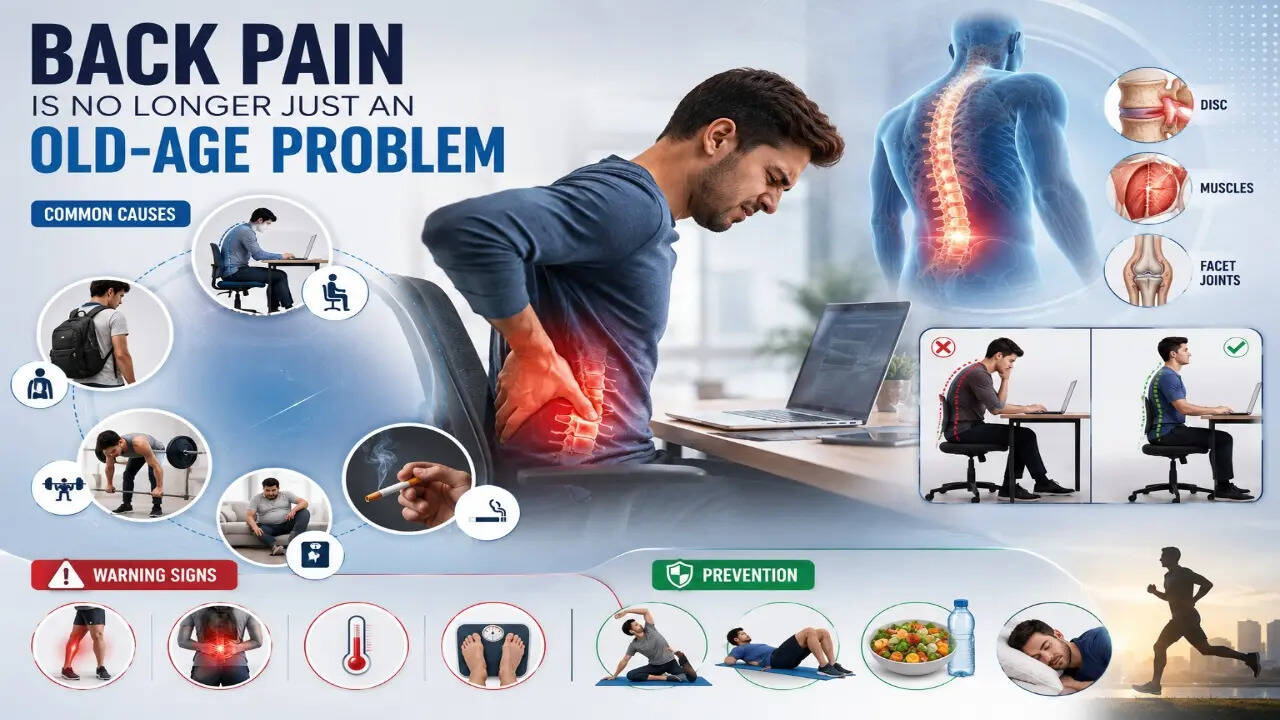
Back pain is generally considered a problem seen in old age, but of late, we are increasingly seeing younger adults suffering from back pain. Prolonged sitting hours, inadequate physical activity, smoking, and an unhealthy lifestyle have made back pain a common complaint even in people under 30 years of age.What is a slipped disc?In an interview with Health and Me, Dr Pramod Sudarshan, Spine Surgeon (ortho), Apollo Hospitals, Bangalore, said, “Most commonly, we attribute this pain to a slipped disc or other disc-related conditions. However, they are just one among many reasons causing back pain. A thorough understanding of the other conditions that can lead to back pain, and knowing the ‘red flags’ to help identify them, will assist in seeking early treatment and preventing further complications.”Muscle strain is considered to be one of the most common reasons for developing back pain in younger individuals. Daily activities like travelling for long hours, lifting heavy weights without proper technique, and carrying heavy backpacks can lead to muscle strain. Often, the pain due to muscle strain comes down with the help of medications such as muscle relaxants and rest.Poor posture and back painWorking professionals and students spend many hours a day studying, gaming, and working on computers without maintaining proper posture, leading to excess strain on the back muscles and, in turn, prolonged back pain. Having a properly ergonomically designed workstation/study table setup can prevent back discomfort and stiffness.What are the causes of back pain?Lack of physical activity and associated conditions such as obesity weaken our core muscles, which are considered the main pillars supporting our spine. Weakened core muscles will not be able to perform the functions expected of them, leading to back pain. Regular exercise, weight management, a healthy diet, and guided weight training will help strengthen our core muscles and reduce the risk of back pain.Other than muscles, the spine also contains small joints known as facet joints, irritation or inflammation of which can lead to back pain. A structure known as the pars interarticularis acts as a clamp in the spine, holding two adjacent vertebral bodies, and any defect, such as a congenital defect or fracture due to repetitive microtrauma, as seen in gymnasts, can lead to the slipping of one bone over the other, causing back pain.Though mechanical back pain is most common, there are other conditions such as inflammatory arthropathy, tumours, and infections. Conditions such as ankylosing spondylitis, rheumatoid arthritis, and hyperuricemia/gout are some examples of inflammatory conditions in which an individual experiences early morning back pain associated with stiffness and may also present with pain in other joints.Can tuberculosis lead to back pain?Tuberculosis affecting the spine is considered the most common infection of the spine. Severe back pain, weight loss, loss of appetite, fever, and night sweats are some of the common symptoms. Other bacterial and fungal infections are also seen affecting the spine, most commonly in immunocompromised individuals.Tumours, though rare in young individuals, warrant further investigation when symptoms such as severe weight loss, night pain, and prolonged back pain are present to rule out the possibility of tumours.Other conditions such as scoliosis (congenital/adolescent idiopathic scoliosis), which is a three-dimensional deformity of the spine, can cause back pain. It requires further assessment in the form of radiological investigations to assess the degree of deformity and to plan any surgical intervention, if required, based on the severity of the curve.What are the symptoms?Identifying some of the red-flag signs, such as weakness in the legs, numbness around the groin, bladder or bowel dysfunction, fever, unexplained significant weight loss, or severe pain following major trauma, is essential. These symptoms may indicate serious underlying pathology requiring medical care.Fortunately, back pain in young people is largely preventable. Basic lifestyle modifications such as regular exercise, maintaining proper posture, avoiding prolonged sitting, maintaining a healthy body weight, undertaking monitored weight-training programmes, following a healthy diet, and getting adequate sleep will help prevent as well as overcome existing back problems. Invest in your spinal health at the earliest opportunity to reap the benefits in the second half of life.