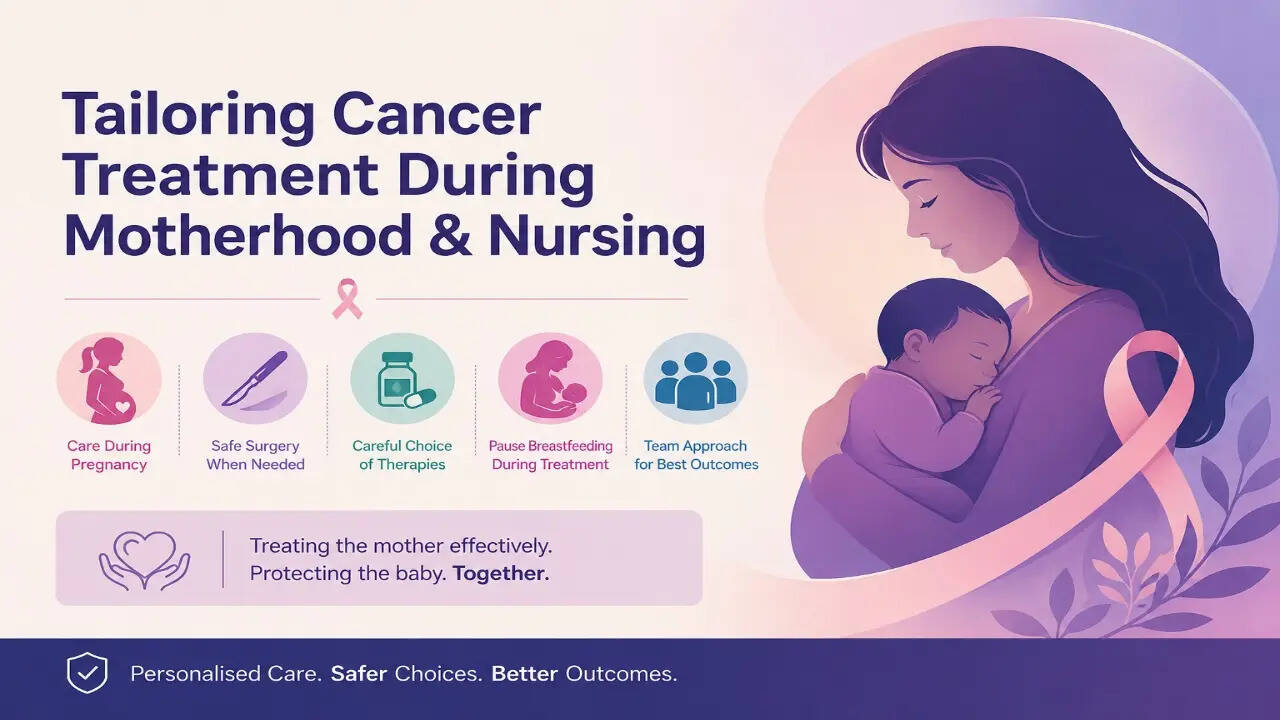
Treatment of cancer during pregnancy and while the lady is nursing is one of the most complex challenges in oncology. It requires finely balancing the urgency of cancer treatment in the mother with the safety of the foetus. With advances in cancer research and treatment, it is now possible for oncologists to tailor treatment in a way that protects both the mother and the child without compromising cancer-related outcomes.In an interview with Health and Men, Dr Jyoti Wadhwa, Principal Lead of Medical and Precision Oncology, Apollo Athenaa Women’s Cancer Centre, Delhi, spoke about the safe treatment of cancer during pregnancy. Best time for cancer treatment during motherhoodThe most important factor guiding anti-cancer treatment during pregnancy is the timing of the pregnancy. In the first trimester, the foetus is highly vulnerable since organ development is ongoing. Exposure to chemotherapy during this period carries a significant risk of miscarriage and congenital malformations, and hence such drugs are generally avoided. However, depending on the cancer type and its stage, doctors may consider surgery and, in some cases, even termination of pregnancy may be advised.During the second and third trimesters, however, certain chemotherapy drugs can be safely administered, such as doxorubicin and cyclophosphamide, drugs that are commonly used for the treatment of breast cancer. When initiated, chemotherapy is usually stopped about three weeks before the expected date of delivery. It should be remembered that not all chemotherapy drugs are safe during pregnancy. Targeted therapies, hormonal therapies, and immunotherapies are usually avoided due to limited safety data and the possibility of potential harm to the foetus.Is surgery safe during pregnancy?Surgery can generally be performed safely during pregnancy, especially in the second trimester, when the risk of miscarriage and preterm labour is the lowest. Radiotherapy is generally deferred unless the treatment areas fall far from the uterus and adequate shielding can be ensured. If the woman is breastfeeding, it should be remembered that most anti-cancer drugs can pass into breast milk and harm the infant. Hence, breastfeeding must be stopped during this phase.For the best outcomes, a multidisciplinary team approach is recommended for decision-making. This team should include not only oncologists but also obstetricians, paediatricians, and supportive care teams. The ultimate goal is to treat the mother effectively for cancer while minimising the risk to the foetus and the newborn child. It is very much doable in modern cancer care.Precision oncology in pregnancy is more about planning ahead rather than immediate treatment execution. Many targeted therapies, such as bevacizumab and immunotherapies, are not safe during pregnancy and are hence deferred until after childbirth.