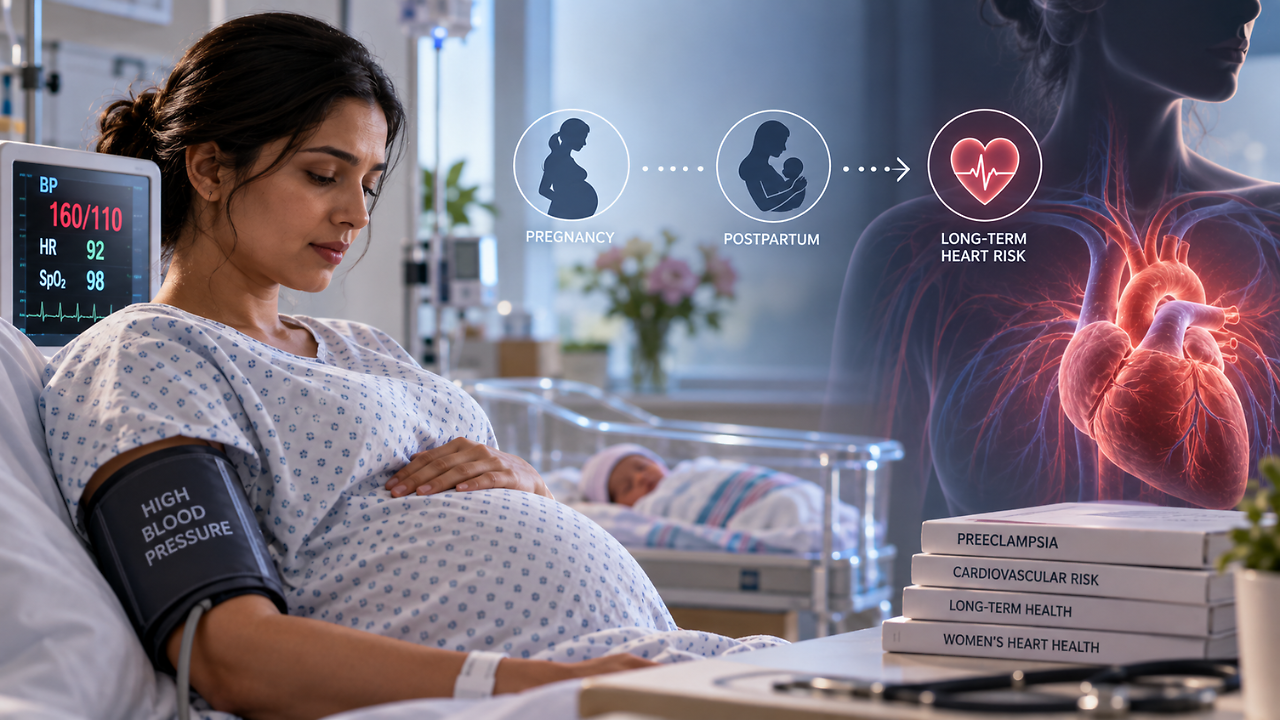
Most women who've had preeclampsia remember it as something that happened during pregnancy. The blood pressure spiked, doctors kept a close watch, the baby arrived, and everything went back to normal. Case closed, or so it seems. But there's a quieter part of this story that doesn't get told nearly enough - what preeclampsia might mean for a woman's heart years down the line. So, What Is Preeclampsia? It's a condition that can happen after the 20th week of pregnancy, when blood pressure rises sharply and starts putting pressure on organs like the kidneys or liver. During preeclampsia, the lining of blood vessels - the endothelium - becomes inflamed and doesn't relax and dilate the way it normally should. This is the same vessel dysfunction we see in the early stages of coronary artery disease, just decades ahead of schedule. Doctors usually catch it through routine checks - protein in the urine, sudden swelling, or blood pressure readings that don't sit right. Once the baby is delivered, blood pressure almost always comes back down. That "return to normal," though, doesn't mean the story is over.Also read: Vitamin D & Pregnancy: Could Vitamin D Deficiency Increase Risk Of Premature Birth?A Pregnancy Complication with a Long Impact on Heart Think of preeclampsia as an early stress test that the heart didn't quite pass. It is associated with increased risk of hypertension in future and also increase the risk of heart failure, stroke and cardiovascular diseases. And this isn’t a risk that shows up only in old age, in some cases, death happens within the first 10 years after pregnancy. The risk of heart failure also increases by four-fold and the risk of coronary heart disease by two folds in patients with preeclampsia. The risk of ischemic heart disease and hypertension is elevated too. The risk increases further if preeclampsia occurred early in pregnancy, during multiple pregnancies, or alongside other factors like obesity or a family history of heart disease. It highlights the importance of life law monitoring of cardiovascular rest factors in a woman who has history of preeclampsia.Also read: PMOS Isn't Just About Periods Or Pregnancy: Why Women Need To Think Beyond FertilityThe Part of Care That Often Gets Skipped Once the baby is here, attention naturally shifts entirely toward the newborn - and a new mother's own follow-ups tend to fall away quietly, usually right after that standard six-week check. That's the gap, we need to close in postpartum care. Women with a preeclampsia history should regularly monitor their blood pressure, cholesterol and blood sugar, and actually bring these numbers up during the consultation. None of this means preeclampsia guarantees heart disease down the road. It just means the risk picture has shifted, and that's worth knowing. Staying active, eating well, keeping weight in check, and staying away from smoking helps reduce the risk. More obstetricians and cardiologists are starting to treat preeclampsia as something to track for life, not just for nine months. That shift in thinking could end up protecting a lot of hearts long after the pregnancy itself is over. By Dr Waseem Farooqui, Consultant, Interventional Cardiology, Cardiac Care, Medanta Hospitals, Noida