
- Health Conditions A-Z
- Health & Wellness
- Nutrition
- Fitness
- Health News
- Ayurveda
- Videos
- Medicine A-Z
- Parenting
Rare Diseases Day: A Parenting Guide For Congenital Hypothyroidism
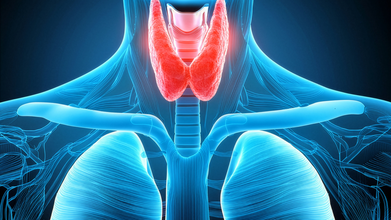
Credit: Canva
Do you know that congenital hypothyroidism, a rare disability, affects about 1 in 2,500–3,000 newborns globally, but in India, the incidence is higher -- approximately 1 in 1,000 births.
India records nearly 26 million births annually, with an estimated 10,000 babies born each year with Congenital Hypothyroidism.
This means 27 babies are born every day in India, with the condition that more than one is born every hour. Early treatment within the first 2 weeks of life can ensure normal brain development, while delayed treatment can reduce IQ by 30–50 points.
Congenital Hypothyroidism (CH) is a condition present at birth in which a baby’s thyroid gland does not produce enough thyroid hormone.
The thyroid is a small gland located in the neck. It produces a hormone called thyroxine (T4), which is essential for brain development, growth, and overall body metabolism. The thyroid hormone is especially important in the first few weeks of life.
The thyroid hormone helps in:
- Brain development
- Physical growth
- Bone development
- Muscle strength
- Energy regulation
If a baby does not receive enough thyroid hormones soon after birth, it can lead to permanent intellectual disability and growth problems.
The good news is that congenital hypothyroidism is easily detectable and completely treatable if identified early.
What Causes Congenital Hypothyroidism? What Are The Symptoms?
Congenital Hypothyroidism may occur because:
- The thyroid gland is completely absent
- The thyroid gland is underdeveloped
- The gland is present but does not function properly
- Rarely, the baby cannot produce or use the thyroid hormone correctly
One of the biggest challenges with Congenital Hypothyroidism is that most babies look completely normal at birth.
However, over time, some signs may appear:
- Excessive sleepiness
- Poor feeding
- Constipation
- Prolonged jaundice (yellowing of skin and eyes)
- Hoarse cry
- Large tongue
- Puffy face
- Cold or dry skin
- Slow growth
How Is Congenital Hypothyroidism Detected?
1. Newborn Screening Test (Heel-Prick Test)
- This is the most important test.
- A few drops of blood are taken from the baby’s heel.
- It is usually done 48–72 hours after birth, but can be done soon after birth on the cord blood, too.
- Test measures Thyroid Stimulating Hormone (TSH).
- If TSH levels are high, it suggests that the thyroid is not functioning properly.
- This test is simple, safe, quick, and affordable
2. Confirmatory Blood Tests
If the screening test is abnormal, the doctor will order:
- Serum TSH test
- Free T4 (thyroxine) level
- High TSH and low T4 confirm the diagnosis
3. Thyroid Scan
In some cases, imaging tests are needed. The ultrasound of the neck (less accurate) and Nuclear Medicine Thyroid scan (more accurate) may be done to check whether the gland is absent, small, or misplaced. However, treatment should not be delayed while waiting for imaging.
When Should Treatment Start?
Treatment should begin as early as possible -- ideally within the first 14 days of life. Starting treatment within the first two weeks allows normal brain development.
Delaying treatment increases the risk of permanent intellectual disability.
Doctors will monitor:
- TSH levels
- T4 levels
- Baby’s growth and development
Initially, blood tests are done every 2–4 weeks, then less frequently as the child grows. Proper follow-up ensures the dose remains correct. Some babies may need treatment for life.
In certain cases, doctors may reassess thyroid function after 3 years of age to see whether the condition is temporary or permanent. Most children who receive early and proper treatment grow up with completely normal intelligence and physical development.
Can Congenital Hypothyroidism Be Prevented? Why Early Screening Is So Important
Most cases cannot be prevented. However:
- Universal newborn screening can prevent intellectual disability
- Ensuring adequate iodine intake during pregnancy helps reduce risk
- The key is early detection—not prevention
A baby with Congenital Hypothyroidism may look perfectly healthy. Without screening, diagnosis may be delayed until symptoms appear—by then, brain development may already be affected.
With early testing the diagnosis is simple; treatment is affordable; and outcome is excellent. But without testing:
- Intellectual disability can occur
- Growth may be affected
- The child may require lifelong support
Congenital Hypothyroidism is one of the most preventable causes of intellectual disability in children. A small heel-prick test in the first few days of life can protect your baby’s brain forever.
If you are expecting a baby or have a newborn, speak to your doctor about newborn thyroid screening.
Early diagnosis. Simple treatment. Normal life.
PM Modi Launches Nationwide Free HPV Vaccination Drive; A Landmark Step, Says WHO

Credit: Health Ministry
Prime Minister Narendra Modi today launched the nationwide Human Papillomavirus (HPV) vaccination campaign for girls aged 14 years from Rajasthan's Ajmer.
The initiative marks a decisive step towards eliminating cervical cancer through timely HPV vaccination. Cervical cancer remains the second most common cancer among women in India. Nearly 80,000 new cases and over 42,000 deaths are reported annually in the country.
"Today, I have had the opportunity to launch the HPV vaccine campaign from Ajmer. This campaign is an important step towards empowering women and daughters of this country,” PM Modi said.
“For us, this was a sensitive issue tied to the insult of our sisters and daughters, one that made them ill. That is why we resolved it at a crucial turning point in their mission,” he added.
The World Health Organization has also lauded India's mission to launch the HPV vaccine and prevent the risk of cervical cancer.
“We are leaving no stone unturned to ensure that the daughters of the country are healthy and prosperous. The objective of this initiative is the prevention of cervical cancer," the Prime Minister, earlier wrote in a post on social media platform X.
The HPV Vaccination Campaign
The nationwide program, based on expert recommendations of the National Technical Advisory Group on Immunization (NTAGI), will target girls aged 14 years.
At 14, the HPV vaccine offers maximum preventive benefit, well before potential exposure to the virus.
"By prioritizing prevention at the right age, the program is expected to provide lifelong protection and significantly reduce the future burden of cervical cancer in the country," the government said.
“The HPV vaccine works best at 9-14 years, before exposure, and when the immune response is strongest. Studies show effectiveness is highest in younger age groups and decreases with age,” Dr. Parmod Kumar, Associate Professor in Medical Oncology, AIIMS Jodhpur, shared on X.
Vaccination under the national program will be voluntary and free of cost.
The HPV vaccination will be conducted exclusively at designated government health facilities, including Ayushman Arogya Mandirs (Primary Health Centers), Community Health Centers, Sub-District and District Hospitals, and Government Medical Colleges.
Cervical Cancer Burden In South East Asia
Despite being preventable, cervical cancer continues to claim the life of a woman every two minutes globally, and the WHO South-East Asia Region bears nearly one-quarter of the global burden.
Dr. Catharina Boehme, Officer-in-Charge, WHO South-East Asia, stated that the introduction of HPV vaccination at a national scale in India "will have a far-reaching impact". It will accelerate progress not only for the country, but for the region and the world, she said.
“This landmark step, led at the highest level of government, reflects India’s strong commitment to protecting adolescent girls from cervical cancer," said Dr. Boehme.
With today’s milestone, nine of the 10 countries in the Region now include HPV vaccination in their national immunization programs.
The WHO global targets for 2030 include vaccinating 90 percent of girls by age 15, screening 70 percent of women by ages 35 and 45, and ensuring 90 percent of women with pre-cancer and invasive cancer receive appropriate treatment.
Do Super Agers' Brains Work Differently? Here's What The Study Says

Credits: Canva
As we grow older, it is almost expected that memory will fade. Names slip. Dates blur. Thoughts take longer to form. Inside the aging brain, proteins can misfold and clump together, damaging cells and gradually eroding cognition. But not everyone follows this script.
Some people reach their 80s with memory and mental sharpness that rival those decades younger. Scientists call them “super-agers.” Now, new research published in Nature offers a possible explanation for why some brains hold up so remarkably well.
At the heart of the findings lies one of neuroscience’s most contested questions: can adult human brains grow new neurons?
Read: A Longevity Expert Who Studies 'Super Agers' Eats All THIS In A Day
Can The Aging Brain Grow New Cells?
For years, scientists have debated whether neurogenesis, the birth of new neurons, continues into adulthood. While it is well established in babies and young children, and in many animal species, evidence in adult humans has been mixed.
This new study adds weight to the idea that it does continue, even into advanced age.
Researchers examined brain tissue donated after death from several groups: younger adults with normal cognition, older adults with typical memory for their age, people with mild cognitive impairment, individuals with Alzheimer’s disease, and super-agers over 80 whose memory functioned like someone about 30 years younger.
They focused on the hippocampus, the brain’s memory hub and a region long suspected to be a birthplace for new neurons.
To detect neurogenesis, scientists looked for three types of cells: neural stem cells, neuroblasts, and immature neurons. In simple terms, stem cells are like infants, neuroblasts are adolescents, and immature neurons are on the brink of adulthood.
“We identified genetic markers for three key types of cells,” the researchers explained, tracing the pathway from stem cell to developing neuron.
What Makes Super-Agers Different
All groups showed signs of these cell types. The difference lay in the numbers.
Super-agers had roughly twice as many new neurons as older adults with typical memory, and about two and a half times more than those with Alzheimer’s disease. In fact, their hippocampi contained even more immature neurons than the brains of younger adults.
“This paper shows biological proof that the aging brain is plastic,” Tamar Gefen told The New York Times. She added that this adaptability appears to persist “even into a person’s 80s.”
The immature neurons in super-agers also carried distinctive genetic and epigenetic signatures. According to Gefen, as quoted by The New York Times, “Super-aging happens not only because there’s more of these young cells, but because there is a type of genetic programming” that allows them to survive and resist age-related decline.
In other words, it is not just about quantity. It may also be about resilience.
A Clue For Alzheimer’s Disease?
The Alzheimer’s findings were equally intriguing.
People with Alzheimer’s actually had more neural stem cells than other older adults. But they had far fewer neuroblasts and immature neurons. This suggests that while the starting material was present, the developmental process stalled.
One interpretation is that neurogenesis becomes disrupted in Alzheimer’s. Stem cells may remain dormant, unable to mature into functioning neurons.
“If that’s true, that’s really opened up a new direction for the field,” Hongjun Song told The New York Times, suggesting that reactivating these dormant cells could one day become a therapeutic strategy.
It is an exciting possibility. Instead of only trying to prevent damage, scientists might be able to encourage regeneration.
Not Everyone Is Convinced
The neurogenesis debate is far from settled.
Some researchers argue that methodological differences have led to conflicting conclusions over the years. Shawn Sorrells, who studies neurogenesis, told The New York Times that mapping how the hippocampus changes in people who age differently is “fantastically interesting and important,” but he cautioned that the findings should be validated using additional techniques.
Skepticism remains because detecting new neurons in adult human brains is technically difficult. Results often hinge on the markers and imaging tools used.
What This Means For The Future
Even if this study does not end the debate, it opens new doors. If certain people naturally maintain robust neurogenesis into their 80s, researchers want to understand why. Is it genetics? Lifestyle? A combination of both?
Scientists are now exploring whether the special properties seen in super-agers’ immature neurons can be replicated or supported through medication or other interventions.
The bigger takeaway is hopeful. Aging does not necessarily mean inevitable cognitive collapse. The brain may retain more capacity for renewal than once believed.
If neurogenesis truly persists across the lifespan, the story of brain aging may need rewriting. Instead of focusing only on decline, researchers may increasingly look toward regeneration and resilience.
And for anyone worried about forgetting where they left their keys, that possibility feels quietly revolutionary.
Study Reveals The Worrying Reason You Should Protect Yourself From Scrub Typhus
Credit: Pixabay
In 2025, Andhra Pradesh reported 1,566 scrub typhus cases, and nine suspected deaths, according to data from the Integrated Health Information Platform, Integrated Disease Surveillance Programme (IDSP-IHIP) on 8 December. Followed by Karnataka with 1,870 cases, Tamil Nadu 7,308 cases, and Telangana, 309 cases. Scrub typhus cases have significantly increased from previous year. It is one of the deadliest infections affecting multiple organs, or even death. Early it was relevant to poeple working in fields, new studies show it migrating to human settlements.
What Is Scrub Typhus?
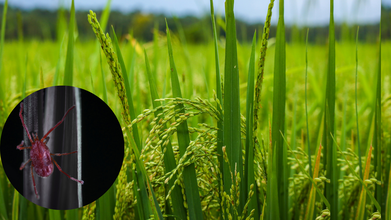
Scrub typhus, also known as bush typhus, is a bacterial infection caused by bacteria infection, caused by bacterium Orientia tsutsugamushi. It is spread through bites of infected larval mites, Chiggers.
Most cases of scrub typhus occur in rural areas of Southeast Asia, Indonesia, China, Japan, the Indian subcontinent and northern Australia. Until now, it was believed that chiggers only lurked in the tall grasses of remote paddy fields or dense forests. Due to this, it is commonly known as "farmers' disease", only confined to the fields.
However, new PLOS study data revealed the opposite. The study is led by researchers from Christian Medical College (CMC) Vellore and international collaborators and suggests that the bulk of infections are now even occurring within human settlements.
The study monitored over 32 000 people in Tamil Nadu, which led to the conclusion that agricultural activities, long considered the primary risk factor, were only weakly associated with the disease in high-prevalence areas.
How are Human Settlements A Prime Factor?
Risk for scrub typhus is significantly higher for those living in clustered houses or homes with fewer rooms. If the micro environment around the residence is unmaintained, gardens are patched, or even the damp corners of a courtyard, it could lead to breeding ground for the mites and the rodents that carry Chiggers.
Who Is At Most Risk?
It was once believed that working-age men were the most affected, but the new study tells otherwise. According to the new data, women over 60 are at the highest risk of infection.
As women spend most of their time in and around the home, due to household work, from the kitchen to the laundry, these activities are now the primary cross point of contact with infected mites.
What Is the Risk Factor Of Infection?
As initial symptoms of infection, such as fever, headache, and muscle pain, are the same as viral flu or dengue, many first seek help from untrained practitioners or local pharmacies.
By the time they reach the hospital, the disease has already progressed to severe complications like acute respiratory distress syndrome (ARDS), Kidney failure, or Meningoencephalitis, which is inflammation of your meninges and brain at the same time, a life-threatening condition.
Not only this, the researchers revealed that nearly 10 percent of affected households exceed 25 percent of their income in the treatment.
For severe cases, the cost of treatment can be up to approximately INR 110,000, a staggering sum for rural and peri-urban families earning a fraction of that monthly.
Prevention
- Do not let the grass grow tall around your house
- Tightly maintain kitchen gardens and remove piles of wood or debris where rodents (the primary hosts for mites) might nest.
- As chiggers are usually found close to the ground, do not sit directly on the grass or soil. Use chairs or mats. For children, make them wear socks and full- length trousers while playing in the yard.
- If you notice a small, dark, cigarette-burn-like mark, it is usually left behind by mites. It is most likely "Eschar". It is an important critical clue. As the bite is painless, it often goes unnoticed.
- Do a thorough skin check for an eschar, especially in warm, moist areas like the armpits, groin, or behind the knees.
Early intervention is necessary, as if a fever lasts more than two days, don't just treat it as "seasonal fever".
Consult a qualified doctor and specifically ask about scrub typhus. Infection can be treated with doxycycline common antibiotic, in the early stages. The case fatality rate in this study was 1.5 percent, hospital based studies in South India have previously recorded mortality rates as high 30 percent when treatment is delayed
- Follow Us :


© 2024 Bennett, Coleman & Company Limited