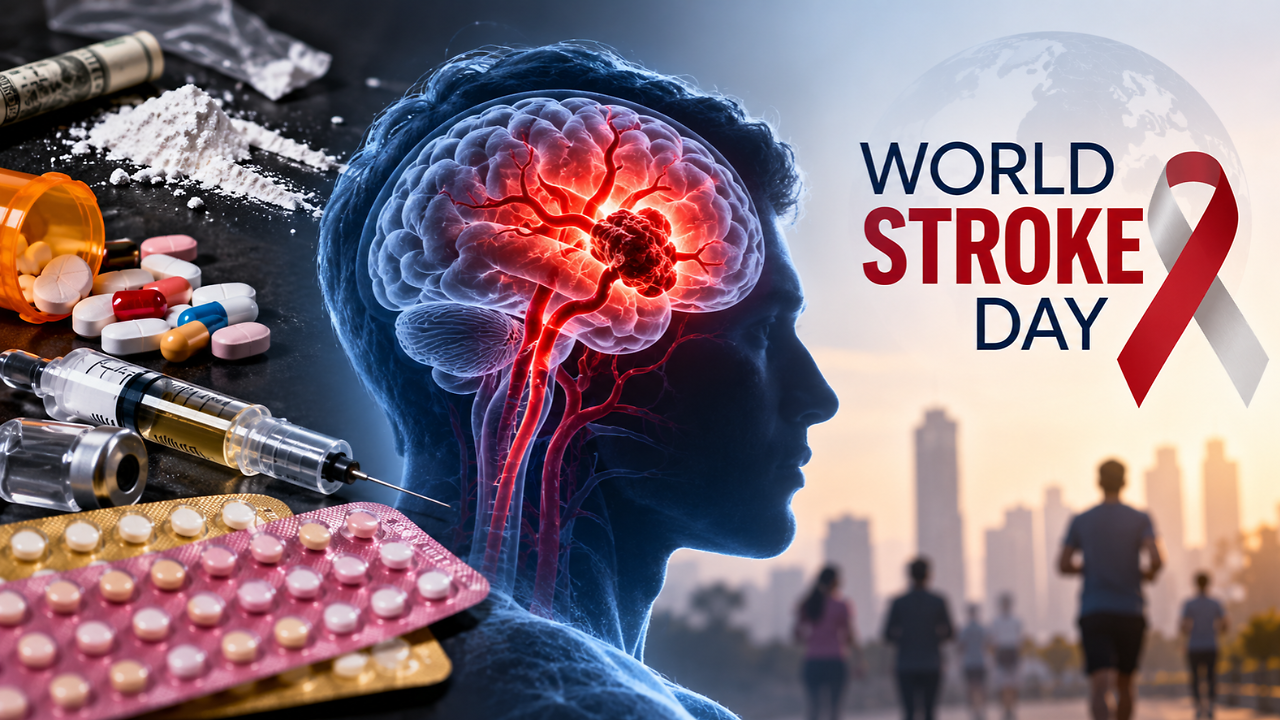
According to a recent study, the rate of strokes among young adults in the United States has nearly doubled in the last two decades. With risk factors like high blood pressure, diabetes and high cholesterol surfacing years earlier, experts are seeing an increasing number of stroke emergencies under the age 40. On World Stroke Day, Dr Arup Sen, London-based physician, specialising in geriatric, stroke and General Medicine and affiliated with Cleveland Clinic London, National Hospital for Neurology and Neurosurgery, and University College Hospital, spoke to HealthandMe about the alarming pattern of stroke rates among young people. The doctor said that recreational drug use, smoking, sedentary behaviour and obesity add to stroke risk, while certain underlying medical conditions could also be triggers. Dr. Sen said, “The bottom line is that what we refer to as stroke risk factors, the risk factors are arriving decades earlier compared to previously. And that's why we're seeing this surge in stroke rates in young people.”Recreational Drugs And Steroid Use Fuel Stroke Risk Dr Sen said recreational drugs affect blood vessels and blood pressure directly, increasing the risk of stroke. Cocaine, for instance, can narrow the blood vessels that could disrupt blood flow to the brain. It can also trigger sudden increases in blood pressure.“Generally speaking, most substances cause stroke through a mechanism of causing vasospasm and a surge in blood pressure or high blood pressure, which then increases the risk of having a stroke,” he said.Cannabis use has also been linked to risk of stroke according to some studies. Dr Sen referred to research reporting an association between cannabis use and stroke, including studies examining daily use. He noted that tobacco use can complicate the picture because some people smoke cannabis with tobacco.“Tobacco itself is a risk factor for stroke. So, for example, people who smoke cigarettes have twice the risk of stroke as someone who doesn't smoke,” he said.He also warned against combining smoking with vaping, saying that research has associated dual use with a higher stroke risk.The doctor said that anabolic steroids used for bodybuilding is a major concern. According to Dr Sen, these substances can lead to thickening of the blood which inceases blood clotting risk and affect the structure of the heart. This could lead to abnormal heart rhythms and blood clots.“One of the most important ways in which you can increase risk is it can make the blood more thick and sticky, increasing risk of blood clots, but it can also affect the heart in terms of causing what we call a cardiomyopathy,” he said.His advice to people using anabolic steroids for bodybuilding was straightforward. He said, “Don't use them, just avoid them altogether, because if you're using it, there's going to be a risk.”Also read: 'Humanity Can Still Act': Lancet Warns Of 17 Global Health Threats By 2100Birth Control And Migraine With Aura Fuel Stroke A Risk In Young WomenDr Sen also highlighted that women who experience migraine with aura and use oestrogen-containing oral contraceptives are at stroke risk.Migraine with aura involves neurological symptoms that can occur before or during a migraine attack. According to Dr Sen, the oestrogen component of certain contraceptives can increase the risk of blood clots and stroke in women with this history.He said, “If a young lady with a history of migraine and aura has a stroke, then we would recommend them, and they're using contraceptives, we would recommend them using progesterone-only contraceptives, avoiding oestrogen, because the oestrogen component is a risk factor for strokes.”The choice of contraception, however, should be always discussed with a healthcare professional. Hidden Causes Of Stroke In Younger AdultsNot every stroke in a younger person is explained by conventional risk factors. Dr Sen said doctors investigate conditions that may be more relevant in younger patients, including patent foramen ovale (PFO), antiphospholipid syndrome (APS) and arterial dissection.A PFO is an opening between the upper chambers of the heart. Dr Sen explained that even though it is common, occurring in around one in four people, in certain cases it can allow a blood clot to pass through the heart and travel to the brain.Antiphospholipid syndrome is a condition that can increase the tendency to form blood clots. Arterial dissection, meanwhile, involves a tear in the wall of an artery. Dr Sen said it can occur in association with sports or neck manipulation and may initially cause neck pain or headaches before neurological symptoms develop.He said PFO and arterial dissection were the two most common unusual causes he had encountered in younger stroke patients, followed by antiphospholipid syndrome.He said, “The most common cause I've seen is PFO, definitely, followed by dissection, and then probably antiphospholipid syndrome.”Also read: Woman With Epilepsy Dies After Following ChatGPT’s Advice To Stop Medication: Why AI Cannot Replace A Doctor Stroke Symptoms In Young People Can Be Overlooked Dr Sen warned that stroke may not always be the first condition doctors suspect when a younger person arrives with symptoms like dizziness, balance problems, nausea, vomiting, blurred vision or headaches.Posterior circulation strokes, which affect the back of the brain, can cause symptoms that resemble other conditions. These may be mistaken for intoxication, gastroenteritis or migraine, potentially delaying diagnosis.“There's this common myth that stroke, if it happens, it's inevitable. There's nothing you could have done to prevent it. But the opposite is true, because the majority of strokes are actually preventable if you address the risk factors in a proactive fashion,” he said.How Can Younger Adults Reduce Their Stroke Risk? Dr Sen urgently recommends addressing lifestyle factors, keeping key health biomarkers in check and recognising stroke symptoms at the earliest.He advised younger adults to stay physically active, avoid smoking and recreational drugs, maintain a healthy diet, get adequate sleep and avoid binge drinking. He also urged people to monitor their blood pressure, cholesterol and blood glucose rather than assuming these checks are necessary only later in life.He said, “Know your numbers. By that, I mean, your risk factors. Even in as early as your mid 20s to early 30s, you should be looking at your blood pressure, cholesterol and diabetes markers. Dr Sen also said that some people may have genetically elevated cholesterol even when they are young. He also mentioned lipoprotein(a), or Lp(a), a largely genetically determined risk factor that is not routinely included in every standard cholesterol assessment.Finally, he stressed the importance of recognising the signs of stroke through the BEFAST acronym:B – Balance: Sudden loss of balance or coordination.E – Eyes: Sudden vision loss or double vision.F – Face: Drooping on one side of the face.A – Arms: Weakness or one arm drifting down.S – Speech: Slurred speech or difficulty finding words.T – Time: Call emergency services immediately.“The mantra in stroke that we use is time is brain,” Dr Sen said. “The earlier you get to the hospital and see the specialists and get the right treatment at the right time and the right place, the better the outcomes.”