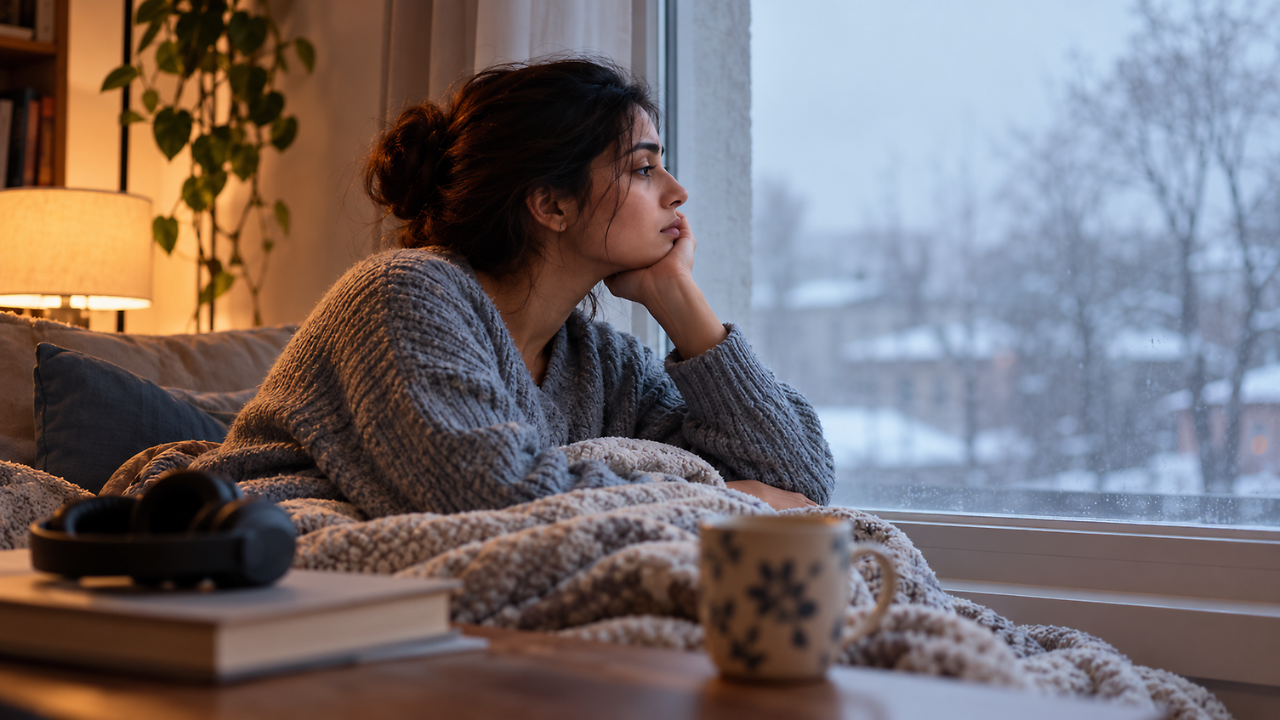
As we brace ourselves for another bout of winter, we can’t help but feel wary about the changes the dip in temperature brings on our mood and mental well-being. You are not imagining winter depression when you start to feel sudden loss of joy. Seasonal depression is more than feeling gloomy. You may no longer enjoy the activities you once relished, like listening to music, exercising or meeting friends. This isn’t just another effect of winter. Experts have designated a term for it: anhedonia. Anhedonia refers to the loss of pleasure or interest in something you once enjoyed. It is one of the symptoms of depression, including seasonal affective disorder (SAD). Unlike sadness, anhedonia can render someone feeling disconnected with or indifferent towards things they once enjoyed. A person experiencing anhedonia may still participate in activities they enjoy but will no longer reap emotional rewards from it. “Anhedonia is not the kind of sadness where you’re feeling down but still have moments of enjoyment,” Dr Deeksha Kalra, Associate Consultant, Psychiatry, Artemis Hospital, Gurugram, explained to HealthandMe.Dr Samant Darshi, Consultant Psychiatrist and Neuromodulation Expert at Yatharth Hospitals, told us, “While sadness entails the state of feeling unhappy about something, anhedonia pertains to the lack of enjoyment.”Dr Kalra said, during SAD, anhedonia may be experienced during the affected season like winter. “This can happen at the same time as low mood, but it can also be one of the clearest symptoms. In SAD, these changes are usually present during the affected season and resolve with the resolution of the depressive episode. So anhedonia is about muted pleasure, not just feeling sad,” Dr Kalra explains.Effects Of Winter On Pleasure And MotivationAlso read: The Silent Struggle Of Raising A Child With Mental Health Challenges: How Parents Can Cope With StigmaChanges that come with SAD, a type of depressive phase, usually pertains to specific seasons, like mostly winter. Due to less duration of daylight, the body’s internal clock, known as circadian rhythm, may get affected. Along with circadian rhythm, poor diet, irregular sleep pattern and limited physical activity can also contribute to SAD. This could cause one to feel difficult to initiative activities they enjoy as they no longer feel motivated, affecting the brain reward system. “Seasonal affective disorder (SAD) causes disturbance of mood, sleep, energy, and motivation. Activities which were pleasurable before become less rewarding because of this. The changes in daylight hours may affect the body clock or the physiological processes related to mood control. The decrease in energy and motivation makes doing the activity even harder and less pleasurable,” said Dr Darshi.Dr Kalra explains that there are a lot of phases to experiencing ‘enjoyment’. It involves identifying something rewarding, anticipating it, experiencing pleasure and learning from the experience. Depression can affect all these phases, making previously enjoyable activities feel less rewarding.“Brain networks including the striatum and nucleus accumbens, contribute to the valuation of rewarding experiences and the motivation of behavior. When their responses are dulled and something that was once naturally rewarding may not have the same emotional resonance,” she says.Dopamine’s Role In SADAlso read: Children’s Mental Health Often Goes Unnoticed: Can India’s New School Policy Change That?Dopamine is a neurotransmitter in the brain responsible for motivation, rewards, learning, and directing behaviour as per goals. When we talk about SAD and anhedonia, dopamine comes into the picture as it is related to motivation and rewards. Dr Kalra explained, “Dopamine is involved in motivation, reward anticipation, learning and determining the value of pursuing something. That’s why dopamine has been looked at when researchers have investigated anhedonia and low motivation.”But doctors say that anhedonia is not characterised by shortage of dopamine. According to research, SAD has been reported to affect dopamine signalling, including lower dopamine transporter availability in the striatum during symptomatic depression.Dr Darshi also emphasises that dopamine is only a part of the process. He said, “Studies concerning depression and anhedonia indicate that changes in the activity of dopamine result in the decrease in motivation and reward sensitivity. However, anhedonia encompasses many brain processes.”SAD And Anticipatory PleasureAlso read: Self-Diagnosis Could Go Wrong: Are We Overusing The Words Anxiety, Trauma and ADHD?Anhedonia makes one indifferent by directly affecting the anticipatory pleasure mechanism. Anticipatory pleasure is the excitement one feels before an event. Consummatory pleasure is the enjoyment experienced while the event is in progress. “Anhedonia can affect the anticipatory pleasure you feel when you look forward to something and the consummatory pleasure you experience when it actually happens. Someone might know that a favorite meal, holiday or meeting with friends should be enjoyable but feel little excitement beforehand. The pleasure might also feel weaker than expected when the event happens,” Dr Kalra explains.Not Everyone May Experience Same SAD Symptoms Everyone with SAD experiences anhedonia in different ways. While some may lose interest and pleasure, others may withdraw socially, sleep excessively, eat more, feeling more tired among other symptoms. “SAD doesn’t affect everybody in exactly the same way any more than depression is a single biological process. Different people can experience different combinations of changes in mood regulation, circadian rhythms, sleep, appetite and energy and reward processing,” says Dr Kalra.She also said that multiple symptoms may interact. For example, poor sleep could result into daytime sluggishness, making energetic activities less tempting. Dr Darshi explained, “Individuals with SAD have different presentations since biology, genetics, circadian rhythm, and psychology are unique for each person. Some individuals have disturbances in reward and motivation, whereas others have sleep disturbances or carbohydrate cravings, or even fatigue. Symptoms might be overlapping and are a reflection of various underlying mechanisms.”