
- Health Conditions A-Z
- Health & Wellness
- Nutrition
- Fitness
- Health News
- Ayurveda
- Videos
- Medicine A-Z
- Parenting
Secret To Glowing Skin: How Face Acids Can Revolutionize Your Skincare Routine

Skin care (Credit: Canva)
Face acids have been gaining popularity in different phases over the past few years. Also known as "chemical exfoliants", they offer a range of benefits from making your skin even to fighting ageing. It is pertinent to note that face acids are classified into two types: alpha hydroxy acids (AHAs) and beta hydroxy acids (BHAs). AHAs work on the skin's surface and are water-soluble, whereas BHAs are oil-soluble and penetrate deeper into the pores.
Types Of Face Acids For Good Skin
Salicylic Acid
Salicylic acid, a BHA, is renowned for its ability to exfoliate the skin and keep pores clear, making it an excellent choice for managing acne. It penetrates deep into pores to remove dead skin cells and reduce inflammation. Commonly found in concentrations between 0.5% and 2%, it's present in products like Stridex Maximum Strength Pads ($6.55) and Neutrogena Oil-Free Acne Wash ($6.30). For higher concentrations, dermatologists use it in peels to treat acne scars, melasma, and sun damage.
Glycolic Acid
Glycolic acid, the smallest AHA, excels in anti-aging due to its deep skin penetration. Derived from sugar cane, it's effective at exfoliating, reducing fine lines, and improving skin texture. Glycolic acid is beneficial for evening out skin tone and fading dark spots. However, it increases sun sensitivity, so pairing it with sunscreen is essential.
Mandelic Acid
Mandelic acid, sourced from bitter almonds, is another AHA that gently exfoliates. Its larger molecular size means it's less irritating than glycolic acid, making it suitable for sensitive or ethnic skin prone to pigmentation issues. it is excellent for treating sun damage and uneven skin tone.
Azelaic Acid
Azelaic acid is celebrated for its dual action in treating acne and lightening post-acne marks. Found in concentrations of 15-20% in products such as The Ordinary Azelaic Acid Suspension 10%, it keeps pores clear, reduces inflammation, and can fade hyperpigmentation. It's often used as a milder alternative to hydroquinone.
Kojic Acid
Kojic acid, a byproduct of sake fermentation, is used primarily for its brightening effects. It is effective in reducing hyperpigmentation and evening out skin tone, though it can be irritating.
This Popular Diabetes Drug Affects Brain: Study
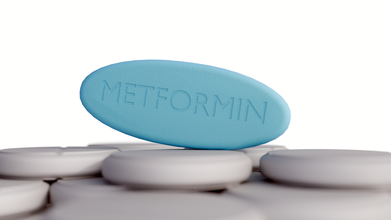
Credits: Canva
Metformin Brain: A popular diabetes drug, prescribed to manage type 2 diabetes by controlling blood sugar, which has been in use for 60 years - metformin, now shows how it is directly linked to the brain.
A drug used for over six decades did not have a study that made scientists sure of exactly how it works, until now. Researchers from the Baylor College of Medicine in the US were able to identify in 2025 a brain pathway that the drug seems to work through. It also has impacts on biological processes in other areas of the body.
"It's been widely accepted that metformin lowers blood glucose primarily by reducing glucose output in the liver. Other studies have found that it acts through the gut," said Makoto Fukuda, a pathophysiologist at Baylor.
"It's been widely accepted that metformin lowers blood glucose primarily by reducing glucose output in the liver. Other studies have found that it acts through the gut," said Makoto Fukuda, a pathophysiologist at Baylor.
What the Study Found
In a 2025 study on mice, researchers observed that metformin travels to the VMH and switches off Rap1 activity. This action appears to be crucial for its ability to control blood sugar. To test this further, scientists bred mice that lacked Rap1. In these mice, metformin no longer improved diabetes-like symptoms, even though other medications still worked.
This points to something important. Metformin may be working through a completely different pathway compared to other diabetes drugs, one that depends on the brain.
Read: Metformin Controls Blood Sugar With Help From Brain Neurons, Finds Study
The researchers also identified specific nerve cells involved in this process. They found that SF1 neurons become active when metformin enters the brain, suggesting these cells play a direct role in how the drug works.
Why This Matters
These findings could change how doctors and scientists think about diabetes treatment. If metformin’s brain pathway is confirmed in humans, future therapies could be designed to target these exact neurons, making treatments more precise and possibly more effective.
There is also a bigger picture. Metformin has already been linked to benefits beyond diabetes, including slowing aspects of brain aging and improving longevity. In one study involving postmenopausal women, those taking metformin had a significantly lower risk of dying before the age of 90 compared to those on another diabetes drug.
Read: Metformin Can Help Lower Risk Of Age-related Vision Loss: Study
What Comes Next
While the results are promising, human studies are still needed. If confirmed, this discovery could open the door to new treatments that not only manage blood sugar better but also tap into the brain’s role in overall health and aging.
It also reinforces an emerging idea that metformin is not just acting on the body’s metabolic organs, but quietly influencing the brain at much lower doses.
Metformin Can Help Lower Risk Of Age-related Vision Loss: Study

Credit: iStock
Metformin is a safe and effective drug used by type 2 patients for the last six decades to control their blood sugar levels and improve the way the body handles insulin.
A recent study showed that metformin can also be crucial in reducing the risk of vision loss in people over the age of 50, known as age-related macular degeneration (AMD).
The observational study, published in the BMJ Open Ophthalmology, showed that metformin can cut down the cases of AMD by nearly 40 percent in people with Type 2 diabetes over five years.
“We have found a significant association between metformin use and a reduction in the incidence of intermediate AMD by 37 percent in people with diabetes over 5 years. Previous epidemiological studies of metformin and AMD have used secondary data on AMD,” said corresponding author Nicholas A. V. Beare, from the University of Liverpool, UK.
“Given metformin’s anti-aging therapeutic effects, the reduction in risk is plausible and warrants prospective clinical trials,” he added.
Also read: Metformin Controls Blood Sugar With Help From Brain Neurons, Finds Study
Metformin And AMD
While currently there is no specific treatment option for AMD — a common cause of blindness in high-income countries — scientists have shown interest in metformin as a candidate drug for treating AMD and reducing its progression.
It is because of metformin's antioxidant, anti-inflammatory, antiangiogenic, and antifibrotic effects. Metformin is also postulated to delay ageing and ageing-related diseases.
Previous research has also identified metformin as a potential treatment for all stages of AMD. Researchers also noted that the common diabetes drug is readily accessible and has a strong safety profile.
How Metformin Improves AMD
The BMJ study analyzed more than 2,500 participants aged 50 or above who attended retinopathy screening in 2011.
All participants had Type 2 diabetes and gradable fundus photographs — high-quality retinal images.
Individuals prescribed oral metformin had a 37 percent lower risk of intermediate AMD by five years. The results are consistent with known biological mechanisms, given metformin’s potential favourable effects on AMD progression, researchers reported, the researchers said.
The team, however, acknowledged limitations such as a lack of proper data regarding the dose, duration of prior use, or compliance with metformin use.
Further, there were only a relatively small number of participants developing advanced AMD – an inevitability in population-based studies. They urged for a clinical trail to prove metformin's potential in treating AMD.
Also read: World Sight Day: 10 Tips To Help Prevent Vision Loss In Elderly
What Is AMD?
Age-related macular degeneration (AMD) is a disease of the retina. It happens when a part of the retina called the macula is damaged. It results in the loss of sharp, straight-ahead vision.
The condition commonly affects adults over 50, and causes
- blurry vision,
- dark spots,
- distorted straight lines.
While AMD rarely causes total blindness but affects central vision, making reading and driving difficult. It is of two types:
- Dry Age-Related Macular Degeneration
- Wet Age-Related Macular Degeneration
Daniel Radcliffe Says Becoming A Father Helped Him Quit Smoking After 20 Years

Credit: Instagram/Canva
Harry Potter star Daniel Radcliffe has quit smoking after 20 long years. The reason: his two–year–old son with girlfriend Erin Darke.
Speaking to media outlet Vulture, the 36-year-old English actor shared that after becoming a father, he was inspired by intrusive thoughts about his mortality, which enabled him to quit the deadly habit after two decades.
"I smoked for 20 years pretty heavily, and I was never even thinking about quitting, and then shortly after having my son, the intrusive thoughts of my own death really helped as an incentive to quit," Radcliffe was quoted as saying.
Radcliffe also shared how a book -- The Easy Way to Quit Smoking, by Alan Carr -- helped him decide to quit smoking.
"It may not work for everybody, but it really worked for me," noted the star, currently starring in the Broadway play Every Brilliant Thing.
Earlier this month, the actor spoke with WSJ Magazine and shared that from being on “cigarettes all day”, he's transformed into a fitness freak.
How Does Smoking Affect Our Body?
Smoking can affect all organs in our body. While lung cancer and tuberculosis are the most prominent ones, smoking can seriously increase the risk of several chronic diseases. These include:
- Heart Disease
- Asthma
- Reproductive Health
- Vision Loss
- Chronic Obstructive Pulmonary Disease
- Cancers of the liver, stomach, and colon.
While quitting tobacco is important, it is a difficult task, with some people finding it harder to quit than others. It may be important to seek help quitting.
Also read: Cigarettes And The Female Body: The Hormonal Toll We Don’t Talk About
What Happens When You Stop Smoking?
- In just 20 minutes of stopping, your blood pressure and heart rate begin to normalize.
- Within a few weeks, your lung function improves.
- Over time, the risk of heart disease and cancer also decreases dramatically.
These strategies have shown varying levels of success in aiding smokers to quit permanently. In addition, alternative methods like e-cigarettes and mindfulness-based techniques have gained traction in helping reduce smoking addiction.
Science-backed Methods To Help You Quit Smoking
Behavioral Support
Quitting smoking isn’t just about resisting cravings. Often, behavioral support through counseling or therapy is crucial for tackling the psychological aspects of addiction. Behavioral therapy involves working with a trained professional to identify triggers, develop coping strategies, and create a tailored quit plan. Research shows that combining counseling with other quit methods can significantly increase success rates.
Prescription Medications
Some medications, such as varenicline (Chantix) and bupropion (Zyban), have been shown to help people quit smoking by reducing cravings and withdrawal symptoms. Experts suggest that varenicline works by blocking the effects of nicotine in the brain, while bupropion is an antidepressant that helps manage withdrawal symptoms. Both medications are generally more effective when combined with behavioral therapy.
Nicotine Replacement Therapy (NRT)
Nicotine replacement products, such as nicotine patches, gums, lozenges, and nasal sprays, deliver controlled amounts of nicotine to ease withdrawal symptoms. According to experts at Harvard Health, NRT can double the chances of quitting by alleviating physical cravings while the person works on overcoming the psychological addiction.
- Follow Us :


© 2024 Bennett, Coleman & Company Limited