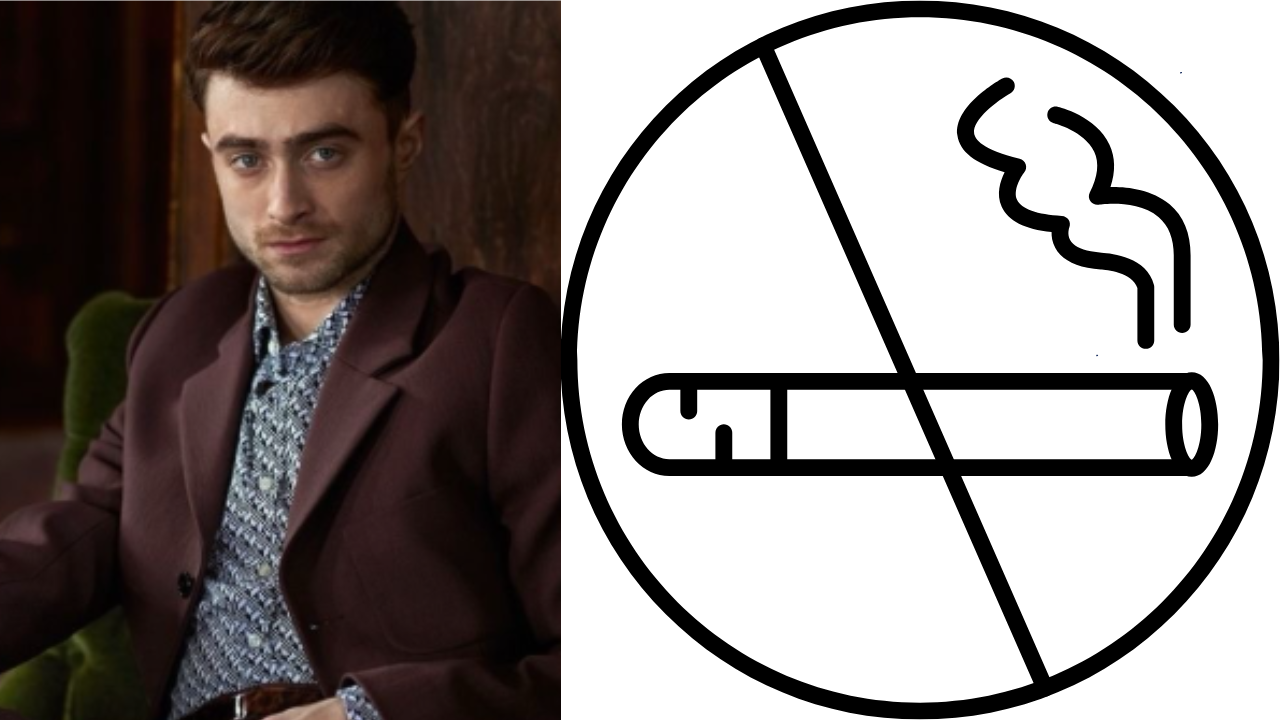
Harry Potter star Daniel Radcliffe has quit smoking after 20 long years. The reason: his two–year–old son with girlfriend Erin Darke. Speaking to media outlet Vulture, the 36-year-old English actor shared that after becoming a father, he was inspired by intrusive thoughts about his mortality, which enabled him to quit the deadly habit after two decades. "I smoked for 20 years pretty heavily, and I was never even thinking about quitting, and then shortly after having my son, the intrusive thoughts of my own death really helped as an incentive to quit," Radcliffe was quoted as saying. Radcliffe also shared how a book -- The Easy Way to Quit Smoking, by Alan Carr -- helped him decide to quit smoking."It may not work for everybody, but it really worked for me," noted the star, currently starring in the Broadway play Every Brilliant Thing. Earlier this month, the actor spoke with WSJ Magazine and shared that from being on “cigarettes all day”, he's transformed into a fitness freak. How Does Smoking Affect Our Body? Smoking can affect all organs in our body. While lung cancer and tuberculosis are the most prominent ones, smoking can seriously increase the risk of several chronic diseases. These include: Heart Disease Asthma Reproductive Health Vision Loss Chronic Obstructive Pulmonary Disease Cancers of the liver, stomach, and colon.While quitting tobacco is important, it is a difficult task, with some people finding it harder to quit than others. It may be important to seek help quitting. Also read: Cigarettes And The Female Body: The Hormonal Toll We Don’t Talk AboutWhat Happens When You Stop Smoking? In just 20 minutes of stopping, your blood pressure and heart rate begin to normalize. Within a few weeks, your lung function improves. Over time, the risk of heart disease and cancer also decreases dramatically. A recent study published in the journal Addiction emphasizes three primary methods proven effective for quitting smoking: behavioral support, prescription medications, and nicotine replacement therapy (NRT). These strategies have shown varying levels of success in aiding smokers to quit permanently. In addition, alternative methods like e-cigarettes and mindfulness-based techniques have gained traction in helping reduce smoking addiction. Science-backed Methods To Help You Quit Smoking Behavioral Support Quitting smoking isn’t just about resisting cravings. Often, behavioral support through counseling or therapy is crucial for tackling the psychological aspects of addiction. Behavioral therapy involves working with a trained professional to identify triggers, develop coping strategies, and create a tailored quit plan. Research shows that combining counseling with other quit methods can significantly increase success rates. Prescription Medications Some medications, such as varenicline (Chantix) and bupropion (Zyban), have been shown to help people quit smoking by reducing cravings and withdrawal symptoms. Experts suggest that varenicline works by blocking the effects of nicotine in the brain, while bupropion is an antidepressant that helps manage withdrawal symptoms. Both medications are generally more effective when combined with behavioral therapy. Nicotine Replacement Therapy (NRT) Nicotine replacement products, such as nicotine patches, gums, lozenges, and nasal sprays, deliver controlled amounts of nicotine to ease withdrawal symptoms. According to experts at Harvard Health, NRT can double the chances of quitting by alleviating physical cravings while the person works on overcoming the psychological addiction.