
- Health Conditions A-Z
- Health & Wellness
- Nutrition
- Fitness
- Health News
- Ayurveda
- Videos
- Medicine A-Z
- Parenting
Study Finds Strong Links Between Borderline Personality Disorder And Alcohol Use

Credits: Canva
Alcohol use problems are far more common in people living with borderline personality disorder than many clinicians may assume. A large meta analysis has found that more than half of individuals diagnosed with the condition also struggle with alcohol use disorders. The finding strengthens calls for mental health care that treats both issues together rather than separately.
Why Alcohol Is A Major Risk
Borderline personality disorder, often called BPD, is a complex psychiatric condition marked by intense emotional swings, impulsive behavior, unstable relationships, and a fragile sense of self. Many people with BPD experience overwhelming emotional distress and may turn to alcohol as a way to cope, calm themselves, or escape difficult thoughts.
For years, research has hinted at a strong connection between BPD and substance misuse. However, the actual scale of the problem has been unclear because individual studies reported very different numbers. Some suggested moderate overlap while others pointed to extremely high rates.
Alcohol misuse in BPD is not just a side issue. It can worsen mood instability, increase the risk of self harm, and make therapy harder to stick with. People may miss appointments, struggle with medication routines, or act more impulsively while intoxicated. This makes understanding the true prevalence important for both diagnosis and treatment planning.
What Did The Research Find?
To clarify the picture, researchers reviewed 15 studies including 15,603 adults diagnosed with borderline personality disorder. The team analyzed data collected across multiple countries and databases up to March 2024 using established systematic review methods.
The results were striking. About 55.28 percent of people with BPD had an alcohol use disorder. Around 44.59 percent met criteria for alcohol dependence and 18.84 percent for alcohol abuse.
When compared with the general population, the contrast becomes sharper. Alcohol use disorders occur in roughly 8.6 percent of men and 1.7 percent of women overall. The prevalence in BPD is therefore dramatically higher.
In simple terms, alcohol related conditions are not occasional in BPD. They are common and clinically significant.
What This Means For Treat
The findings suggest that mental health services cannot treat borderline personality disorder in isolation. Screening for alcohol misuse should become routine during psychiatric assessment. Likewise, addiction services should look for underlying personality disorders rather than focusing only on drinking behavior.
Integrated treatment approaches are likely to work better. Therapy that addresses emotional regulation, impulsivity, and coping skills alongside addiction support may reduce relapses and improve long term outcomes.
Early identification is key. When both conditions are recognized together, patients are more likely to stay engaged in care and avoid severe complications. The research ultimately highlights a simple but important point. For many patients, recovery depends on treating the person as a whole, not just the diagnosis they first walk in with.
Ramadan Fasting: Avoid Excess Salt And Caffeine To Boost Kidney, Prostate Health, Say Experts

Credit: Canva
Dehydration is a serious concern for people fasting during the month-long Ramadan period, and can severely impact kidney and prostate health. Experts suggested that avoiding excess salt and caffeine can help.
While Ramadan fasting is generally safe for people with early-stage chronic kidney disease (CKD), maintaining adequate hydration between iftar and sehri -- the two important meals each day for faithful observing the fasting -- is of significant importance.
Dehydration can lead to acute kidney injury and electrolyte imbalances for individuals with advanced CKD. As prolonged fasting hours -- more than 12 hours a day -- urine becomes concentrated, increasing the risk for kidney stones and Urinary Tract infections (UTIs).
For men with prostate problems, fasting during Ramadan can pose challenges, such as Benign Prostatic Hyperplasia (BPH) or an enlarged prostate, primarily due to dehydration.
“As a practicing urologist and kidney transplant surgeon in India, I often notice a rise in kidney stone pain and urinary infections during Ramzan. When patients fast for long hours -- especially in our warm climate -- urine becomes highly concentrated. That increases the risk of stones and UTIs. Men with prostate enlargement sometimes report worsening urinary flow because they consciously reduce fluid intake,” Dr. Pankaj Panwar, Additional Director, Urology, Fortis Escorts Okhla, New Delhi, told HealthandMe.
The doctor advised people “to hydrate strategically between Iftar and Sehri, avoid excess salt and caffeine”.
How Excess Salt And Caffeine Impact Ramadan Fasting
Consuming high-sodium foods such as processed meats, pickles, salty snacks, and fast food during iftar or sehri can increase thirst and dehydration.
High salt intake forces the body to pull water from cells to dilute the sodium, leading to severe thirst. It can also lead to bloating.
Similarly, caffeine in coffee, tea, chocolate, and energy drinks can be diuretic and cause the body to lose fluids and salts through increased urination. Particularly, drinking coffee or tea at sehri -- the pre-dawn meal -- can lead to faster dehydration during the day.
Caffeine consumption, especially late in the evening, can also interfere with sleep, making it harder to wake up for sehri.
“Ramzan is a sacred month of fasting, but prolonged abstinence from water, especially in hot climates, can increase dehydration risk. Concentrated urine puts stress on the kidneys and may worsen kidney stones or trigger urinary tract infections,” Dr. Mangesh Patil, Urologist at Saifee Hospital, Mumbai, told HealthandMe.
Dehydration during Ramadan fasting can lead to symptoms like headaches, extreme thirst, fatigue, and dizziness. But in case of severe dizziness, fever, confusion, or blurred vision, the experts warned of immediate medical help.
“Do not ignore warning signs like flank pain, fever, or difficulty passing urine. A little planning can prevent an emergency hospital visit,” Panwar said.
Patil said warning signs include severe flank pain, burning urination, fever, vomiting, blood in urine, or reduced urine output. Men with Benign Prostatic Hyperplasia may notice worsening urinary symptoms.
Tips To Prevent Complications
- Drink 2-3 liters of water between iftar and sehri
- Include water-rich fruits
- Avoid excess salt and caffeine
- Individuals with kidney disease, stones, UTIs, or prostate issues should consult their doctor before fasting.
The Common Colon Cancer Sign You Need To Look Out For
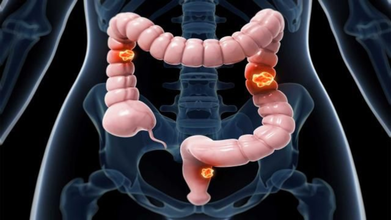
Credit: Pinterest
Colon (colorectal) cancer begins when small growths called polyps form on the inner lining of the colon or rectum. Over time, changes in the DNA of these cells can cause the polyps to become cancerous.
As abnormal cells multiply, they replace healthy cells and eventually form a mass known as a tumor. This process develops slowly, often taking up to ten years for a precancerous polyp to turn into cancer and begin showing symptoms.
Colon cancer poses serious health risks because cancerous cells can invade healthy tissues. Over time, they may break away and spread to other parts of the body, making detection more difficult since the symptoms can resemble other conditions.
What Is the First Sign of Colon Cancer You Shouldn’t Ignore?
Colon cancer can be difficult to detect because it often develops without obvious symptoms. However, doctors emphasize that the number one warning sign is rectal bleeding or blood in your stool.
"Colon cancer can be hard to diagnose because it can develop asymptomatically,” said Dr. John Nathanson, a gastroenterologist at New York-Presbyterian Allen Hospital.
Dr. Pratima Dibba adds that this symptom should not be misdiagnosed as hemorrhoids, infection, or constipation, since early signs of colon cancer can look similar.
She urges patients to get checked promptly to rule out serious conditions.
Research from the Cleveland Clinic also shows that blood in stool can originate anywhere in the gastrointestinal tract, including the colon.
Detecting colon cancer early is critical, as survival rates can be as high as 90 percent when caught in its initial stages.
What Are Other Symptoms Of Colon Cancer?
Persistent changes in bowel habits (diarrhea, constipation, or narrowing of stool). Other signs include:
- Abdominal (belly) pain
- Bloated stomach
- Constipation or diarrhea
- Feeling like there’s still poop in your bowel even after you go to the bathroom
- Feeling tired or weak
- Unexplained weight loss
Present Day Scenario In India
Colorectal cancer (CRC) is a major health concern worldwide. In India, it is the fourth most common cancer among both men and women. In 2022, there were 64,863 new cases and 38,367 deaths.
Projections suggest that incidence will continue to rise by 2026, reflecting both lifestyle changes and improved detection.
Compared to developed countries, survival rates in India remain lower, largely due to late-stage diagnosis and limited access to screening programs.
The American Cancer Society notes that colorectal cancer is a cancer that starts in the colon or the rectum. Colorectal cancer impacts around 1.9 million people every year, noted the World Health Organization (WHO) as per its 2022 data.
Some of the risk factors include risk factors involve being over the age 50, family history, certain genetic syndromes (like Lynch syndrome), inflammatory bowel diseases, and lifestyle factors (diet high in red meat, alcohol, smoking, inactivity).
The most effective way to prevent colorectal cancer is through annual colonoscopies, screening and stool tests.
Chinese Scientists Could Reverse Type 2 Diabetes Through Stem Cell Therapy
Credits: Canva
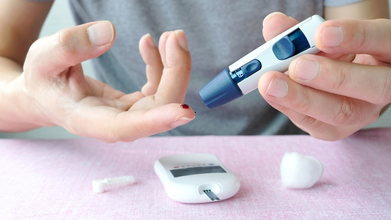
For the longest we have been told that Type-2 diabetes though can be maintained, cannot be fully reversed. However, Chinese scientists may have found a cure, thanks to stem cell therapy. Chinese scientists have achieved the first case in the world in reversal of type-2 diabetes.
What Is Type 2 Diabetes?
Diabetes is a condition characterized by high blood sugar (glucose) levels. It develops when the pancreas either doesn't produce enough insulin, doesn't produce any insulin at all, or when the body doesn't respond properly to insulin, a condition known as insulin resistance.
Type 2 diabetes is the most common form of diabetes and occurs when your body doesn't use insulin properly. The risk of developing Type 2 diabetes increases if you are overweight or obese, or if you have a family history of the condition.
What Did The Study Find?
First, researchers collected stem cells, either from the patient’s own body or from a donor. These cells are valuable because they can develop into many different specialised cell types and take over specific biological functions.
In the laboratory, scientists exposed the stem cells to carefully designed chemical signals and genetic instructions. This guided them to become pancreatic islet cells, more precisely, beta cells, the body’s natural insulin-producing cells.
Once reprogrammed, the cells were grown into small clusters that resemble real pancreatic tissue damaged in diabetes. These clusters are capable of sensing blood sugar levels and releasing insulin when required.
Next came transplantation. The insulin-producing clusters were implanted into the patient’s body, in this case, the abdomen. After implantation, they connected to the bloodstream and began functioning within the body.
After transplantation, the new cells begin behaving like healthy pancreatic beta cells. They sense rising blood glucose levels and release insulin in response, helping bring sugar levels down naturally and reducing, or sometimes removing, the need for insulin injections.
Doctors then closely monitor the patient over time to make sure the cells survive, continue producing insulin, and do not trigger immune rejection or other complications.
This approach falls under regenerative medicine, where the goal is not just to manage type-2 diabetes but to repair the underlying problem by rebuilding the body’s insulin-producing ability.
The early outcome is encouraging, but caution is essential. The success comes from a single case, and that alone cannot prove the treatment works broadly. Larger clinical trials across diverse patient groups are necessary to confirm both safety and effectiveness before it can be considered a reliable therapy.
Why Does This Study Matters Especially For India?
Many experts have recognized India as the diabetes capital, with type-2 diabetes being the most common cost. Globally, diabetes affects about 90 million adults between the ages 20 to 70 years, with over 90 per cent of these cases are of type-2 diabetes. India had 89.8 million adults between ages 20 to 79 years living with diabetes in 2024 and the numbers are expected to increase to 100 million by the end of 2026. This is why this stem cell therapy could prove to be of great help in controlling the numbers, especially for insulin-dependent patients.
- Follow Us :


© 2024 Bennett, Coleman & Company Limited