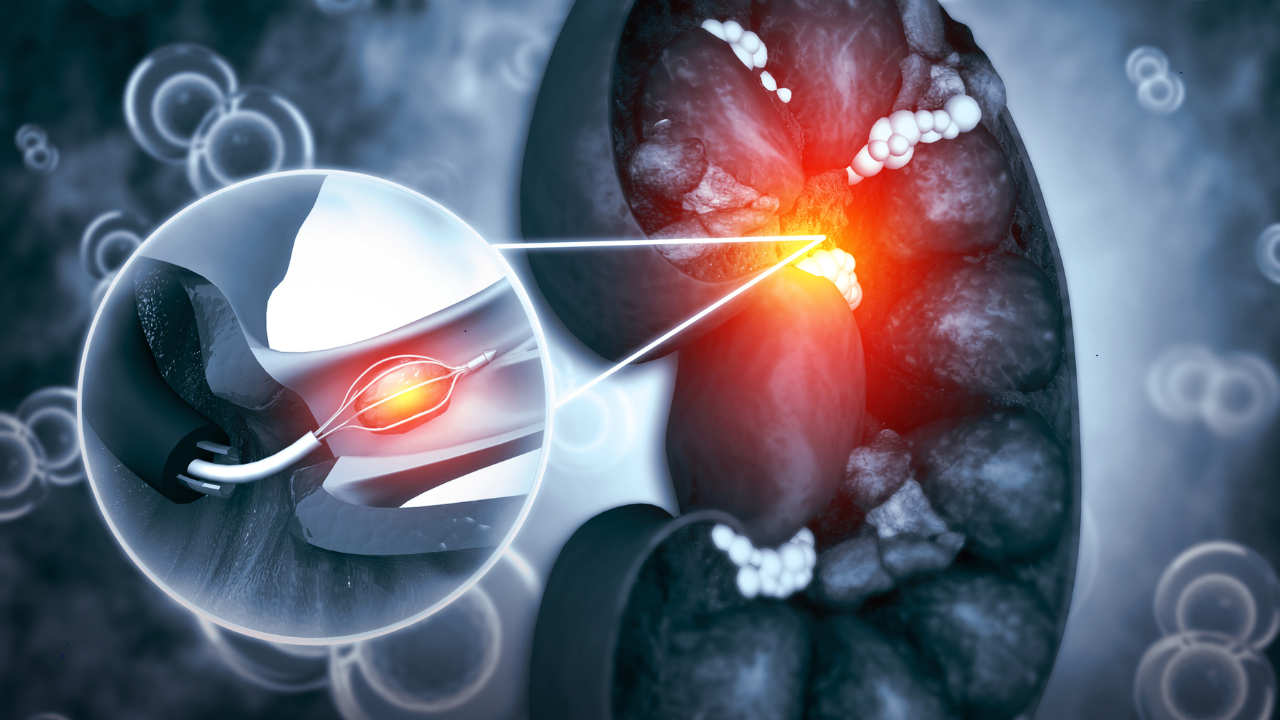
A team of researchers in the US has developed a nanoparticle-based technique that could make laser surgeries for kidney stones faster, safer, and potentially reduce the chances of recurrence. Engineers from the University of Chicago and doctors from Duke University added dark nanoparticles to a common saline solution used in kidney stone laser surgeries. Their method also promised less recurrence of disease. The research focused on laser lithotripsy, a widely used surgical method in which lasers are used to break kidney or urinary tract stones into tiny fragments that can then be removed by suctioning or pass naturally. How Nanofluid Boosts Lasery SurgeryTraditionally, surgeons use a small video-guided laser to fragment the stones. However, achieving effective fragmentation often requires higher laser power, which generates additional heat and causes damage to the surrounding tissues. Thus the new method “is a way to better utilize the laser energy that is already being employed,” said Po-Chun Hsu, assistant professor at the University of Chicago Pritzker School of Molecular Engineering (UChicago PME). Hsu noted that their nanoparticle-based “nanofluid” also has the potential to enhance the performance of lasers without increasing power levels. This will effectively fragment the stones and remove the dust particles. The study, published in the journal Advanced Science, describes an innovative saline solution that enhances the performance of existing laser systems without requiring modifications to the equipment. By adding dark nanoparticles that absorb laser wavelengths, the solution ensures that more of the laser energy is directed at the kidney stone rather than being reflected or dispersed. “This improves the amount of laser energy that is transmitted to and absorbed by the stones,” said corresponding author Pei Zhong, a professor of engineering at Duke University. “Nanofluid introduces a new dimension that can influence this complex physical process, independent of the stone composition or the laser being used,” Zhong said.Kidney Stone Laser Surgery In 10 MinutesLaboratory tests using artificial kidney stones showed that the nanofluid increased stone ablation efficiency by between 38 and 727 percent in spot treatments and by 26 to 75 percent in scanning treatments. The researchers also tested the nanoparticle solution on living cells for up to 24 hours and found it to be non-toxic and safe. In clinical settings, however, exposure would be much shorter. Laser lithotripsy is typically an outpatient procedure lasting about 30 minutes. The researchers believe that improved laser absorption could reduce the procedure time to around 10 minutes. “If surgeries take too long, waste heat from the laser can accumulate and cause more harm than the stone removal itself,” Hsu said.Kidney Stones: Symptoms And PreventionKidney stones are hard mineral or acid salt deposits formed in the kidneys. It occurs due to concentrated urine, and causes intense, radiating back/side pain, nausea, and blood in urine. Common causes include dehydration, diet, obesity, family historymetabolic issuesKidney stones can be prevented by:staying well-hydrated reducing sodium levelseating fewer oxalate-rich foodsconsuming sufficient calcium-rich foodsincreasing citrus intake.