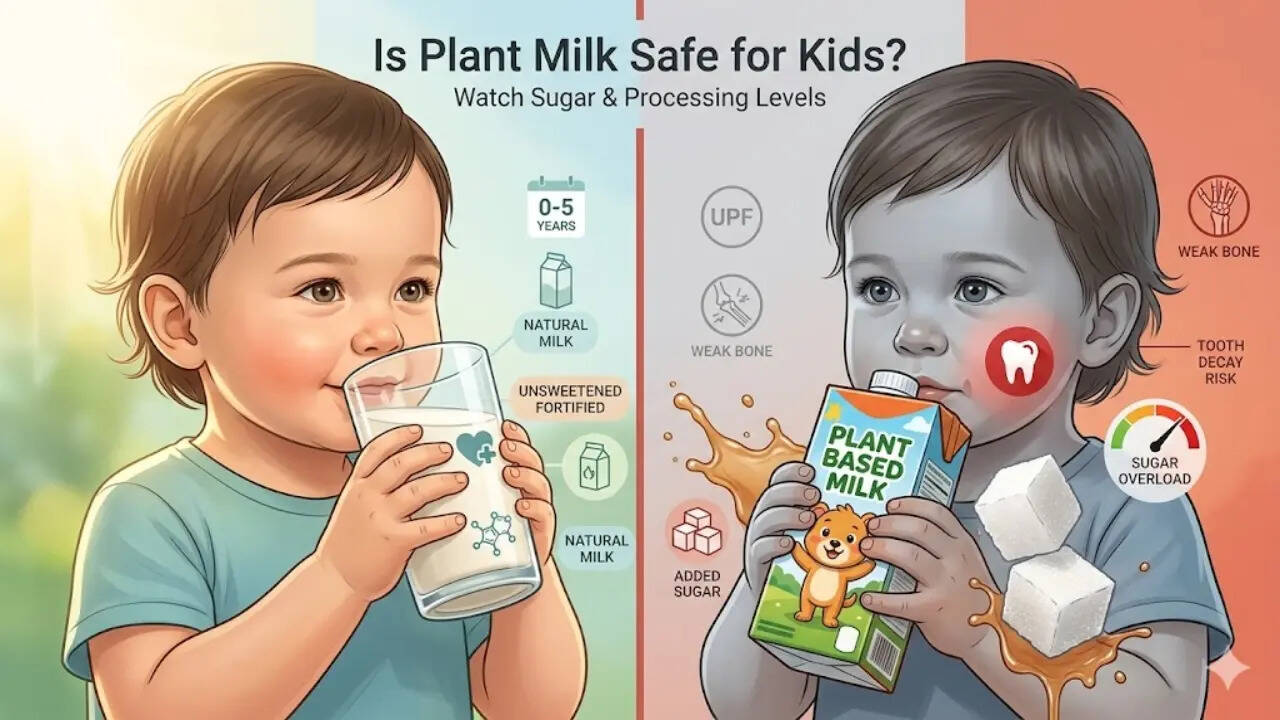
A plant-based diet is highly recommended for a healthy heart — weight watchers can also benefit from it, as can diabetics. When one goes vegan, the biggest change comes when one moves from dairy milk to oat, almond, or soy milk. Parents, too, are now shifting their children to trendy vegan milk options — little do they realise that this could bring their worst fears to life. According to the British Society for Allergy & Clinical Immunology, drinks that are aimed at children and often marketed as healthy are usually loaded with sugar and offer little or no nutrition.Why has plant milk become a preferred choice?Experts found that children under five years of age are more prone to malnutrition, tooth decay, or even obesity. The study is the first of its kind, and its warning will be published in the coming week. It is backed by the British Dental Association and the British Dietetic Association. Doctors say that plant-based drinks are often compared to cow’s milk in terms of nutrition. However, these claims are not supported by current evidence.Why is plant milk discouraged for children?Plant milk has gained popularity in recent years because of the health benefits that many believe it offers. While adults may benefit from it in several ways, toddlers must not be given these packaged, sugary drinks. The added sugars can become nothing more than a frequent treat for children, who may lose their milk teeth sooner and suffer from decay. Researchers found that families are often convinced that plant milk is good for children, but these oat, almond, and soy versions of milk are processed and full of sucrose and fructose syrups.According to a report, most of these drinks contain large amounts of sugar in the form of maltodextrin, glucose syrup, sucrose, and fructose. A 350 ml glass of such milk contains more than double a toddler’s daily sugar allowance. Ideally, toddlers should not be given more than 14 grams of sugar every day. Their young bodies can struggle to absorb vitamin B12 and calcium from plant drinks. The BSACI recommends that parents opt for unsweetened, fortified plant milk instead, as these can play a crucial role in supporting children’s health.How do ultra-processed foods affect children’s health?Ultra-processed foods (UPFs) are defined as food groups that undergo a great deal of processing — the most natural foods fall under Group 1, while heavily processed foods are placed under Group 4. While these do not definitively determine how healthy a food option is, they indicate the level of processing involved. Highly processed foods are associated with a range of health problems, which is why it is important to make informed dietary choices.What are minimally processed foods?In your kitchen, foods with a minimal level of processing include:FruitsVegetablesGrainsLegumesMeat and poultryEggsFish and seafoodFresh milkSpices and herbsCoffee and teaNuts and seedsPlain yoghurtWhat are ultra-processed foods in your kitchen?Some of the most processed foods in your kitchen include:Sweetened yoghurtSoft drinksBiscuitsBreakfast cerealsCandiesCake mixesBreads and bunsEnergy drinksEnergy barsFrozen foods — pies, pizzas, snacks, sausages, pepperoni, ham, and salamiInstant foods — noodles, soups, and sauces