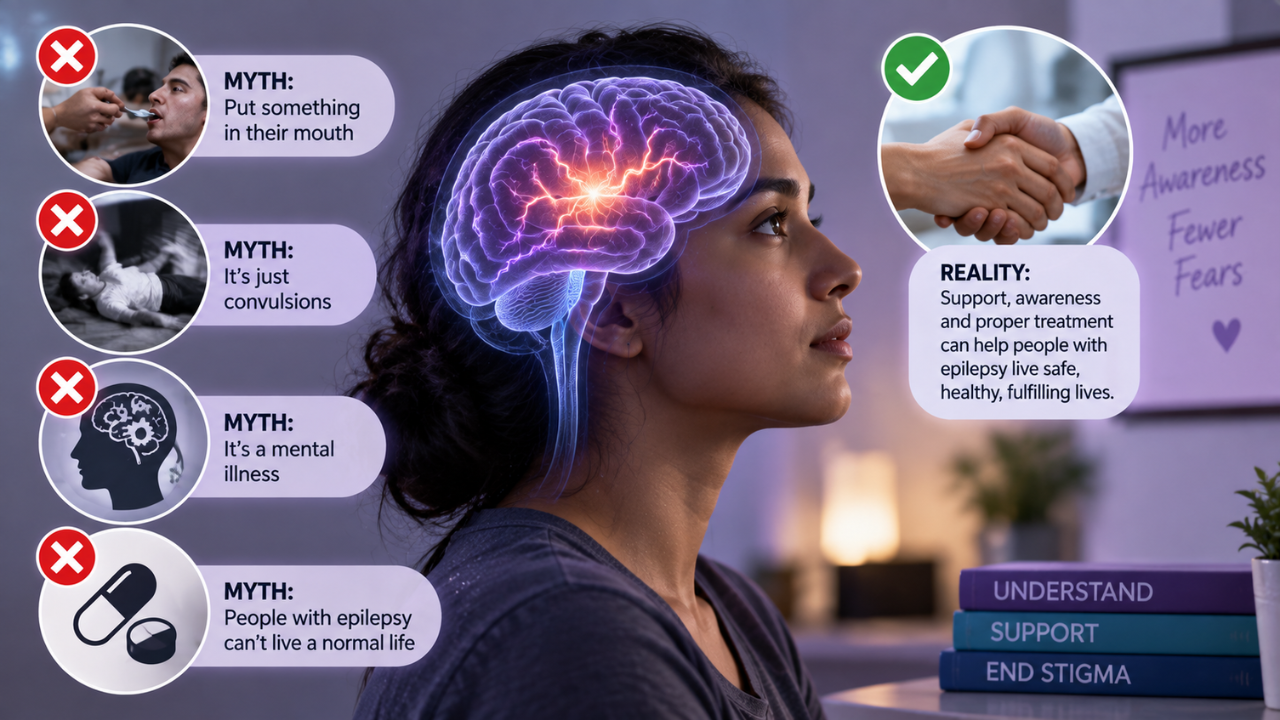
A neurologist speaks out against the superstitions that continue to endanger people living with epilepsy Epilepsy is one of the most common neurological disorders in the world, affecting roughly fifty million people globally, according to the World Health Organisation. Yet despite its prevalence, it remains shrouded in confusion, fear and, most worryingly, dangerous folklore. A senior neurologist has now spoken out, urging the public to abandon long-held myths that, far from helping patients, are actively putting their lives at risk. "Epilepsy is not a curse, a possession, or a punishment. It is a medical condition in which the brain's electrical activity is temporarily disrupted. That is all it is. Yet the myths surrounding it are so deeply entrenched that they often cause more harm than the seizures themselves." Myth One: Something Must Be Put in the Mouth During a Seizure Perhaps the most persistent and dangerous myth is the belief that a spoon, cloth, or one's fingers should be forced into a person's mouth during a seizure to "stop them swallowing their tongue." Doctors are unequivocal: this is physically impossible and medically reckless. It is anatomically impossible to swallow one's tongue during a seizure; forcing an object into someone's mouth can break their teeth, injure their gums, or cause choking. Several patients have suffered serious dental and jaw injuries because well-meaning bystanders tried to 'help' in this way. The correct approach is far simpler: gently turn the person onto their side, cushion their head, remove nearby hazards, and time the seizure. Nothing should ever be placed in the mouth, and the person should not be restrained.Also read: As India Faces Flu Vaccine Shortage Amid H1N1 Surge, ICMR Recommends Alternative: Expert Explains If You Should Take It Myth Two: Women with Epilepsy Should Not Become Mothers Another myth that continues to cause deep emotional and social harm is the belief that women with epilepsy should avoid motherhood altogether, either because pregnancy will worsen their condition or because the child will inevitably inherit it. This is simply untrue for the overwhelming majority of women; with proper pre-conception counselling, careful medication management, and regular monitoring, most women with epilepsy go on to have healthy pregnancies and healthy babies. Up to seventy per cent of people with epilepsy can become seizure-free with appropriate treatment, a fact that applies just as much to expectant mothers as to anyone else. The key is planning the pregnancy with a neurologist well in advance, since some anti-seizure medications carry risks and may need adjusting under medical supervision, rather than being stopped abruptly out of fear.Also read: Can India Prevent Rabies Deaths By Vaccinating Dogs? Lancet Study Says Kerala May Reach Near-Zero Deaths In 3 Years Myth Three: Epilepsy Is Contagious or Caused by Evil Spirits In many communities, epilepsy is still wrongly associated with possession, sin, or contagion, leading to patients being isolated, denied education, or excluded from social and professional life. The World Health Organisation notes that stigma and discrimination surrounding epilepsy remain more disabling in many parts of the world than the seizures themselves. Epilepsy cannot be caught by touching, breathing near, or sharing utensils with someone, the neurologist clarifies. It arises from genetic factors, brain injury, infection, stroke, or developmental conditions — never from supernatural causes. Myth Four: People with Epilepsy Cannot Lead Normal Lives Many assume that a diagnosis of epilepsy signals the end of independence — no driving, no marriage, no career. In reality, most people with well-controlled epilepsy study, work, marry, drive under appropriate medical clearance, and raise families without difficulty. Why the Facts Matter Health bodies estimate that a significant proportion of people with epilepsy in lower-income regions never receive appropriate treatment, largely due to stigma, misinformation, and limited access to neurological care. This treatment gap, the neurologist warns, is often widened by superstition rather than narrowed by medicine. Every myth we fail to correct is a patient who might delay treatment, hide their diagnosis, or be treated unkindly by their own family. Education is not a luxury here — it is protection. Families witnessing a seizure should stay calm, protect the person from injury, avoid crowding them, and seek medical help if the seizure lasts longer than five minutes or is followed by another without recovery in between. Epilepsy is manageable, treatable, and, in most cases, entirely compatible with a full and ordinary life. What patients need is not superstition, but understanding — and that begins with all of us learning the facts.