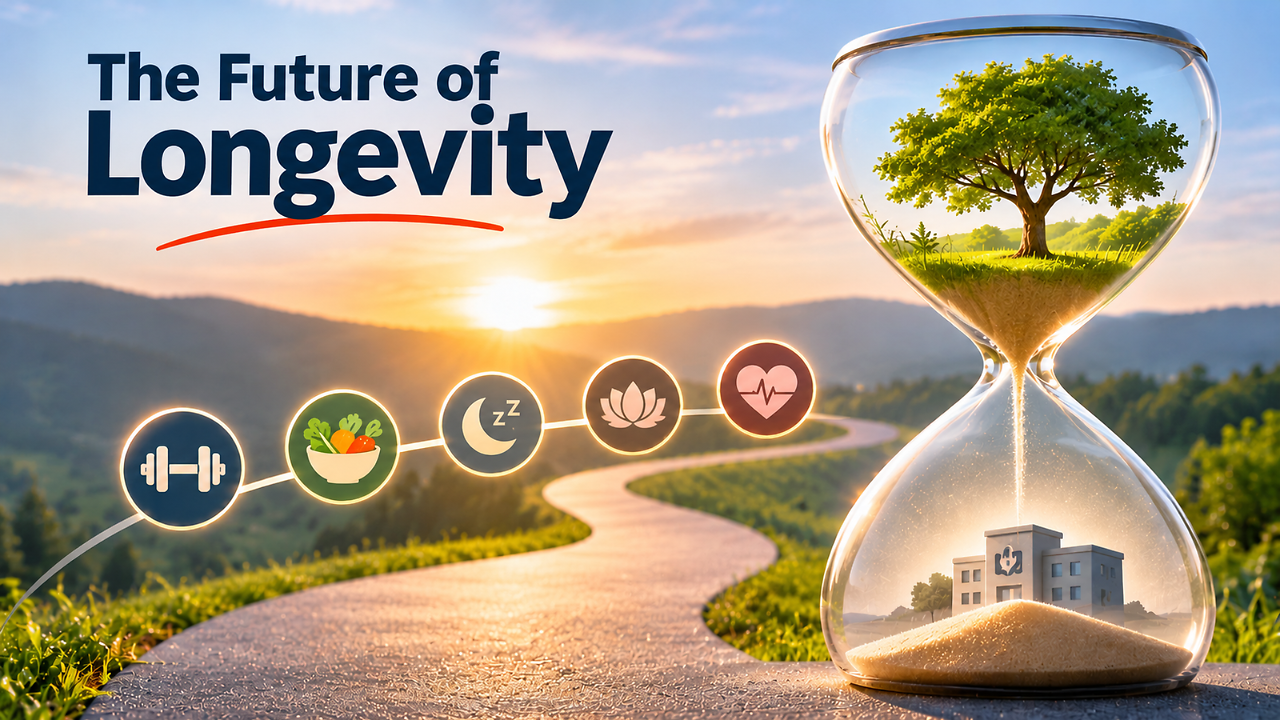
Healthcare is undergoing a significant transformation. For decades, medical science has focused primarily on treating diseases and extending life expectancy. Today, however, the conversation is shifting towards a more important question: how can we help people live longer while maintaining good health, physical strength and mental wellbeing?This shift from lifespan to healthspan is emerging as one of the most important developments in modern healthcare.Lifespan refers to the total number of years a person lives, while healthspan represents the period during which an individual remains physically active, mentally capable and functionally independent. Living longer does not necessarily mean living healthier. The increasing prevalence of diabetes, cardiovascular diseases, metabolic disorders and age-related conditions highlights the need to rethink conventional healthcare approaches.I believe the future of medicine will depend on how effectively we bridge this gap between lifespan and healthspan.Understanding Ageing Through Modern ScienceAgeing is a complex biological process influenced by genetics, cellular damage, metabolic changes, environmental exposure and lifestyle factors. Scientific research has identified several mechanisms associated with ageing, including mitochondrial dysfunction, cellular senescence, chronic inflammation and declining stem cell function.Advancements in biotechnology, molecular biology and regenerative medicine are helping researchers understand these processes more effectively. Biomarkers, metabolic assessments and emerging epigenetic technologies are creating opportunities to study biological ageing and identify potential health risks earlier.The objective is not to promise immortality or miracle cures, but to understand the biological mechanisms of ageing and develop evidence-based approaches that may help individuals maintain better health for longer.Regenerative medicine, including research into stem cells, platelet-rich plasma (PRP) and exosomes, is also attracting considerable scientific interest. However, these technologies differ in their clinical evidence, applications and regulatory status. Every intervention must be evaluated through scientific research, patient safety and ethical medical practice.Also read: Longevity Guide: What Can You Do Today To Reduce Your Risk of Illness 30–40 Years from Now?Why India Needs Its Own Longevity Research FrameworkIndia presents a unique opportunity in the global longevity landscape. Its population has distinct genetic, nutritional, metabolic and environmental characteristics. Conditions such as diabetes and cardiovascular diseases also affect many Indians at comparatively younger ages.Therefore, biological-age assessment tools developed primarily using Western population data may not fully represent ageing patterns among Indian populations.We need stronger research frameworks that consider India's demographic and biological diversity. Developing population-specific reference standards for biological ageing could help researchers identify relevant biomarkers, understand metabolic differences and improve health assessments.India also has an opportunity to connect traditional knowledge with contemporary scientific research. Ayurveda has historically emphasised Rasayana, a concept associated with rejuvenation and healthy ageing. While traditional practices must be evaluated through appropriate scientific evidence, exploring their relevance alongside modern biotechnology could encourage interdisciplinary research.I describe this integration of scientific research, regenerative medicine and intelligent healthcare approaches as Regenerative Intelligence.Moving Towards Preventive and Predictive HealthcareOne of the most important changes in modern medicine will be the transition from reactive treatment to preventive and predictive healthcare.Instead of waiting for symptoms to appear, longevity-focused healthcare aims to understand individual health risks earlier through appropriate assessments and lifestyle interventions.Some essential components include:Biomarker monitoring: Evaluating relevant indicators of metabolic, hormonal and inflammatory health.Nutrition: Following balanced dietary practices that support metabolic health and overall wellbeing.Sleep: Recognising the importance of adequate sleep in recovery, hormonal regulation and cognitive function.Physical activity: Promoting resistance training and muscle preservation to maintain strength and mobility with age.Stress management: Addressing chronic stress and emotional wellbeing as part of long-term health management.Advanced therapies cannot replace these fundamentals. The future of longevity medicine must integrate healthy lifestyle practices, appropriate diagnostics and clinically validated treatments.Also read: Deepinder Goyal's Temple Device: Why Doctors Are Questioning Its ScienceThe Growing Importance of Regenerative MedicineRegenerative medicine is becoming an important area of scientific investigation because it explores biological mechanisms involved in tissue maintenance, repair and regeneration.Stem cell research, PRP, exosomes and related technologies are being investigated across multiple medical disciplines, including musculoskeletal health, dermatology and women's health.However, scientific progress must be accompanied by responsible clinical application. Not every promising laboratory finding translates into a safe and effective treatment. Healthcare professionals must understand the underlying science, clinical evidence, limitations and potential risks before considering these interventions.This makes professional education and research collaboration essential to the responsible growth of regenerative medicine.Building Expertise for the Longevity RevolutionThe success of longevity medicine will depend not only on scientific discoveries but also on the availability of appropriately trained healthcare professionals.Recognising this need, the International Association of Stem Cell & Regenerative Medicine (IASRM) has been working to advance professional education, scientific awareness and international collaboration in regenerative and longevity medicine.Through its Longevity Revolution conferences, initiated in 2014, and its academic initiatives, IASRM provides platforms for interaction among clinicians, scientists, researchers and healthcare professionals. Its fellowship programmes focus on three key areas:Anti-Ageing, Regenerative, Aesthetic & Functional Medicine: Covering biomarkers, metabolic health, mitochondrial function, nutritional approaches and emerging longevity technologies.Stem Cell & Regenerative Medicine: Focusing on stem cell biology, PRP, exosomes, secretomes and the scientific evidence behind regenerative applications.Functional, Regenerative & Aesthetic Gynaecology: Exploring women's health and regenerative approaches across different life stages.These programmes incorporate international faculty interactions, academic masterclasses, practical training, mentorship and research-oriented learning.The objective is to strengthen scientific understanding and encourage responsible clinical decision-making. Professional fellowships are educational programmes and do not replace recognised medical qualifications or statutory licensing requirements.Also read: Times Network India Health Summit 2026 Key Takeaways: AI, Fertility, AYUSH, Cancer Care And MoreEvidence and Ethics Must Lead the WayAs longevity medicine gains popularity, distinguishing scientific progress from commercial hype has become increasingly important.The growing demand for anti-ageing treatments and regenerative procedures has created opportunities for innovation, but it has also increased the risk of misleading claims and inappropriate clinical applications.Every intervention must be evaluated according to the quality of available evidence. Laboratory research, animal studies, observational research and randomised controlled trials provide different levels of evidence and should not be presented as equivalent.At IASRM, we believe the future of regenerative and longevity medicine must be guided by three fundamental principles: scientific evidence, ethical practice and continuous professional education.India's Opportunity to Lead India has the potential to become an important contributor to global longevity research through its growing biotechnology ecosystem, medical institutions, scientific talent and diverse population.However, leadership will require sustained investment in research infrastructure, clinical studies, interdisciplinary collaboration and professional training.The upcoming Healthspan Standard Summit, scheduled for 10–11 April 2027 in New Delhi, will bring together international experts to discuss scientific evidence, clinical relevance, regenerative medicine and the future of healthy ageing.Such platforms can strengthen collaboration and encourage greater accountability in this rapidly evolving field.Longevity should not be viewed as an attempt to remain young indefinitely. It should be understood as an effort to preserve health, independence, mobility and quality of life as people grow older.I believe the next era of healthcare will be defined by the integration of preventive medicine, biotechnology, regenerative science and personalised healthcare.We have spent decades extending human lifespan. The next great responsibility of medicine is to make those additional years healthier, more active and more meaningful.