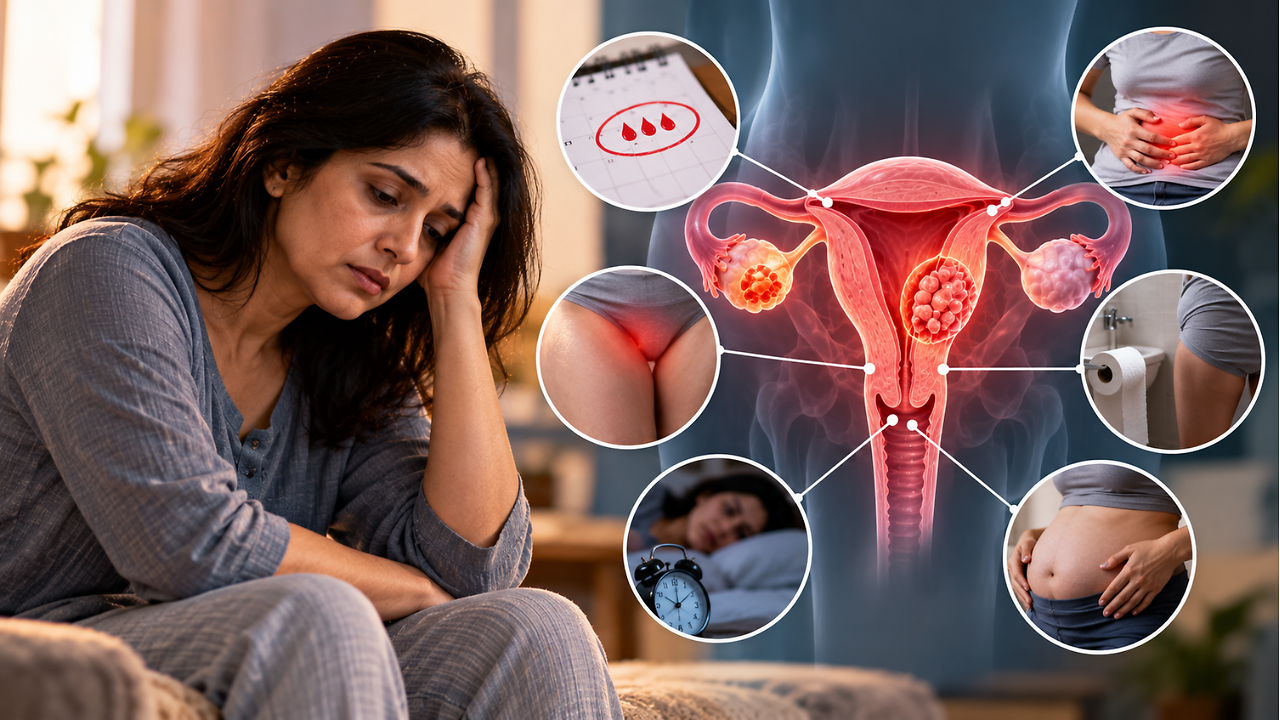
Changes in periods, bloating, pelvic discomfort or unusual bleeding may seem like a part of getting older,. But persistent or unusual symptoms definitely deserve attention.Women often become experts at putting themselves last. A heavier period is blamed on age. Bloating is dismissed as digestion. Pelvic discomfort is accepted as something that comes with getting older. And after menopause, unexpected bleeding may be brushed aside as a hormonal fluctuation. But sometimes, these changes are the body’s way of asking for attention. Gynaecological cancers, including cancers of the uterus, cervix, ovaries, vulva and vagina, can present with symptoms that overlap with common hormonal or digestive problems. Recognising when something is different from a woman’s usual pattern can help ensure timely medical evaluation.When bleeding should not be ignoredChanges in bleeding are among the most important warning signs. Periods that suddenly become much heavier, last longer than usual or occur between periods should be evaluated, particularly if this is a new change. Any bleeding after menopause is also not something women should simply attribute to ageing. Although there can be several non-cancerous causes, postmenopausal bleeding requires medical assessment.Also read: Rare Pregnancy Infections Linked To 3-Fold Higher Autism Risk: What Is TORCH?Persistent bloating is not always “gas”Everyone experiences occasional bloating. However, persistent abdominal swelling, pressure, discomfort or feeling unusually full after eating small amounts should not always be blamed on food or digestion. If these symptoms are new, frequent or progressively worsening, speaking to a doctor is important.Pelvic pain can have many causesPelvic or lower abdominal pain may occur due to several conditions, including fibroids, endometriosis, infections or digestive problems. But unexplained or persistent pain, particularly when accompanied by changes in periods, bleeding or urinary symptoms, deserves attention. A woman does not have to wait until pain becomes severe before seeking medical advice.Also read: ‘Momnesia’ Is Real: Pregnancy Forgetfulness May Be Linked To Disruption In Brain’s Memory CircuitOther changes women should noticeUnusual vaginal discharge, especially if it is persistent, blood-stained or accompanied by an unpleasant smell, should be checked. Changes around the vulva, such as persistent itching, skin colour changes, sores, lumps or wounds that do not heal, should also not be ignored.Unexplained weight loss, ongoing fatigue or changes in bladder or bowel habits can sometimes accompany other symptoms and should be discussed with a healthcare professional. Listen when your body feels differentNot every unusual symptom means cancer. Many of these changes have harmless explanations. The important thing is not to panic but not to dismiss persistent symptoms either. Women know their bodies better than anyone. If something feels unusual, keeps returning or is clearly different from the normal pattern, it deserves a conversation with a doctor.