
- Health Conditions A-Z
- Health & Wellness
- Nutrition
- Fitness
- Health News
- Ayurveda
- Videos
- Medicine A-Z
- Parenting
The New Flu Strain Emerged Too Late For Vaccines, And It Is Already Causing Outbreaks
Credits: Canva
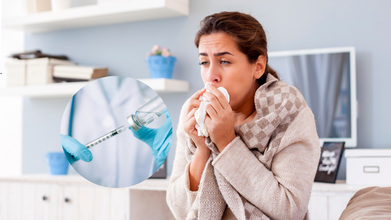
Flu season is here again and global health experts are getting worried about a strain that came up in June. The worry's cause is that the strain came up four months after the makeup of this year's flu shot.
This is the strain H3N2. The strain has caused outbreaks in Canada and in the UK, and health officials have warned about the early wave that is sending people to the hospitals.
As per Dr Wenqing Zhang, who is the head of the World Health Organization (WHO)'s Global Respiratory Threats Unit, "Since it emerged, it is rapidly spreading and predominating in some countries so far in the Northern Hemisphere."
The New Strain
The version of H3N2, which has been circulated worldwide this year "acquired 7 new mutations over the summer," said Antonia Ho, a consultant in infectious disease at Scotland's University of Glasgow. As per her media statement, this "means the virus is quite different to the H3N2 strain included in this year's vaccine".
The strain is now picking up in Canada, after it has been active in the UK, leading to flu cases being triple to what it was the same time last year. Furthermore, generally, H3N2 is thought to cause more illness, and this could be worse for older adults. In fact, Japan is also experiencing an early and harsh flu season. Japanese news outlet Nippon TV reported that as of November 4, flu cases in Tokyo has surged six times to the level it had seen last year. This data has been confirmed by the Japanese Ministry of Health, Labor, and Welfare. As per the media outlet, more than 2,300 day cares and schools were partially closed.
What Is Happening In The US?
H3N2, which is a strain of influenza have had some cases in the US, where people reported positive for flu. However, the Centers for Disease Control and Prevention (CDC) has not provided any detailed national report on flu since September 26, ever since the government shutdown happened.
What About This Year's Flu Shot? Will It Be Of any Use?
Every February, global health experts and vaccine manufacturers decide which flu strains should be included in the Northern Hemisphere’s fall vaccine, based on the strains circulating in the Southern Hemisphere. This year’s flu shot targets three strains, two influenza A types and one influenza B.
While the annual flu vaccine doesn’t always prevent infection, it significantly reduces the severity of illness. Last year, it was up to 55% effective in preventing hospitalizations among adults with the flu.
On Tuesday, U.K. health authorities reported early data showing that this year’s vaccine is up to 40% effective at preventing hospitalizations in adults.
Despite the variation in effectiveness, experts stress the importance of getting vaccinated. “Decades of data show that even when the match isn’t perfect, the flu shot continues to prevent hospitalizations, ICU admissions, and helps keep people out of the cemetery,” said Dr William Schaffner, an infectious disease expert at Vanderbilt University Medical Center, in Nashville, Tennessee, as reported by NBC.
Experts Flag Rising Iron Deficiency Among Women; Timely Screening Key
Credit: Canva
Iron deficiency is one of the most common nutritional problems among women, but in the juggle between professional and household responsibilities, a majority of women tend to ignore their health. However, the detecting the mild symptoms in the beginning can help boost treatment and improve quality of life for women, said experts, while stressing the need for timely screening, ahead of International Women's Day.
International Women's Day is observed globally on March 8 every year.
According to health experts, in a month, around 5 out of 10 women between the ages of 30 and 45 visit doctors with complaints such as persistent weakness, headaches, and tiredness. These symptoms are often linked to iron deficiency and put women at risk of developing anemia.
“Iron deficiency is a matter of concern among women, because the symptoms, such as fatigue and weakness, are neglected until the condition becomes serious,” said Dr. Upasana Garg, Regional Technical Chief, Apollo Diagnostic Mumbai.
Dr. Garg said iron deficiency can be detected through simple blood tests that will be advised by the expert and will play a pivotal role in early diagnosis and timely treatment.
These include tests for
- Hemoglobin levels -- are carried out to measure the amount of oxygen-carrying protein in the blood and indicate if a woman has anemia
- Serum ferritin and iron levels -- to gauge the amount of stored iron in the body and help detect iron deficiency even before anemia develops
- A complete blood count (CBC) -- to measure red blood cells, including their size and number, which checks if the body is producing healthy blood cells.
Anemia In Women
Anemia is a major public health concern, mainly affecting young children, pregnant and postpartum women, and menstruating adolescent girls and women.
The World Health Organization (WHO) estimates that 40 percent of all children aged 6–59 months, 37 percent of pregnant women, and 30 percent of women 15–49 years of age worldwide are affected by anemia.
Anemia occurs when there isn’t enough hemoglobin in the body to carry oxygen to the organs and tissues.
In severe cases, anemia can cause poor cognitive and motor development in children. It can also cause problems for pregnant women and their babies. It is often caused by a lack of iron in the blood.
“Iron is a necessary mineral which helps the body to produce hemoglobin, a protein in red blood cells that carries oxygen to different parts of the body. When the body does not have enough iron, it is unable to produce healthy red blood cells. This condition is known as iron deficiency or iron deficiency anemia,” said Dr. Ritu Agrawal, Gynecologist, Zynova Shalby Hospital, Mumbai.
Dr. Agrawal said that women are more likely to experience iron deficiency when compared to men.
The major reason is blood loss during menstruation, and women who have heavy periods are at a higher risk.
During pregnancy, when the body needs extra iron to support the growing baby, the risk of anemia increases in the mother.
Other factors include poor diet, skipping meals, and not eating enough iron-rich foods.
Early Screening And Treatment
The common symptoms of anemia in women include:
constant tiredness,
weakness,
pale skin,
shortness of breath,
dizziness,
headaches,
hair fall
difficulty concentrating
frequent infections due to reduced immunity
Dr. Agrawal said that 50 percent of women tend to ignore early symptoms of anemia.
“In a month, around 5 out of 10 women between the ages of 30–45 visit with complaints such as persistent weakness, headaches, and tiredness, which are often linked to iron deficiency and put them at risk of developing anemia. If iron deficiency is not treated in time, it can lead to several health complications,” she added.
Severe anemia can also lead to heart-related problems, such as irregular heartbeat or shortness of breath.
The experts noted that detecting iron deficiency on time and initiating immediate treatment is necessary for women's better health.
Management of iron deficiency includes
- improving diet and taking iron supplements as advised by any expert
- Have iron-rich foods like spinach, beans, lentils, nuts, and dates
- Vitamin C–rich foods, such as oranges and lemons.
Oprah Winfrey Sparks Ozempic Buzz at Paris Fashion Week with Slim Figure

Instagram/TikTok
American TV personality Oprah Winfrey turned heads at the Paris Fashion Week with her slim figure and sparked talks on the popular weight-loss drug Ozempic.
The now viral videos show Oprah, 72, in jeans and a jacket. Usually seen in parted hair, Oprah also resorted to a ponytail and was wearing tinted sunglasses.
While several netizens expressed concerns about her health, others also spoke about the effects of Ozempic, widely used for weight loss.
“What in the Ozempic Oprah is going on here?”, wrote a user.
“I'm afraid Oprah may OD on Ozempic. Welfare check, please!” another added.
People also commented on the seemingly bigger head and frail body.
“Her head looks way too big for her body. Is it Ozempic or Oprah?” wrote a user.
“She looked good, but she seemed frail,” the netizens said, while another stated, “But having a head that big still is crazy”.
The video also showed Gayle King, another TV host and a longtime friend of Oprah, with a lean figure. Gayle, 71, also rocked a warm-brown look, paired with a fitted top and a black leather jacket.
Does Oprah Winfrey Take Ozempic?
Oprah has openly shared the use of a GLP-1 agonist for weight loss. However, she never mentioned any brand names.
“One of the things that I realized the very first time I took a GLP-1 was that all these years I thought that thin people just had more willpower, they ate better foods, they were able to stick to it longer, they never had a potato chip, and then I realized the very first time I took the GLP-1 that, 'Oh, they're not even thinking about it. They're only eating when they're hungry, and they're stopping when they're full,” Oprah said in a podcast early in 2025.
In 2023, speaking to People, she said she uses the weight-loss medication as a tool to quiet the food noise.
“I now use it as I feel I need it, as a tool to manage not yo-yoing. It quiets the food noise,” she had told the publication.
Oprah's Strength Training Session
In an Instagram post in February 2026, Oprah also showcased her strength training evolution, highlighting the benefits of daily workouts for bone health and her impressive plank progress.
She told her fans that while in 2024, she struggled to hold a plank for more than 10 seconds, now she manages to do a 1-minute plank routine.
Can Ozempic Really Help You Lose Weight?
While Ozempic was originally developed and FDA-approved as an injectable medication to help manage type 2 diabetes, it has gained immense popularity for its ability to produce significant weight loss.
The drug is popular for its active ingredient, semaglutide, which works by mimicking a hormone that regulates blood sugar and appetite.
However, there are several concerns over its side effects. The loss of lean mass, which includes muscle, has emerged as the biggest concern.
Studies have proven that it provides significant weight loss and also reduces major cardiovascular risks and boosts kidney health, among others.
However, common side effects include:
- gastrointestinal (nausea, vomiting, diarrhea, constipation),
- pancreatitis,
- gallbladder issues,
- face sagging
- dental issues like tooth decay, erosion.
Her Health, Her Power: A Call to Action This International Women's Day

Credit: iStock
She wakes before dawn, packs lunches, manages households, holds careers together, and still finds time to ask everyone else, "Are you okay?" The Indian woman is, in every sense, the backbone of her family. And yet, in giving so much of herself to others, she often becomes the last person she takes care of.
This International Women's Day, that needs to change.
Cancer remains one of the gravest health threats facing Indian women today.
Breast cancer has become the most frequently diagnosed cancer among Indian women — and unlike in Western countries, it is striking women in their 30s and 40s, at the very peak of their lives.
Cervical cancer, though almost entirely preventable, continues to claim thousands of lives every year — not because medicine has failed, but because awareness has.
Ovarian cancer, often called the "silent killer," is frequently caught only at advanced stages, making early vigilance all the more critical.
Thyroid cancer is emerging as a cancer that disproportionately affects women — occurring nearly three times more often in women than men. The good news is that it is also one of the most treatable cancers when detected early.
Women who notice a lump or swelling in the neck, unexplained hoarseness, or difficulty swallowing should not dismiss these signs.
A simple ultrasound and blood test can go a long way in ruling out — or catching — a problem early. The truth, however, is not bleak — it is urgent.
Early Detection Saves Lives
Most cancers, when found at an early stage, are highly treatable. Women above 40 should schedule regular clinical breast examinations and mammography.
Cervical cancer screening through a Pap smear or HPV test, starting as early as age 25–30, can detect precancerous changes before they ever become cancer. These tests are quick, safe, and available — what they need most is for women to simply show up.
Prevention, too, begins with everyday choices. Avoiding tobacco in all its forms — cigarettes, gutka, paan — is the single most powerful step. Regular physical activity, a diet rich in fruits and vegetables, maintaining a healthy weight, limiting alcohol, and getting the "HPV vaccine" (ideally between ages 9 and 14) can dramatically reduce cancer risk.
And perhaps just as importantly: listen to your body. An unusual lump, unexplained bleeding, or a symptom that won't go away is not something to push aside for later. Later can cost everything.
A healthy woman builds a healthy family — and a healthy nation. This Women's Day, let's give every woman around us the most meaningful gift possible: the reminder that her health is not selfish, it is essential.
- Follow Us :


© 2024 Bennett, Coleman & Company Limited