
- Health Conditions A-Z
- Health & Wellness
- Nutrition
- Fitness
- Health News
- Ayurveda
- Videos
- Medicine A-Z
- Parenting
Typhoid Fever Is Becoming Resistant To Antibiotics: Lancet Study
Credits: Canva
Typhoid have plagued humans for millennia and many believe that in developed countries it is no longer considered a threat. However, this 'ancient killer' is still dangerous and a Lancet study published in 2022, titled: The international and intercontinental spread and expansion of antimicrobial-resistant Salmonella Typhi: a genomic epidemiology study, noted that typhoid fever is evolving extensive drug resistance, and is rapidly replacing strains that are not resistant.
As of now, antibiotics are the only effective treatment for typhoid, caused by the bacterium Salmonella enterica serovar Typhi (S. Typhi). However, in the past three decades, the bacteria's resistance to oral antibiotics have been growing.
What Did The Study Find?
In this large-scale investigation, researchers from several countries analyzed the genetic sequences of 3,489 Salmonella Typhi (S. Typhi) samples collected between 2014 and 2019 from Nepal, Bangladesh, Pakistan, and India. Their findings revealed a concerning increase in extensively drug-resistant (XDR) Typhi strains across the region.
XDR Typhi is resistant not only to commonly used first-line antibiotics such as ampicillin, chloramphenicol, and trimethoprim/sulfamethoxazole, but is also increasingly showing resistance to more advanced treatments, including fluoroquinolones and third-generation cephalosporins.
More alarmingly, these highly resistant strains are spreading quickly beyond national borders.
Although the majority of XDR Typhi cases originate in South Asia, researchers have documented close to 200 cases of international transmission since 1990. Many of these strains have spread to Southeast Asia and parts of East and Southern Africa. Additionally, cases of these drug-resistant typhoid strains have been detected in countries such as the United Kingdom, the United States, and Canada.
"The speed at which highly resistant strains of S. Typhi have emerged and spread in recent years is a real cause for concern, and highlights the need to urgently expand prevention measures, particularly in countries at greatest risk," said Stanford University infectious disease researcher Jason Andrews when the results were published.
Drug-resistant Typhoid And Warnings
Scientists have warned about the drug-resistant typhoid for years now. In 2016, the first XDR typhoid strain was identified in Pakistan.
By 2019, this had become a dominant genotype in the nation. However, by the early 2000s, mutations that confer resistance to quinolones accounted for more than 85 per cent of all cases in Bangladesh, India, Pakistan, Nepal and Singapore. At the same time, cephalosporin resistance was also taking over.
Today, only one oral antibiotics is left: the macrolide, azithromycin. However, scientists believe that this medicine may also not work for much longer.
The 2022 Lancet study reported that mutations responsible for resistance to azithromycin are increasingly emerging and spreading, raising fresh concerns among scientists. Researchers warned that this development “threatens the efficacy of all oral antimicrobials for typhoid treatment,” significantly narrowing the pool of effective medicines. Although these particular mutations have not yet been observed in extensively drug-resistant (XDR) S. Typhi strains, experts caution that if XDR variants acquire azithromycin resistance as well, treatment options would become extremely limited, creating a potentially dire public health scenario.
Typhoid fever remains a serious and potentially life-threatening illness. If left untreated, as many as 20 percent of cases can result in death. In 2024 alone, more than 13 million typhoid cases were reported worldwide, underscoring the scale of the burden.
While typhoid conjugate vaccines offer a promising tool to help prevent future outbreaks and reduce transmission, their impact depends heavily on widespread and equitable access. Without significant global expansion of vaccination coverage, health experts warn that the world could face another major public health crisis driven by increasingly drug-resistant typhoid strains.
"The recent emergence of XDR and azithromycin-resistant S. Typhi creates greater urgency for rapidly expanding prevention measures, including use of typhoid conjugate vaccines in typhoid-endemic countries," the authors write.
What Could Be Done To Prevent This From Happening?
Experts say that nations must now expand their access to typhoid vaccines and invest in new antibiotic research.
A 2021 study in India published in journal Vaccine estimated that if children are vaccinated against typhoid in urban areas, it could prevent up to 36 per cent of typhoid cases and death. Pakistan is also leading the front as it was the first nation in the world to offer routine immunization for typhoid. A small number of countries have followed the suit or are "planning or considering introduction".
The World Health Organization (WHO) too have prequalified four typhoid vaccines as of April 2025.
Priyanka Chopra, Nick Jonas Open Up About Malti’s Premature Birth And NICU Battle

Credits: Canva
Priyanka Chopra and Nick Jonas, we all know them as a power couple. However, there are moments that have broken them and they both have talked about it. This was the moment of their daughter Malti Marie Chopra Jonas' birth.
On February 4 episode of the Jay Shetty Podcast, Jonas, 33, opened up about his daughter's birth. "She came to the world under sort of very intense circumstances, which I have not really talked about ever. She came out, she was one pound and 11 ounces, and purple basically. These angels at the NICU kind of resuscitated her in that moment, got her taken care of really quickly, and intubated and everything else."
In fact, recently a video has been circulating of Priyanka Chopra Jonas talking about the premature birth of her daughter too. She described this period as "tough" and said that it was extremely hard on her. She also called Malti a "miracle baby".
On the Jay Shetty podcast, she revealed that the couple were forced to announce her birth, whereas they wanted to wait till her health gets better. They had put everything on halt and visited the NICU every single day. "We received a text saying that her (Malti) birth would be out in the newspapers, if we don't, they are going to put it in within three hours. So we were kind of forced into announcing her birth because we wanted to control our own narrative. We weren't ready. We didn't know what would happen with her or how she would be."
Malti's Premature Birth
Priyanka shared that she was informed about her premature delivery in the 27th week. This is what made her completely "shut down". She also recalled sitting in front of the fireplace for nine hours and was not able to process the situation.
Like Jonas, Priyanka too noted that Malti was purple at birth and required immediate NICU attention. She also said that the nurses' fingers were too big for her small mouth. She recalled feeling "numb" at that time.
However, Jonas shared that Priyanka and him "had a lot of tough conversations day in, day out about caring" for Malti. He also appreciated his wife's strength on handling the situation. "The way in which she handled it was so inspiring to me, and you know, allowing for those days to be tough, but to be tougher for our little girl was the focus."
Malti received six blood transfusions and gained weight in the hospital. After nearly three and half months, she was able to go home.
Priyanka reveals that in her house there is a "big mandir" with "a large Shiv Ji murti". This is where everyone sat as a family and she cried not out of fear, but out of gratitude. "Gratitude that she survived, that she was home, that she chose us, and that we were able to make it happen. IVF is tough."
Read: What Parents of Premature Babies Must Know About the NICU, According to a Neonatologist
What Parents Of Prematurely Born Babies Must Keep In Mind?
Health and Me had earlier spoken to Dr Sanjay Wazir, Medical Director, Neonatology and Pediatrics at Motherhood Hospitals, Gurugram who pointed out that Neonatal Intensive Care Unit or the NICU may seem overwhelming, however, it must be seen as a sanctuary of healing.
"In the NICU, premature or unwell newborns receive specialized medical attention, constant monitoring, and compassionate care from expert hands. Here, the mother and the baby are well taken care of. This will help the baby lead a healthy life. Hence, NICU care is important for all the premature or unwell babies," he says.
What Happens Inside The NICU?
The doctor explains that the NICU provides a controlled and nurturing environment where babies can grow stronger outside the womb. "It helps maintain their body temperature, supports breathing, and ensures proper nutrition through feeding tubes if necessary," he says.
Every machine in the NICU is for a specific purpose, right from oxygen support to heart rate monitoring, ensuring that each baby receives precisely what they need. Parents often find comfort knowing that the experts in the NICU are constantly watching over their child’s progress, explains the doctor.
The doctor points out that parents are essential part of the NICU journey. "Your touch, your voice, and your calm presence can help your baby feel safe and comforted," he tells to all the parents. However, what is extremely important is to maintain hygiene guidelines, staying involved in daily care, and communicating regularly with the doctors and nurses to "strengthen your bond and confidence as caregivers." The doctor says that during this time, the mother will also be taught about Kangaroo care, which is skin-to-skin contact that helps the mother bond with her baby.
Study Reveals The Worrying Reason You Should Protect Yourself From Scrub Typhus
Credit: Pixabay
Cases of scrub typhus, one of the deadliest infections affecting multiple organs, or even death, have significantly increased from previous year. Once relevant to people working in fields, new studies show it migrating to human settlements.
In 2025, Andhra Pradesh reported 1,566 scrub typhus cases, and nine suspected deaths, according to data from the Integrated Health Information Platform, Integrated Disease Surveillance Programme (IDSP-IHIP) on 8 December. Followed by Karnataka with 1,870 cases, Tamil Nadu 7,308 cases, and Telangana, 309 cases.
What Is Scrub Typhus?
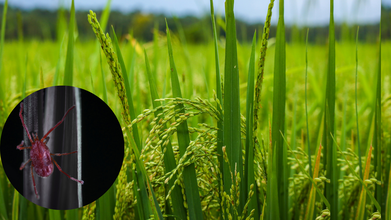
Scrub typhus, also known as bush typhus, is a bacterial infection caused by bacteria infection, caused by bacterium Orientia tsutsugamushi. It is spread through bites of infected larval mites, Chiggers.
Most cases of scrub typhus occur in rural areas of Southeast Asia, Indonesia, China, Japan, the Indian subcontinent and northern Australia. Until now, it was believed that chiggers only lurked in the tall grasses of remote paddy fields or dense forests. Due to this, it is commonly known as "farmers' disease", only confined to the fields.
However, new PLOS study data revealed the opposite. The study is led by researchers from Christian Medical College (CMC) Vellore and international collaborators and suggests that the bulk of infections are now even occurring within human settlements.
The study monitored over 32 000 people in Tamil Nadu, which led to the conclusion that agricultural activities, long considered the primary risk factor, were only weakly associated with the disease in high-prevalence areas.
How are Human Settlements A Prime Factor?
Risk for scrub typhus is significantly higher for those living in clustered houses or homes with fewer rooms. If the micro environment around the residence is unmaintained, gardens are patched, or even the damp corners of a courtyard, it could lead to breeding ground for the mites and the rodents that carry Chiggers.
Who Is At Most Risk?
It was once believed that working-age men were the most affected, but the new study tells otherwise. According to the new data, women over 60 are at the highest risk of infection.
As women spend most of their time in and around the home, due to household work, from the kitchen to the laundry, these activities are now the primary cross point of contact with infected mites.
What Is the Risk Factor Of Infection?
As initial symptoms of infection, such as fever, headache, and muscle pain, are the same as viral flu or dengue, many first seek help from untrained practitioners or local pharmacies.
By the time they reach the hospital, the disease has already progressed to severe complications like acute respiratory distress syndrome (ARDS), Kidney failure, or Meningoencephalitis, which is inflammation of your meninges and brain at the same time, a life-threatening condition.
Not only this, the researchers revealed that nearly 10 percent of affected households exceed 25 percent of their income in the treatment.
For severe cases, the cost of treatment can be up to approximately INR 110,000, a staggering sum for rural and peri-urban families earning a fraction of that monthly.
Prevention
- Do not let the grass grow tall around your house
- Tightly maintain kitchen gardens and remove piles of wood or debris where rodents (the primary hosts for mites) might nest.
- As chiggers are usually found close to the ground, do not sit directly on the grass or soil. Use chairs or mats. For children, make them wear socks and full- length trousers while playing in the yard.
- If you notice a small, dark, cigarette-burn-like mark, it is usually left behind by mites. It is most likely "Eschar". It is an important critical clue. As the bite is painless, it often goes unnoticed.
- Do a thorough skin check for an eschar, especially in warm, moist areas like the armpits, groin, or behind the knees.
Early intervention is necessary, as if a fever lasts more than two days, don't just treat it as "seasonal fever".
Consult a qualified doctor and specifically ask about scrub typhus. Infection can be treated with doxycycline common antibiotic, in the early stages. The case fatality rate in this study was 1.5 percent, hospital based studies in South India have previously recorded mortality rates as high 30 percent when treatment is delayed
Study Reveals The Worrying Reason You Should Protect Yourself From Scrub Typhus
Credit: Pixabay
Cases of scrub typhus, one of the deadliest infections affecting multiple organs, or even death, have significantly increased from previous year. Once relevant to people working in fields, new studies show it migrating to human settlements.
In 2025, Andhra Pradesh reported 1,566 scrub typhus cases, and nine suspected deaths, according to data from the Integrated Health Information Platform, Integrated Disease Surveillance Programme (IDSP-IHIP) on 8 December. Followed by Karnataka with 1,870 cases, Tamil Nadu 7,308 cases, and Telangana, 309 cases.
What Is Scrub Typhus?
Scrub typhus, also known as bush typhus, is a bacterial infection caused by bacteria infection, caused by bacterium Orientia tsutsugamushi. It is spread through bites of infected larval mites, Chiggers.
Most cases of scrub typhus occur in rural areas of Southeast Asia, Indonesia, China, Japan, the Indian subcontinent and northern Australia. Until now, it was believed that chiggers only lurked in the tall grasses of remote paddy fields or dense forests. Due to this, it is commonly known as "farmers' disease", only confined to the fields.
However, new PLOS study data revealed the opposite. The study is led by researchers from Christian Medical College (CMC) Vellore and international collaborators and suggests that the bulk of infections are now even occurring within human settlements.
The study monitored over 32 000 people in Tamil Nadu, which led to the conclusion that agricultural activities, long considered the primary risk factor, were only weakly associated with the disease in high-prevalence areas.
How are Human Settlements A Prime Factor?
Risk for scrub typhus is significantly higher for those living in clustered houses or homes with fewer rooms. If the micro environment around the residence is unmaintained, gardens are patched, or even the damp corners of a courtyard, it could lead to breeding ground for the mites and the rodents that carry Chiggers.
Who Is At Most Risk?
It was once believed that working-age men were the most affected, but the new study tells otherwise. According to the new data, women over 60 are at the highest risk of infection.
As women spend most of their time in and around the home, due to household work, from the kitchen to the laundry, these activities are now the primary cross point of contact with infected mites.
What Is the Risk Factor Of Infection?
As initial symptoms of infection, such as fever, headache, and muscle pain, are the same as viral flu or dengue, many first seek help from untrained practitioners or local pharmacies.
By the time they reach the hospital, the disease has already progressed to severe complications like acute respiratory distress syndrome (ARDS), Kidney failure, or Meningoencephalitis, which is inflammation of your meninges and brain at the same time, a life-threatening condition.
Not only this, the researchers revealed that nearly 10 percent of affected households exceed 25 percent of their income in the treatment.
For severe cases, the cost of treatment can be up to approximately INR 110,000, a staggering sum for rural and peri-urban families earning a fraction of that monthly.
Prevention
- Do not let the grass grow tall around your house
- Tightly maintain kitchen gardens and remove piles of wood or debris where rodents (the primary hosts for mites) might nest.
- As chiggers are usually found close to the ground, do not sit directly on the grass or soil. Use chairs or mats. For children, make them wear socks and full- length trousers while playing in the yard.
- If you notice a small, dark, cigarette-burn-like mark, it is usually left behind by mites. It is most likely "Eschar". It is an important critical clue. As the bite is painless, it often goes unnoticed.
- Do a thorough skin check for an eschar, especially in warm, moist areas like the armpits, groin, or behind the knees.
Early intervention is necessary, as if a fever lasts more than two days, don't just treat it as "seasonal fever".
Consult a qualified doctor and specifically ask about scrub typhus. Infection can be treated with doxycycline common antibiotic, in the early stages. The case fatality rate in this study was 1.5 percent, hospital based studies in South India have previously recorded mortality rates as high 30 percent when treatment is delayed
- Follow Us :


© 2024 Bennett, Coleman & Company Limited