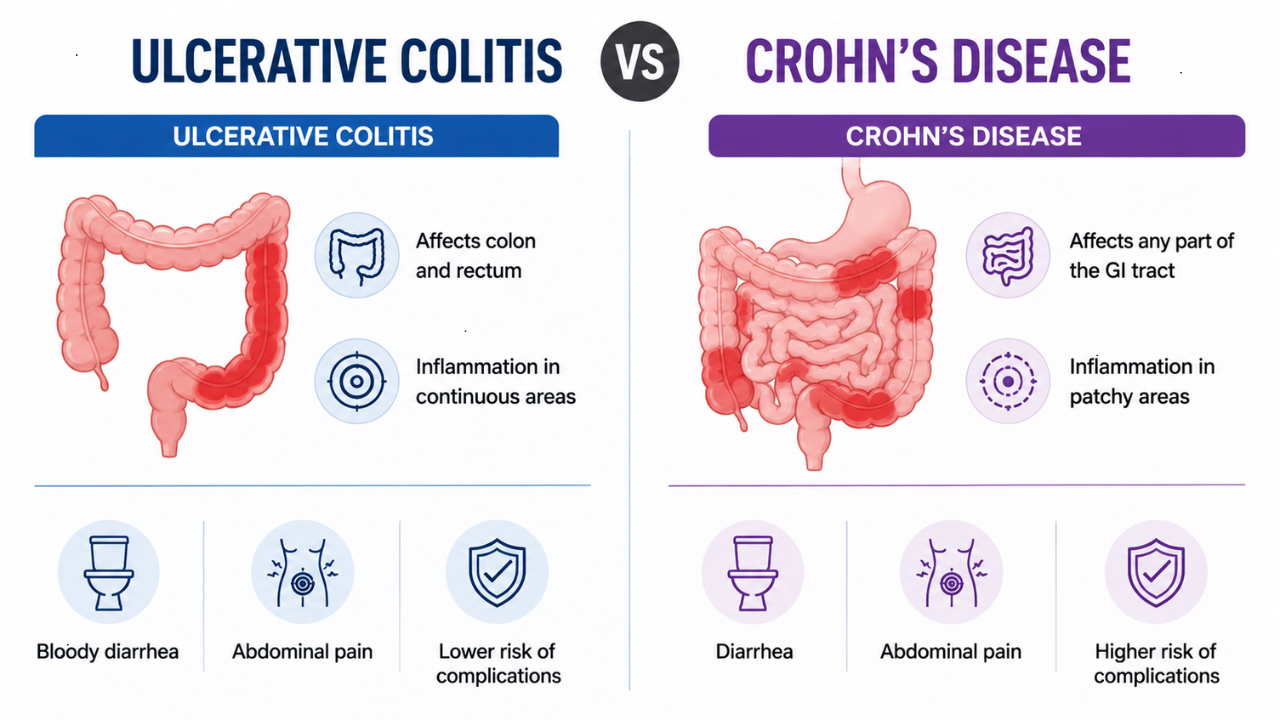
IBD or Inflammatory Bowel Disease is a growing health concern worldwide - particularly amongst young adults. The two main types of IBD are Ulcerative Colitis and Crohn’s disease. However, these can be confused because they share symptoms. Some of these are abdominal pain, diarrhea, fatigue, and weight loss. They affect the digestive tract differently, thus also have different complications and treatment plans. It is important to understand these differences so that patients may seek out timely diagnosis and better disease management. 1. Different Parts of the Digestive Tract Are AffectedUlcerative Colitis is limited to the colon and rectum. Inflammation begins in the rectum and spreads continuously upwards. In Crohn’s disease, any part of the digestive system can be impacted. Including the mouth, esophagus, stomach, small intestine, and colon. However, it is most commonly the small intestine that is involved in Crohn’s disease.2. Inflammation Pattern is DifferentIn ulcerative colitis, inflammation is continuous. There are no healthy gaps in between the affected areas. Crohn’s disease causes patchy inflammation. Meaning, there are sections of healthy tissue known as “skip lesions”. 3. Crohn’s Disease causes more serious damageUlcerative colitis affects only the innermost lining of the bowel. Crohn’s disease, on the other hand, can involve all layers of the intestinal wall. This increases the risk of complications such as fistulas, bowel obstruction, and intestinal narrowing.4. Symptoms May Look Similar, But Often DifferBoth conditions can cause diarrhea, abdominal cramps, fatigue, and unintended weight loss. However, bloody stools are more common in ulcerative colitis. Crohn’s disease may also cause mouth ulcers, severe nutritional deficiencies, and pain in the anal region.5. Nutritional Problems Are More Common in Crohn’s DiseaseBecause Crohn’s disease frequently affects the small intestine, patients may struggle to absorb nutrients properly. This struggle results in anemia, a vitamin B12 deficiency, low iron levels, and weight loss. 6. Surgery Has Different OutcomesUlcerative colitis can be cured by removing the colon. In Crohn’s disease, surgery is used mainly to treat complications, but inflammation can affect another part of the digestive tract.7. Smoking Affects the Diseases DifferentlySmoking worsens Crohn’s disease. It increases the risk of flare-ups, complications, as well as repeat surgeries. However, Ulcerative Colitis does not show the same pattern. Some studies have found lower rates of ulcerative colitis among smokers. Although smoking is never recommended as a treatment because of its serious health risks. 8. Treatment ApproachesBoth conditions are treated with anti-inflammatory medications, immunosuppressing drugs, and dietary changes. But in Crohn’s disease, often more aggressive and long-term treatment is required. This is because it can affect the deeper layers of the bowel and multiple parts of the digestive tract.