
- Health Conditions A-Z
- Health & Wellness
- Nutrition
- Fitness
- Health News
- Ayurveda
- Videos
- Medicine A-Z
- Parenting
Unique Symptoms Of Influenza A In Canada And How Long Infection Now Last
Credits: iStock and Canva
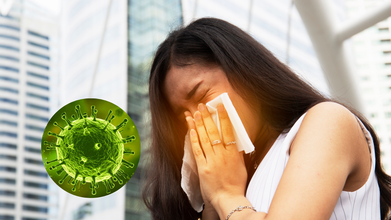
The world is battling a 'very tough' flu season this year. Already there was super flu, the mutated clade K, and now reports of three children from Ottawa and Eastern Ontario dying due to flu-related complications in the past two weeks have come up. This is the result of influenza A. This strain is currently circulating widely and affecting children more severely than ever.
What Is So Unique About Influenza A?
As per the National Institutes of Health, US, influenza viruses that contains single-stranded RNA that are classified into three types: A, B, and C. Type A and B cause annual epidemics and even pandemics, while type C is a less common disease.
As per the Centers for Disease Control and Prevention (CDC), Influenza A viruses are descendants of the 2009 H1N1 pandemic virus that emerged in the spring of 2009 and caused a flu pandemic. These viruses, scientifically called the "A(H1N1)pdm09 virus," and more generally called "2009 H1N1," have continued to circulate seasonally since 2009 and have undergone genetic and antigenic changes.
Influenza A(H3N2) viruses also change genetically and antigenically. Influenza A(H3N2) viruses have formed many separate, genetically different clades in recent years that continue to co-circulate.
It is a fast-spreading respiratory virus responsible for seasonal flu outbreaks and, at times, global pandemics. It changes quickly through genetic shifts, which makes new strains harder to predict and control. The virus is grouped based on surface proteins called hemagglutinin and neuraminidase, with H1N1 and H3N2 among the most common strains in circulation. It spreads mainly through coughs, sneezes, or close contact and often comes on suddenly, causing fever, cough, body pain, and extreme tiredness. In some cases, it can lead to serious complications, especially in vulnerable groups.
Is There A Difference Between H1N1 and H3N2 Virus?
Both are a type of influenza A virus that causes seasonal flu. However, while H3N2 changes its form regularly, which makes it harder for our immune system to fight it off, H1N1 is also known as swine flu. It is now a regular seasonal flu virus that comes back every year.
Read: Influenza A: Can Flu Kill You? Here's All That You Need To Know
How to differentiate between the two in terms of symptoms?
H3N2 Symptoms
- High fever (often above 101°F)
- Severe body aches and muscle pain
- Extreme tiredness that lasts longer
- Dry cough that can be persistent
- Headache
- Sore throat
- Runny or stuffy nose
- Loss of appetite
- Nausea (especially in children)
H1N1 Symptoms
- Fever (usually moderate)
- Body aches (less severe than H3N2)
- Cough
- Headache
- Sore throat
- Runny nose
- Stomach problems (more common)
- Diarrhea and vomiting (especially in children)
- Chills and sweating
The recovery time of any influenza could last up to 5 to 14 days, the key is to monitor breathing patterns and avoid over medication.
What Is The Best Line Of Defense?
This year, the flu is hitting hard everywhere. While winter flu cases are not uncommon, the virus is changing every day, which causes it to be more severe than ever. The best line of defense in this case is vaccination. Experts have suggested that despite mutation, vaccine provides the best defense.
“The flu vaccine may not always prevent infection, but it significantly reduces the risk of severe illness, hospitalization, and complications,” officials said. They added that the vaccine takes about two weeks to become fully effective, making early vaccination crucial ahead of the holiday season, when virus spread typically increases.
German Study Shows Squirrels May Be Harboring Mpox Virus
Credit: Canva
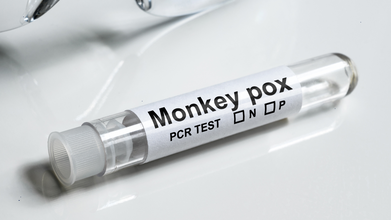
Squirrels could be natural hosts of the mpox virus (MPXV) -- that causes monkeypox disease -- according to a recent study by German researchers.
The team from the Helmholtz Institute for One Health (HIOH) identified the fire-footed rope squirrel (Funisciurus pyrropus) as a likely natural reservoir of the MPXV.
The study published in the journal Nature revealed that sooty mangabeys – a primate found in West Africa -- can contract mpox by eating infected squirrels. The disease may present mild lesions, but it can also cause more severe skin lesions or even be fatal.
"Identifying the animal sources of the virus and the exposure routes that lead to inter-species transmission are key steps towards understanding spillover mechanisms and developing effective prevention measures to mitigate the risk of transmission to humans," said Livia V. Patrono, one of the senior authors at HIOH.
Squirrels Suspected MPXV Hosts
While squirrels have long been suspected as potential reservoirs for MPXV, their role was confirmed after an investigation of an mpox outbreak among wild sooty mangabeys (Cercocebus atys) in Côte d'Ivoire.
During the outbreak, reported in early 2023, nearly one-third of the primates showed clinical signs of disease, and four infants died.
The team conducted viral genome sequencing and found that the infected monkeys carried a virus that was nearly identical to an MPXV strain identified in a fire-footed rope squirrel found dead 12 weeks earlier nearby.
Further, the team analyzed fecal samples from the mangabeys. A sample collected eight weeks before the outbreak's onset contained DNA from both the virus and the rope squirrel. This provided strong evidence of interspecies transmission at that moment.
Sooty mangabeys have been previously observed catching and eating fire-footed rope squirrels, which provide a direct route for the transmission of viruses.
Mpox Continues To Spread Globally
Although mpox is no longer a public health emergency, outbreaks of clade I and clade II strains of the mpox virus are continuing in many countries around the world, especially in Africa.
Last week, Madagascar announced the country's first death from mpox, a 3-year-old girl from the island nation’s eastern city of Toamasina.
The WHO has also confirmed that two cases of the recombinant strain – combining genomic elements of clades Ib and IIb of the monkeypox virus (MPXV) – have been identified to date: one in the United Kingdom and one in India.
Mpox is an infectious disease caused by the monkeypox virus (MPXV), part of the Orthopoxvirus genus, which also includes the virus that causes smallpox.
It spreads through close physical contact, including sexual contact, and in some cases through contaminated materials or respiratory droplets.
Symptoms typically include fever, swollen lymph nodes, rash, and/or lesions.
The global health body has also urged all countries to “remain alert to the possibility of MPXV genetic recombination.” It has also urged for continued epidemiological surveillance, sequencing, vaccination of at-risk groups, and infection prevention and control measures.
This AI Tool Predicts Women’s Breast Cancer Risk Up to Four Years

Credit: Canva
An international group of scientists has created an artificial intelligence tool that can estimate a woman’s likelihood of developing breast cancer within the next four years.
The AI tool, known as the BRAIx risk score, analyzes mammogram images to generate an individualized risk assessment and flag women who may face a higher chance of developing the disease.
It may not only show the current risk but also predict the future risk, enabling early detection and treatments for a better outcome.
According to the findings published in The Lancet Digital Health journal, nearly one in 10 women ranked in the top 2 percent of risk by the AI tool were diagnosed with breast cancer within four years. This was despite previously receiving a clear screening result.
“These risk scores enable future development of personalized screening pathways to transform population breast cancer screening and save lives,” said corresponding author Helen M. L. Frazer of the University of Melbourne.
Frazer noted that identifying women who appear cancer-free but carry very high risk -- comparable to those with inherited BRCA1 or BRCA2 mutations -- will unravel both hereditary and non-hereditary causes of breast cancer.
From one-size-fits-all screening to personalization
Breast cancer screening programs have significantly lowered mortality rates -- by roughly 40-50 percent among women aged 50 to 74. However, most screening systems still apply the same approach to all women, regardless of individual risk.
Traditional screening tools use genetics, breast density, and questionnaires to estimate breast cancer risk. On the other hand, new AI-based screening tools, such as BRAIx personalizes screening by gathering information already present in breast scan images to better identify who is at higher risk.
“Our results show that conventional mammographic density is a far weaker predictor of breast cancer risk than the BRAIx risk score, even for interval cancers,” the researchers said in the paper. Interval cancers are aggressive tumors diagnosed after a negative mammogram.
The BRAIx Tool
The BRAIx risk score was developed using mammograms from nearly 400,000 women. To prove its efficacy, the AI tool was tested on data from almost 96,000 women from Australia and then confirmed in an independent Swedish population of over 4,500 women.
The findings showed that:
- The BRAIx risk score estimated breast cancer risk more accurately than the traditional risk factors, such as breast density, country of birth, and even family history.
- For the top 2 percent of women with the highest BRAIx risk score, the probability of a cancer diagnosis within 4 years was 9.7 percent -- a risk level exceeding that typically seen in women with inherited BRCA1 or BRCA2 mutations.
The BRAIx risk score can:
- Make breast screening more personalised,
- Improve early cancer detection,
- Reduce false alarms,
- Save lives without increasing costs
Global Breast Cancer Burden
Breast cancer continues to be the most common cancer among women worldwide.
A recent study published in The Lancet Oncology journal predicted that the number of new cases of the deadly disease will reach more than 3.5 million globally in 2050 -- rising by a third from 2.3 million in 2023.
Annual deaths from the disease will also rise by 44 percent -- from around 764,000 to 1.4 million.
However, not smoking, getting sufficient physical activity, lowering red meat consumption, and having a healthy weight can help prevent over a quarter of healthy years lost to illness and premature death from breast cancer.
COVID Survivors At Nearly Fivefold Risk Of Kidney Failure: Study
Credit: Canva
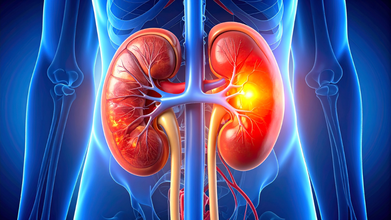
People who survived a COVID-19 infection can be at significant risk for kidney disease, acute kidney injury, and chronic kidney disease. compared to individuals who were not infected, according to a study.
The study, published online in the journal Communications Medicine, revealed that COVID patients have
- a 2.3-times higher risk of acute kidney injury
- a 1.4-times higher risk of chronic kidney disease
- a 4.7 times higher risk of kidney failure
“While we’re in the post-pandemic era, this shows that COVID-19 history is an important variable when considering the long-term impact of the infection on kidney function and disease,” said first author Yue Zhang, who was at Pennsylvania State University, US, while conducting the study. Zhang is currently a postdoctoral scholar at Johns Hopkins Bloomberg School of Public Health.
How Was The Study Conducted?
For the study, data on over 3 million working-age adults in the United States were analyzed.
The team compared the effect of influenza, another common viral infection that affects kidney health, and people with a history of COVID infection on kidney infections.
Using a machine learning model, the individuals were followed between 180 and 540 days for the emergence of new acute or sudden kidney disease.
The results showed that:
- Both COVID and the flu can worsen kidney health
- Flu caused a mild and temporary effect
- COVID increased the risk of acute kidney injury for a longer duration
- COVID survivors developed kidney disease within a few hours to a few days
- COVID patients had a longer-term chronic and end-stage kidney disease.
How COVID Worsens Kidneys Health
The Penn State researchers explained that kidney cells express high levels of the primary protein receptors that SARS-CoV-2 uses to enter and infect cells. Kidney cells also produce specialized enzymes that help viruses enter cells.
According to Kidney Health Australia, an acute COVID infection can impact the kidneys with fevers and respiratory symptoms, and/or worsening blood sugar control.
The US National Institutes of Health stated that renal dysfunction is an increasing clinical indicator of COVID propagation.
Citing several studies, the NIH said that the most common clinical manifestation is proteinuria -- found in more than half of the COVID patients. In addition, hematuria, elevated blood urea nitrogen, and elevated serum creatinine are other common features in Covid survivors with poor kidney health.
Nasr Ghahramani, Professor of Medicine at Penn State College of Medicine, stressed the need for COVID survivors, especially those with diabetes and high blood pressure, to take "more frequent and more prolonged monitoring of their kidney function" to enable early detection and better outcomes.
- Follow Us :


© 2024 Bennett, Coleman & Company Limited