
- Health Conditions A-Z
- Health & Wellness
- Nutrition
- Fitness
- Health News
- Ayurveda
- Videos
- Medicine A-Z
- Parenting
Unsanitary Washroom Habits That May Cause Harm To Your Health

Unsanitary Washroom Habits (Credit-Freepik)
Washroom habits are the first step to hygiene taught to children at home. Before children learn better cognitive function, their parents take care of it and then slowly teach their children to do the same. Not only do these habits make sure your family is presentable and hygienic, but they also make sure that your family is clean of diseases. Here are some bathroom habits that may cause harm to your family’s health.
Not cleaning the toilets regularly
Toilets can harbour harmful bacteria. Using toilet sanitisers can help keep them clean and fresh. These products create a cleaner environment and help prevent the spread of germs. Bad smells in the bathroom can be unpleasant. Air fresheners can help mask odours, but it's important to address the root of the problem, like poor ventilation or infrequent cleaning.
Bacteria that live on the bar soaps
Soap dishes might seem harmless, but they can be a breeding ground for germs. Bar soap can become contaminated with bacteria, which can then spread to your hands. Liquid or foam soap dispensers are a much cleaner option. They reduce the spread of germs and are easier to keep clean.
Not washing the harmful bacteria off your hands
Washing your hands is one of the most effective ways to prevent the spread of germs. It's especially important after using the bathroom. Many germs can live on your hands for hours, so it's crucial to wash them with soap and water. Hand sanitisers can be a good option when soap and water aren't available, but they aren't as effective as washing your hands.
Leaving sanitary pads out
Throwing away used sanitary products incorrectly can lead to serious health risks. It's important to use proper disposal methods to prevent the spread of bacteria. Always follow the guidelines for disposing of sanitary products to protect yourself and others.
Flushing toilets without closing the lid
Proper toilet hygiene involves more than just flushing. Wiping correctly after using the toilet is crucial to prevent infections. It's also important to keep the bathroom clean and dry to reduce the risk of slips and falls.
Leaving dirty foot stains on the floor
Bathroom floors can be a breeding ground for germs and bacteria. Every time someone uses the toilet, tiny droplets containing germs can spread to the floor. In addition, shoes can track in dirt and other contaminants. To prevent the spread of germs and reduce the risk of slips and falls, it's important to keep the bathroom floor clean and dry. Using anti-slip mats can help create a safer environment.
Exposing your phone to germs
Many people have bad habits when it comes to bathroom use. For example, bringing your phone into the bathroom can expose it to germs. It's also important to change your toothbrush regularly and to put the toilet lid down before flushing to prevent the spread of germs.
Not cleaning and drying your bathroom regularly
Regular cleaning is essential for maintaining a healthy bathroom environment. It's important to clean all surfaces, including the toilet, sink, and floors. Using disinfecting cleaners can help kill germs and prevent the spread of illness.
World Autism Awareness Day 2026: Origin, Theme, Significance

Credit: UN
World Autism Awareness Day is observed every year on April 2. The day is important to raise awareness about autism — a neurodevelopmental condition affecting communication, social interaction, and behavior — affecting millions of people globally.
According to the World Health Organization (WHO), one in 127 people worldwide is diagnosed with the lifelong brain health condition. It is also among the top 10 conditions contributing to health loss globally.
The first child diagnosed with autistic symptoms was Donald Grey Triplett. Labelled as Case 1, he went on to become an American banker, demonstrating that, if provided with the right and inclusive support and opportunities individuals with autism be as productive as others.
“Like anyone else, autistic people should be able to shape their own lives — and help to shape our shared future,” said
António Guterres, UN Secretary-General.
World Autism Awareness Day: Date and History
April 2 was designated as World Autism Awareness Day (WAAD) by the United Nations General Assembly in 2007.
The 2007 General Assembly resolution highlighted the need to raise public awareness of autism.
It stated that "children with disabilities should enjoy a full and decent life, in conditions which ensure dignity, promote self-reliance and facilitate the child’s active participation in the community, as well as the full enjoyment of all human rights and fundamental freedoms on an equal basis with other children".
World Autism Awareness Day: Theme
This year, World Autism Awareness Day is held under the theme "Autism and Humanity - Every Life Has Value".
The 2026 theme highlights and affirms the dignity and worth of all autistic people. While there are international human rights conventions safeguarding the rights of people with autism, they continue to face stigma, discrimination, and barriers to participation.
“Access to timely, quality health care and support services remains limited, driving inequalities across the life course," the WHO said. The global health body urged "sustained action and greater investment" to address these challenges. It also called for developing inclusive policies and services that uphold the rights of autistic people.
This year's theme, thus, is a call to action to recognize the inherent dignity and equal rights of all people with autism.
Guterres highlighted the need for "equal education, fair employment, and accessible health systems" for all persons with autism and to provide inclusive opportunities to participate and thrive, along with others.
Also read: Expert Reveals Why Childhood Autism Is Going Undetected In India
What is Autism?
The National Health Service (NHS) UK defines autism as not an illness or a medical condition with treatments or a "cure", but a developmental condition that affects how people communicate, learn, behave, and interact with others.
It is a spectrum, which means "everybody with autism is different".
People with autism spectrum disorder (ASD) may have difficulty with social interaction, exhibit atypical behavior and activities, or find it hard to communicate.
Early Signs Of Autism
Studies show that symptoms of autism are usually diagnosed within the first 3 years of birth. These include:
- Limited to zero eye contact
- Delayed responses
- Repeating words or actions such as hand-flapping
- Being strong-headed about following the same routine
- Easily annoyed, throws tantrums
- Difficulty understanding and expressing emotions
- Sensitive to certain sounds, textures, lights, or smells.
Shift to Plant-Based Proteins, Low-Fat Dairy To Boost Heart Health: American Heart Association
Credit: iStock
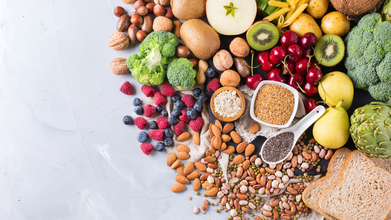
The American Heart Association (AHA), in its latest update on nutrition guidance, has urged the need to eat a diet rich in vegetables and fruits, while also making a key shift to plant-based protein from meat-based protein earlier to improve heart health.
It has also emphasized the need to reduce the intake of sugar, salt and ultra-processed foods, as well as to switch to low-fat dairy.
The scientific statement, which is issued about every five years, comes amid increasing cases of high blood pressure and obesity in the US, which can potentially lead to poor health outcomes, including deaths from cardiovascular disease and other chronic conditions.
“For healthy eating to be more attainable and sustainable, we recommend people focus on their overall eating pattern rather than specific nutrients or foods. This approach is actionable, something that can be modified as people pass through different life stages, while still adhering to the nine key features,” said Alice H. Lichtenstein, volunteer chair of the scientific statement writing committee and senior scientist.
“The guidance applies to wherever you eat: at home, school, work, restaurants, or in your community. You want to strive for progress rather than perfection. Every time you choose to make a swap for a healthier alternative, you’re making a step toward a healthier life,” added Lichtenstein, who is also senior scientist at the Jean Mayer USDA Human Nutrition Research Center on Aging at Tufts University in Boston.
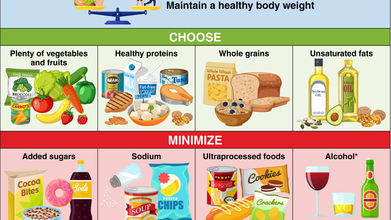
The 9 Guidelines for a heart-healthy dietary pattern include:
- Maintaining a healthy body weight by balancing food intake and physical activity
- Eating plenty of vegetables and fruits
- Choose whole grains such as whole‑wheat bread, brown rice, and oatmeal over refined grains such as white bread or white rice
- Shifting from meat to plant-based sources such as legumes, including beans, peas, and lentils, along with nuts and seeds, and fish and seafood. Select low-fat or fat-free dairy products.
- Replace saturated fats with healthy unsaturated fats, including those from nuts, seeds, avocados, and non-tropical plant oils.
- Choose minimally processed foods instead of ultra-processed foods
- Limit beverages and foods with added sugars
- Choose foods low in sodium and prepare foods with minimal or no salt
- Limit intake of alcohol
Also read: AHA’s New Dyslipidemia Guidelines Stress Early Screening, Lifestyle Management
Healthy Eating Patterns From Childhood
The 2026 guidance for children recommends a heart‑healthy dietary pattern starting at 1 year of age. It urges families to play a significant role and become role models.
“Cardiovascular disease begins early in life; even prenatal factors can contribute to increased risk in children as they grow. So, it’s important that healthy eating patterns are adopted in childhood and continue throughout the entire lifespan,” Lichtenstein said.
“The best way to do that is for adults to role model heart-healthy eating patterns inside and outside the home,” she added.
Also read: Cardiovascular Diseases Lead As India’s Top Killer: US Cardiologist Points Out Risk Factors
While the updated guidance is specifically designed to improve cardiovascular health, it may also help improve other conditions like type 2 diabetes, kidney disease, some cancers, and brain health.
Breast Conservation Surgery vs Mastectomy: What Surgeons Recommend Today

Credit: Freepik
Breast cancer treatment has evolved significantly over the past few decades, moving from radical removal approaches to more personalized and tissue-preserving techniques. Today, surgeons no longer view breast conservation surgery (BCS) and mastectomy as competing options, but as equally effective strategies chosen based on individual patient needs.
With the growing availability of reconstructive surgery in Kolkata, patients now also have better cosmetic and psychological outcomes regardless of the surgical path they choose.
Understanding The Two Surgical Options
When faced with a breast cancer diagnosis, understanding the available surgical options is crucial for making an informed decision. Each approach is designed to effectively treat the disease while considering the patient’s long-term health, comfort, and quality of life.
What Is Breast Conservation Surgery (BCS)?
Breast conservation surgery, or lumpectomy or partial mastectomy, is a procedure that involves the removal of the tumor and a small amount of surrounding healthy tissue while preserving most of the breast.
The main objective is to remove cancer without altering the natural shape and appearance of the breast. Radiation therapy is usually administered after surgery to kill any remaining cancer cells and minimize the chances of recurrence.
What Is A Mastectomy?
Mastectomy is the removal of the whole breast tissue, and in other cases, the lymph nodes and skin around the breast. It can be done on either breast or both breasts based on the type of cancer and risk factors.
After a mastectomy, patients can choose to have breast reconstruction with the help of modern surgical procedures, such as those provided in reconstructive surgery in Kolkata, which can help to restore the shape and symmetry of the breast.
Major Differences Between BCS And Mastectomy
The basic distinction is the degree of tissue excision. BCS leaves the majority of the breast, but a mastectomy takes away all of it.
| Factor | Breast Conservation Surgery (BCS) | Mastectomy |
| Extent of Surgery | Removes tumor with a small margin of healthy tissue | Removes entire breast tissue |
| Invasiveness | Less invasive | More extensive surgery |
| Cosmetic Outcome | Preserves most of the natural breast shape | The breast is removed (reconstruction may be needed) |
| Recovery Time | Generally faster recovery | Longer recovery period |
| Radiation Therapy | Usually required after surgery | May or may not be required |
| Risk of Recurrence | Slightly higher local recurrence risk | Lower local recurrence risk |
| Hospital Stay | Often shorter or a day-care procedure | May require a longer hospital stay |
| Suitability | Early-stage cancer, smaller tumors | Larger tumors, multiple areas, or high-risk cases |
| Impact on Body Image | Better preservation of body image | May impact body image (can be improved with reconstruction) |
Notably, several studies indicate that both methods have equal chances of survival in the long term in early-stage breast cancer.
Eligibility Criteria: Who Can Opt For What?
Not every patient is suited for the same surgical approach, as the choice largely depends on individual clinical factors. Tumor size, stage, location, and overall health all play a crucial role in determining eligibility. Understanding who can opt for which procedure helps ensure both effective treatment and optimal long-term outcomes.
Candidates for Breast Conservation Surgery
BCS is usually prescribed to patients with:
- Stage I or II breast cancer
- Tumors smaller than 5 cm
- One tumor in one area
- No radiation therapy contraindications
- Some cases do not have high-risk genetic mutations like BRCA
It might not apply to patients who have more than one tumor in other parts of the breast or those with advanced disease.
Candidates for Mastectomy
Mastectomy may be suggested when:
- The tumor is huge in comparison with the size of the breast
- It has several tumors in various quadrants
- Cancer is metastatic (Stage III or IV)
- The genetic risk of recurrence is high in the patient
- Radiation therapy is not an option or choice
Moreover, other patients might opt to undergo mastectomy to have a sense of security or to alleviate the fear of recurrence.
Advancements In Breast Surgery
The current surgical advances have greatly enhanced the results, particularly in patients who want to preserve their breasts.
Oncoplastic Surgery
Among the most remarkable developments is the oncoplastic breast surgery that involves the use of both cancer resection and plastic surgery. This enables the surgeons to excise bigger tumors without altering the shape and symmetry of the breast.
This has increased the eligibility of BCS so that more women can avoid mastectomy and still have safe control of cancer.
Improved Imaging and Targeting
Modern imaging techniques have assisted surgeons in accurately identifying tumors so that they can be fully removed without damaging normal tissue. This enhances cosmetic outcomes as well as oncological safety.
Advanced Reconstruction Methods
The emergence of reconstructive surgery in Kolkata has given patients who have undergone mastectomy the opportunity to have an immediate or delayed reconstruction with the help of implants or autologous tissue.
Reconstruction has been brought to improve psychological well-being, body image, and quality of life.
Influencing Factors of Surgical Decision-Making
The decision to use BCS or mastectomy is not only a medical choice, but a very personal one, which depends on several factors:
1. Cancer Stage and Tumor Characteristics
The main determinants include tumor size, location, and spread. BCS is more appropriate in early-stage cancers, whereas mastectomy is usually necessary in advanced cases.
2. Survival and Recurrence Outcomes
It has always been demonstrated that the survival rates are the same with BCS (including radiation) and mastectomy in the case of early-stage cancers. Nevertheless, BCS can be slightly more likely to recur locally, which can be treated.
3. Patient Preference
A major role is played by emotional and psychological factors. There are those patients who want to keep their breasts, and others opt to undergo a mastectomy to have peace of mind. Studies show fear of recurrence is a major driver for choosing mastectomy.
4. Access to Radiation Therapy
Since BCS requires post-operative radiation, access to treatment facilities can influence the decision. Patients without easy access may opt for a mastectomy.
5. Cosmetic and Quality-of-Life Concerns
BCS tends to provide superior cosmetic results and satisfaction. Nevertheless, the modern methods of reconstruction have also helped to enhance the results of mastectomy patients considerably.
What Do Surgeons Recommend Today?
Modern breast surgeons support a multidisciplinary patient-centered approach. Instead of prescribing a single solution, they consider:
- Clinical (tumor size, stage, genetics)
- Access to care and patient lifestyle
- Motivational preparedness and individual interests
Surgeons are increasingly preferring breast conservation surgery in most of the early-stage cases because of its good results and quality-of-life advantages. Nevertheless, mastectomy is necessary in more complicated or risky cases.
Conclusion
The debate between breast conservation surgery and mastectomy is no longer about which is superior, but about which is most appropriate for the individual patient. Oncoplastic techniques and reconstructive surgery in Kolkata have advanced, and patients now have a choice of safer, more personalized, and cosmetically satisfying options.
- Follow Us :


© 2024 Bennett, Coleman & Company Limited