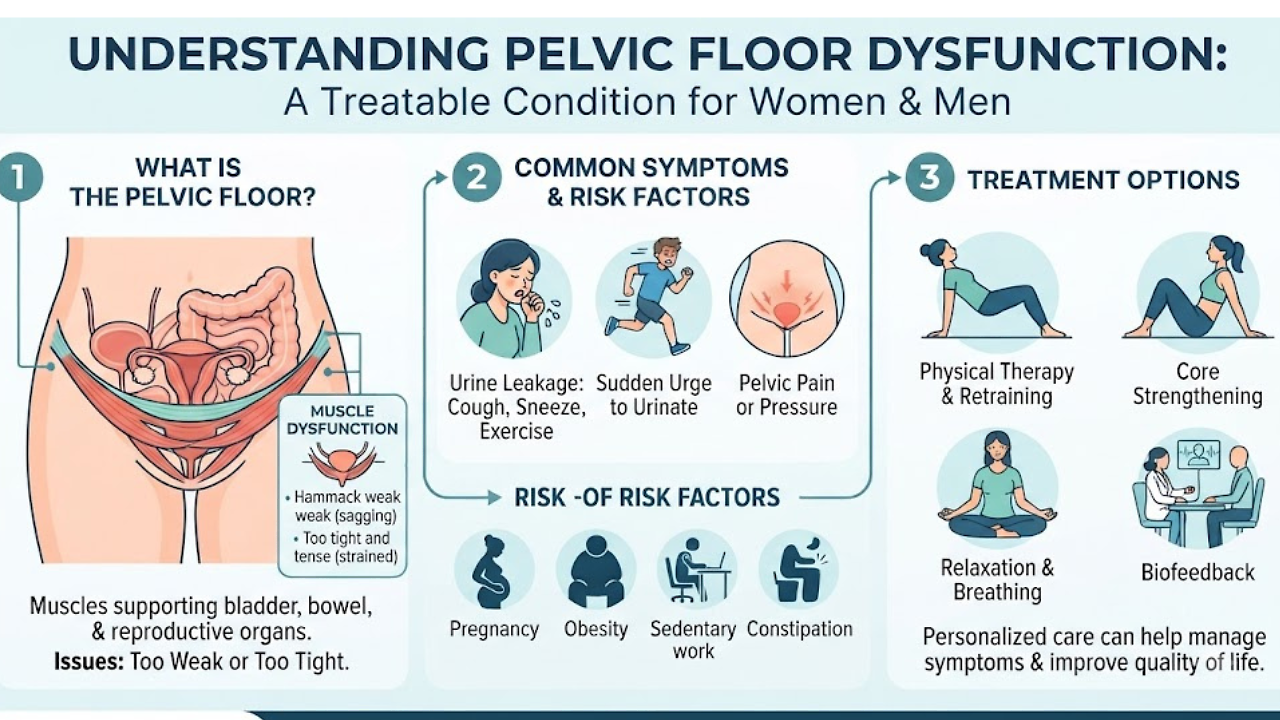
Urine leakage when you cough, sneeze or exercise is often dismissed as something women simply have to live with after pregnancy or childbirth. But pelvic floor problems can affect both women and men and may interfere with daily activities, confidence, relationships and sexual health.Many people quietly live with symptoms such as urine leakage, urgency, pelvic pressure or pain, while even those who seek medical help may not know the underlying cause. Speaking to HealthandMe, doctors said these can be signs of pelvic floor dysfunction — a treatable condition that should not be ignored.Early identification and appropriate treatment can help prevent symptoms from disrupting everyday life.What Is Pelvic Floor Dysfunction?Pelvic floor dysfunction occurs when the muscles in the pelvis do not relax, contract or coordinate properly. These muscles support the bladder, bowel and reproductive organs.According to the Cleveland Clinic, the pelvic floor muscles act like a supportive hammock. When they are too tight, weak or poorly coordinated, normal bladder, bowel and sexual functions can be affected.Pregnancy and childbirth are important risk factors, but pelvic floor problems can also affect men. Symptoms may include urinary urgency or leakage, pelvic pain or pressure and bowel problems.Other factors such as sedentary lifestyles, stress, obesity and constipation may be contributing to pelvic floor dysfunction.Also read: Endometriosis Can Take Years To Diagnose But This AI Tool Can Identify Its Signs In 18 MillisecondsWhat Can Increase The Risk Of Pelvic Floor Problems?Dr Nirmala M, Consultant, Obstetrician, Gynaecologist & Fertility Specialist, Motherhood Hospitals, Bengaluru, told HealthandMe that sedentary office work, stress, obesity and constipation can contribute to pelvic floor problems. Poor water intake and regularly holding urine can also play a role.“It is seen that almost four of every five cases of incontinence observed in hospitals have been identified among young women aged 25 to 35 years old,” she said.Pelvic floor dysfunction can affect men too, particularly in association with urinary, bowel or prostate-related problems.Dr Meghana Reddy Jetty, Senior Consultant - Obstetrics, Gynecology, Laparoscopy and Aesthetic Gynecology, Aster Women and Children, Bengaluru, said men may also experience urinary leakage and bowel control problems, including in association with pelvic operations and prostatic procedures.“Men have pelvic floor muscles too, which are responsible for bladder and bowel control and proper functioning of the pelvis,” she said.What Are The Early Signs?Read More: Ferritin Face: Can Pale Skin Signal Iron Deficiency?Symptoms can vary depending on whether the pelvic floor muscles are weak, too tight or poorly coordinated.Common signs include:Urine leakage while coughing, sneezing or exercisingA sudden or uncontrollable urge to urinateDifficulty emptying the bladder or bowelPelvic heaviness or pressurePelvic discomfortPain during intercourseDr Nirmala said urinary leakage during physical strain and a sudden, uncontrollable urge to urinate are among the early symptoms.Dr Meghana said occasional urine leakage, difficulty emptying the bladder or bowel, pelvic heaviness, discomfort and pain during sexual intercourse can indicate that the pelvic floor is not functioning properly.How Can Pelvic Floor Dysfunction Affect Daily Life?The condition can affect more than bladder or bowel control. Fear of leakage, urgency or pain may cause people to avoid exercise, travel and social activities.Dr Nirmala said some women avoid parties and long-distance travel because of difficulty finding a nearby bathroom. In serious cases, they may rely on diapers or sanitary pads, affecting confidence and increasing stress. Pelvic floor dysfunction can also affect sexual health. Pain and difficulty relaxing the pelvic muscles may lead women to avoid sexual activity.“It can hurt sexual health if pain and difficulty in relaxing pelvic muscles cause one to avoid sexual activity. This kind of problem that seemingly just involves the physical aspect can slowly but surely have a great effect on one's confidence, relationships and behavior in general,” said Dr Meghana.Can Exercise Make Pelvic Floor Symptoms Worse? Exercise can support pelvic health, but the type, intensity and technique matter.Dr Swati Rai, Senior Consultant-Obstetrician and Gynecologist at Cloudnine Group of Hospitals, Noida, said exercises such as Kegels, diaphragmatic breathing, pelvic tilts, glute bridges and gentle core strengthening can help support the pelvic floor during and after pregnancy, depending on the individual.“Kegels involve gently contracting the muscles used to control urine, holding briefly and then completely relaxing; they should not be routinely practized while urinating,” she told HealthandMe.However, excessive or improperly performed high-impact exercise, intense interval training, repeated jumping and weightlifting can place additional pressure on the pelvic floor, particularly when breathing and core control are inadequate.Dr Meghana said pelvic-floor training should focus on muscle control rather than simply increasing repetitions.“So, training of pelvic muscles should be more about learning muscle control - knowing when to contract and when to relax - rather than just doing more and more repetitions,” she said.Dr Swati said excessive straining, breath-holding or incorrectly performed high-impact exercises may aggravate symptoms.Is Pelvic Floor Dysfunction Treatable?Pelvic floor dysfunction can improve significantly with appropriate, personalized treatment. However, treatment depends on whether the muscles are weak, overly tight or poorly coordinated.Treatment may include:Pelvic floor retrainingPhysical therapyCore strengtheningRelaxation and breathing exercisesBiofeedback