
- Health Conditions A-Z
- Health & Wellness
- Nutrition
- Fitness
- Health News
- Ayurveda
- Videos
- Medicine A-Z
- Parenting
Weight Loss Drug Semaglutide Cannot Slow Down Alzheimer’s: Lancet Study

Credit: iStock
While early-stage research raised hopes of oral semaglutide (GLP-1 pill) slowing down the progression of Alzheimer’s disease, results of a new large-scale clinical trial have rendered it ineffective.
Evoke and Evoke+ -- the randomized, double-blind, placebo-controlled phase 3 trials conducted across 566 sites in 40 countries -- showed that semaglutide led to no significant difference after two years.
The findings, published in the Lancet journal, however, revealed that the popular weight loss drug can lead to significant reductions in several biological markers of Alzheimer’s disease.
Yet, it did not help slow the progression of the neurodegenerative disease, said an international team of researchers, including those from the University of California-San Diego.
"Oral semaglutide was not efficacious in slowing clinical progression in participants with early Alzheimer's disease," they said in the paper.
"Safety and tolerability of semaglutide in early Alzheimer's disease is consistent with studies in other indications," the team added.
The EVOKE and EVOKE+ trials
The studies are the first major phase 3 trials to investigate this possibility in people with early Alzheimer’s disease.
The researchers conducted the trial on about 3,800 patients aged 55-85 years. The patients received either up to 14 mg of oral semaglutide daily or a placebo pill.
After two years, no significant difference was seen in slowing down the cognitive disease's progression in patients taking semaglutide and patients taking the placebo.
"The results of the large evoke(+) trials do not support the efficacy of 14 mg/day of semaglutide given for up to 156 weeks in participants with biomarker-confirmed Alzheimer's disease in the MCI or mild dementia stage," the researchers said.
While “GLP-1 [drugs] have given us so many wonderful results," the trial results are "disappointing,” and “a setback for the field”, endocrinologist Daniel Drucker was quoted as saying to the Scientific American.
Drucker says there are many potential explanations why oral semaglutide didn’t work as hoped. The fatty-acid structure surrounding semaglutide might have prevented it from being able to penetrate certain brain regions, such as the hippocampus, which controls memory and cognitive function.
What Is Alzheimer’s Disease
Alzheimer's disease is a progressive neurodegenerative disease characterised by gradual cognitive and functional decline.
It is one of the most common forms of dementia and mostly affects adults over the age of 65.
Over seven million people in the US, 65 and older, live with the condition, and over 100,00 die from it annually.
The disease is believed to be caused by the development of toxic amyloid and beta proteins in the brain, which can accumulate and damage cells responsible for memory.
Early symptoms of Alzheimer's disease include forgetting recent events or conversations. Other signs include:
- losing or misplacing things
- getting lost when walking or driving
- being confused, even in familiar places
- losing track of time
- difficulties solving problems or making decisions
- difficulties performing familiar tasks
- misjudging distances to objects visually.
Why Women Face More Sleep Issues Than Men?

Credit: iStock
While research shows women need more sleep than men due to brain function, hormones, and multitasking, females around the globe are struggling to get enough sleep, according to experts.
A 2016 study by the Sleep Research Centre at the UK’s Loughborough University found that women needed 20 minutes more sleep because of multitasking and performing more complex brain tasks during the day.
But, the American Academy of Sleep Medicine (AASM), revealed that an estimated 30 percent of women fail to get sufficient sleep.
Hormones, mood disorders, and caregiving responsibilities, coupled with professional pressures and stress, are the major reasons driving up insomnia and other sleep issues among women.
“Women around the world face a higher burden of sleep difficulties because their sleep cycles are tightly interlinked with hormonal shifts that occur throughout life,” Dr. Janhvi Siroya Shah, Sleep Specialist from the University of Bern, Switzerland, told HealthandMe.
Gender Gap In Sleep: Why Women Sleep Less
The gender gap in sleep is real, as revealed by the recent ResMed Global Sleep Survey 2026, which showed that 56 percent of women get a good night's sleep only four days or fewer per week, compared to 50 percent of men.
Women were also 48 percent more likely to report problems falling asleep than men (42 percent). More than 50 percent of women felt waking up not feeling rested for 1-2 nights per week or more, compared to 46 percent of men.
The study flagged stress or anxiety as the biggest barrier to consistent, quality sleep (39 per cent), followed by work-related responsibilities (37 per cent) and household duties (31 per cent) among women.
Speaking to HealthandMe, Dr. Kirti Kadian, from the Department of Pulmonary Critical Care & Sleep Medicine at AIIMS Bhopal, said: “Women experience disproportionate sleep challenges globally, largely because their bodies undergo repeated physiological transitions that influence how sleep is regulated.”
The experts cited the main reasons as
- fluctuations during menstruation,
- pregnancy,
- postpartum recovery
- menopause.
All these factors can alter mood regulation, increase nighttime alertness, and disrupt the architecture of sleep itself.
Dr Kadian said that hormonal fluctuations across the life course -- especially during the menopausal transition -- can affect circadian rhythm, airway stability, pain sensitivity, and the nervous system’s response to stress.
“When these biological changes coincide with external stressors, such as multitasking, emotional labor or caregiving demands, women become far more vulnerable to insomnia and unrefreshing sleep,” Shah said.
The prevalence of sleep disorders increases from about 16–42 percent in pre-menopause to around 39–47 percent in peri-menopause and up to 35–69 percent in post-menopause, indicating that sleep disturbances become more common as women progress through different reproductive stages.
“Declining levels of estrogen and progesterone can disrupt the body’s sleep regulation and trigger symptoms like hot flashes and night sweats, while reduced melatonin may make it harder to fall and stay asleep,” Dr. Kadian explained.
In addition, certain medical conditions that are more common in women, such as thyroid disorders, anemia, and autoimmune diseases, can also negatively affect sleep and overall health.
How Poor Sleep Affects Women
Poor sleep also significantly affects both physical and mental health, increasing the risk of
- metabolic disorders,
- cardiovascular disease,
- weakened immunity,
- persistent fatigue,
- reduced concentration,
- irritability,
- anxiety,
- depression.
How Women can Improve their Sleep
The Harvard Medical School suggested that to get a better sleep cycle women should:
- Create a sleep sanctuary by removing the television, computer, smartphone or tablet, from the bedroom.
- Cut down or limit afternoon naps to 20 to 30 minutes
- Avoid caffeine after noon
- Get regular exercise, but not within three hours of bedtime.
The Human Cost of Cure: Why Our Current Approach to TB Is Outdated

Credit: iStock
In the year 1947, on the remote Scottish island of Jura, George Orwell sat hunched over a typewriter in a farmhouse, engaged in a desperate race against time to finish his masterpiece, 1984, while a ‘slow-motion plague’ consumed his lungs.
The man who was born in Motihari, Bihar, was suffering from tuberculosis. He would cough up blood and frequently collapse out of sheer exhaustion, even as he typed the final warnings of a dystopian future. He finished the book in December 1948 and died just over a year later.
Orwell’s story is a haunting reminder that TB has always been a disease of the displaced. As we approach World Tuberculosis Day this year with the theme ‘Yes! We Can End TB: Led by countries, powered by people, we face a sobering reality.
We have the modern tools that Orwell lacked, but the global narrative remains trapped in an outdated cycle where technological potential far outstrips operational reality. To end this disease, we must stop viewing TB through a narrow clinical lens and start addressing the systemic inefficiencies that leave out millions.
From Years to Months: The Scientific Revolution
For decades, a diagnosis of drug-resistant TB (DR-TB) was a near-death sentence even with treatment. Patients faced a grueling 18 to 24-month treatment regimen involving thousands of pills and daily painful injections that often caused permanent side effects like deafness.
With the introduction of the BPaLM regimen (Bedaquiline, Pretomanid, Linezolid, and Moxifloxacin), this tide seems to have turned. The all-oral four-drug treatment, touted as a medical miracle, has slashed recovery time for drug-resistant strains to just six months.
However, even a magic pill cannot overcome a broken system. We must distinguish between clinical success and social success. A patient might technically be cured of the bacteria, but if they lose their job or suffer from social stigma during those six months, the system has still failed them.
The Gender Gap: Why Men Remain Elusive
Statistically, men bear a higher burden of TB, yet they are often the hardest to bring into the care net. According to the World Health Organization (WHO), men account for approximately 55 per cent of all TB cases globally, compared to 33 per cent for women and 12 per cent for children.
This is not a biological accident; it is a structural failure. Gendered social norms often prevent men from seeking care until the disease is advanced. As primary earners, the prospect of losing wages – combined with the stigma of diagnosis – creates a powerful disincentive to visit a clinic. To be truly people-centered, we must move away from static clinic hours and towards flexible, community-based care that reaches men at places where they work.
The Silo System and the Economic Reality
Treating TB in isolation is an outdated strategy. We see patients suffering from a double burden because TB is usually accompanied by diabetes, malnutrition, or even HIV.
- Diabetes: Increases the risk of TB by two to three times.
- HIV: People living with HIV are 16 times more likely to fall ill with TB.
Despite this, our medical systems remain stubbornly reserved. A patient is often forced to navigate fragmented clinics that rarely communicate. Integration is the only way to ensure we treat the whole person, not just the pathogen.
The Human Cost of Cure
The path forward requires us to acknowledge that we cannot end TB by looking only at the lungs; we must look at the lives of those affected. The end of TB is a matter of leadership and courage to fix the systems that hold medical science back.
As we look towards World Tuberculosis Day, let us not just renew our commitments; let us hold our systems to account. The human cost of cure is currently too high, not because of the medicine, but because of the world in which the medicine is delivered.
As we honor World Tuberculosis Day, let us ensure that no one else has to choose between finishing their life’s work and surviving a curable disease. Curing tuberculosis is no longer a biological mystery; it is a test of our collective humanity.
World Oral Health Day: Your Mouth May Signal Disease Before You Even Know, According To Doctor
Credits: Canva
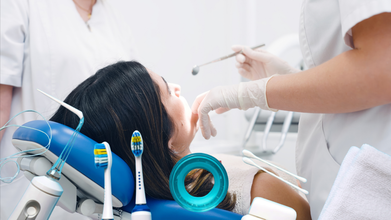
Every year on March 20, World Oral Health Day is observed to raise awareness about the importance of caring for your mouth at every stage of life. This means starting from birth through later years. However, a visit to dentist is usually the last thing anyone plans when they think of a doctor's visit. Dental visits happen only when extraction or something bigger is involved. More often than not people ignore a follow up or a regular dental checkup to maintain oral health. Why so?
In a previous interview with Health and Me Lt Gen Dr Vimal Arora, the Chief Clinical officer at Clove Dental, who has 40 years of experience as a dentist and also served in the Indian Army explained how oral health is not just about a pretty smile. He explained that many do not plan a regular visit to a dentist because the problems that pertains to oral health do not seem "life threatening".
Read: Exclusive: Astronaut Rakesh Sharma Had To Get His Wisdom Tooth Extracted Before His Trip To Space
However, Dr Arora told Health and Me that oral health can in fact be the first way to know if anyone is prone to a chronic disease.
Early Signs Of Disease Your Mouth Can Reveal
“There is now scientific evidence, published in top medical journals, that shows how oral infections can significantly worsen pre-existing systemic diseases,” says Dr. Arora. This isn’t just a theory — it’s a medically established fact.
Take diabetes, for instance. People with gum infections often find it harder to control their blood sugar levels. “If you're suffering from diabetes and you have a gum infection, your diabetes will not be well controlled. In fact, it may worsen,” he adds. The same applies to heart diseases. Oral infections can increase inflammation in the body, potentially triggering or worsening cardiovascular problems.
This is concerning especially for those people who may already be managing conditions like hypertensions, arthritis, or respiratory illness. Poor oral health can actually sabotage their efforts to stay stable.
“Your tongue is a true mirror of your oral and general health,” says Dr. Arora. The correlation therefore goes beyond just gums and teeth. Dentists are trained to detect early signs of systemic disorders simply by examining the tongue's color, coating and texture.
A pale tongue might indicate iron deficiency, while a coated tongue could be a sign of digestive issues or a viral illness. “Sometimes, we ask patients if they've had their blood work done, based purely on what we see on their tongue,” he adds. In some cases, dentists can even detect undiagnosed diabetes or early signs of nutritional deficiencies.
What Mother's Oral Health Can Predict About Their Babies
Dr. Arora also highlights the overlooked risks that pregnant women face when they neglect their dental hygiene. “If you are pregnant and suffer from periodontitis or even gingivitis — essentially poor gum health — you are at risk of having a preterm or low-birth-weight baby,” he says.
This isn’t just theory; it’s a well-documented risk in obstetric dentistry. Pregnant women are encouraged to get dental check-ups not just for themselves, but for the health of their unborn child.
Despite these evidences, oral health remains one of the most neglected aspects of personal healthcare. Dr. Arora believes this is partly due to a lack of awareness and the perception that dental problems are not "serious enough."
“People often wait until they’re in pain before they see a dentist, but by then, the damage might already be affecting other parts of the body,” he says. Preventive check-ups, regular cleaning, and treating gum infections early on can go a long way in improving not just oral health, but overall wellness.
- Follow Us :


© 2024 Bennett, Coleman & Company Limited